
Ingredients Categories
Finished Products
Finished Food Categories
- Bakery
- Beverages / Juices
- Cereal and grain products
- Confectionery
- Cooking Fats & Oils
- Dairy
- Egg products
- Fruits & Vegetables
- Infant & Baby food
- Meat, Poultry & Fish
- Nuts & Seeds products
- Other Finished Food Categories
- Pet Food
- Plant-based foods
- Prepared foods
- Sauces & Seasonings
- Sweet & Savoury Spreads
Specialised Finished Products
- Bee products
- Biotic products
- Dietary supplements
- Energy drinks
- Functional beverages
- Functional confectionery
- Functional food
- Functional powders
- Meal replacement products
- Nutricosmetics
- Other Specialised Finished Products
- Pet Dietary Supplements
- Pharma and OTC products
- Protein products
- Sugar replacers / Sweeteners
Health & Wellness Areas
Delivery Formats
Operations & Services
- 3D printing
- Analysis/ Testing
- Auditing & certifications
- Blending & mixing
- Bottling
- Certification
- Clinical trials
- Co-packing
- Coating
- Consulting
- Contract manufacturing
- Drying
- Electrospinning
- Encapsulating
- Enzymatic processing
- Extracting
- Extrusion
- Fat structuring
- Fermentation
- Filling
- Flavour development
- Freeze drying
- Granulating/ grinding/ milling / mixing
- High-pressure processing
- Labelling
- Other Operations & Services
- Packaging
- Packet filling
- Pasturising
- Quality assurance
- Saccharification
- Shear cell processing
- Spray drying
- Sterilisation
- Storage & Logistics
- Tabletting
- Toasting / roasting
- Ultra-high temperature processing
News
Danone bets €1 billion on complete nutrition category with Huel acquisition
Tessa Wiles, Content Editor - Food 25 Mar 2026Danone has agreed to acquire UK-based Huel for approximately €1 billion, marking its entry into the complete nutrition category.
The deal, announced on 23 March, is subject to regulatory approvals and is expected to close within the coming months.
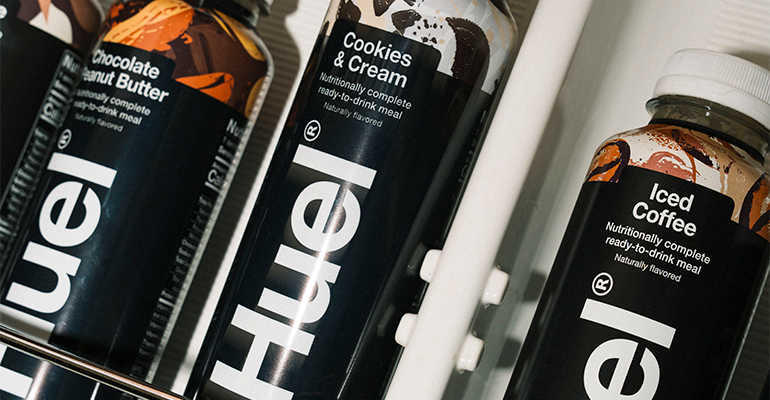
The acquisition would expand the French food group’s portfolio and its entry into functional nutrition.
Huel to sit within the Renew Danone strategy
Huel is to sit within the Renew Danone strategy, which centres around pivoting the company towards protein, gut health, functional nutrition, and medical nutrition.
The deal follows two 2025 acquisitions in categories of interest: Kate Farms, a US-based medical nutrition company, and the Akkermansia Company, a Belgian gut health specialist.
“What Huel has achieved in the fast-growing complete nutrition space fully resonates with Danone's mission of delivering health through food,” Antoine de Saint-Affrique, chief executive of Danone, said in a press release.
He pointed to Huel's “best-in-class digital capabilities” and the opportunity to combine them with Danone's “scale, capabilities, and global reach”.
Chief executive of Huel, James McMaster, said the acquisition would give Huel access to infrastructure, distribution, and R&D capability to expand into new markets.
Huel acquisition: Filling a portfolio gap?
Marit Veenstra, managing partner and brand strategist at Healthy Marketing Team (HMT), told Ingredients Network that the deal highlights a gap in Danone's portfolio.
“While strong in health and dairy, it has been less present in convenient, digitally native formats that fit modern lifestyles,” she said.
Veenstra explained that the acquisition also aligns with Danone's sustainability strategy, which is designed to shift diets towards more plant-based patterns.
Julia Varela Tarancón, trend and innovation strategist at HMT, said the acquisition “strongly reflects a portfolio gap” at Danone.
“It lacked a modern, lifestyle-driven functional brand with direct engagement with younger consumers. Huel directly fills this gap,” she added.
Acquisition signals entry into ‘complete nutrition’ category
In its press release, Danone positioned the acquisition as an entry into “the fast-growing Complete Nutrition space”, as opposed to the purchase of a meal replacement brand.
Huel’s portfolio, which includes everything from ready-to-drink shakes and protein bars to powdered meals and a hot savoury range, is formulated to meet the European Food Safety Authority’s recommended daily nutrient amounts, which Huel defines as “nutritionally complete”.
Huel, which holds B Corp Certification, uses a plant-based formulation centred on oat, pea protein isolate, ground flaxseed, and brown rice protein, alongside 26 essential vitamins and minerals.
Veenstra believes the reframing is a smart move.
She said: “By reframing this as ‘complete nutrition’, Danone is widening the relevance of the category, moving it from a diet-focused solution to a more inclusive, everyday lifestyle choice for wellbeing.”
Varela Tarancón said the distinction reflected a shift in consumer expectations.
“‘Complete nutrition’ is a more relevant framing than ‘meal replacement’ because it no longer implies substituting a traditional meal with a beverage,” she explained. “The emphasis shifts towards nutritional sufficiency rather than calorie restriction.”
Danone ‘buying credibility to compete in a category where it has limited authenticity’
Huel was founded in 2015 by Julian Hearn, and built as a digitally native and direct-to-consumer brand.
The brand has since developed a loyal subscriber base and sold over 50 million meals through its online platform. More recently, it has moved into retail and now sells its products across the world in more than 25,000 locations, including the UK, Europe, the US, and Japan.
Revenue exceeded £250 million (€288 million) in the last financial year, according to its website. The approximately €1 billion acquisition price values Huel at around four times its revenue, a sum which nearly doubles the valuation (€483 million) placed on the company during its 2022 series B funding round.
McMaster said Huel had grown into “an omnichannel business with a strong direct-to-consumer foundation, an expanding international footprint, and a retail business that's scaling quickly”.
With the imminent acquisition, the question becomes how a direct-to-consumer brand that has carved out a clear community and operates mainly on subscription-based models fits within Danone’s fast-moving consumer goods structure.
“Danone is essentially buying credibility to compete in a category where it has limited authenticity. The biggest risk is losing that credibility,” Varela Tarancón said.
She cautioned against over-expansion, explaining that the temptation to broaden the product range too quickly “could dilute the brand's positioning and turn it into ‘everything for everyone’”.
What does the Huel acquisition signal for the complete nutrition category?
Veenstra believes the challenge of transferring direct-to-consumer capabilities extends beyond technological aspects.
She said: “The challenge is not the tools or data; it's the mindset and operating model behind them.
“To truly leverage Huel's digital strength, Danone would need to protect not just the capabilities, but the way of working behind them.”
She warned that differentiation in the complete nutrition space will not come from formulation alone.
“The brands that win will be those that build strong meaning, clear positioning, and real consumer relevance,” she said. “Danone has the scale to grow the category, but maintaining what made Huel distinctive will be critical to turning this into long-term leadership.”

Get more of our news on Google
Set Ingredients Network as a 'Preferred Source' to get quicker access to the news you value.
Related news

Do the US dietary guidelines put UPFs under pressure?
10 Sep 2026
Will the US dietary guidelines change the way Americans eat, swapping ultra-processed foods for whole foods? We asked Dr Barry Popkin, renowned nutrition and obesity researcher.
Read more
Food fraud costs UK economy £2bn each year
9 Sep 2026
Food fraud is costing the UK economy up to £2 billion (€2.3 billion) every year although the food sector is more “resilient” than others, according to a recent study.
Read more
Skimpflation: An ‘unfair’ and risky approach to keeping prices low
2 Sep 2026
Consumers see skimpflation – reducing the quality of ingredients due to rising costs – as more unfair than shrinkflation, making it a risky strategy according to recent research.
Read more
NielsenIQ’s EU barometer shows Britain leading in grocery inflation
31 Aug 2026
Britain was the only country to record grocery inflation above 2%, according to NielsenIQ data that compared Europe’s five biggest grocery markets from February to May 2026.
Read more
‘Urgent gaps’ in achieving 2030 food system goals
27 Aug 2026
Global food systems are failing to meet 2030 targets across indicators including health, environment, and resilience, according to a report co-authored by the Food and Agriculture Organisation (FAO).
Read more
China beverages: Is herbal innovation the future?
20 Aug 2026
Herbal and botanical innovation in China's drinks market continues to grow, with ingredients like astragalus root, ginger, and ginseng in the spotlight – and focus shifting far beyond refreshment.
Read more
Popular barbecue staples experience sharp price increases
19 Aug 2026
The typical cost of US shoppers’ barbecue baskets has risen by 12% over the past year – the fastest annual rise in a decade, figures from The Economist show.
Read more
Beyond 'nice to have': A spotlight on US functional beverages
12 Aug 2026
Functional beverage interest in the US is gaining important ground as consumers now expect function rather than see it as "nice to have", and there are clear market gaps for growth, according to Spate.
Read more
Manam Chocolate aims to bring premium Indian cacao to 'the world stage'
11 Aug 2026
Craft chocolate brand Manam Chocolate is investing in local expansion and supply chain innovation throughout India as it works to build out the premium reputation of its locally produced cacao products.
Read more
Digital twin technology gains ground in food manufacturing
6 Aug 2026
Food and beverage companies are increasingly turning to digital twins to optimise and automate manufacturing processes, but opportunities stretch far beyond this, say experts.
Read more