
Ingredients Categories
Finished Products
Finished Food Categories
- Bakery
- Beverages / Juices
- Cereal and grain products
- Confectionery
- Cooking Fats & Oils
- Dairy
- Egg products
- Fruits & Vegetables
- Infant & Baby food
- Meat, Poultry & Fish
- Nuts & Seeds products
- Other Finished Food Categories
- Pet Food
- Plant-based foods
- Prepared foods
- Sauces & Seasonings
- Sweet & Savoury Spreads
Specialised Finished Products
- Bee products
- Biotic products
- Dietary supplements
- Energy drinks
- Functional beverages
- Functional confectionery
- Functional food
- Functional powders
- Meal replacement products
- Nutricosmetics
- Other Specialised Finished Products
- Pet Dietary Supplements
- Pharma and OTC products
- Protein products
- Sugar replacers / Sweeteners
Health & Wellness Areas
Delivery Formats
Operations & Services
- 3D printing
- Analysis/ Testing
- Auditing & certifications
- Blending & mixing
- Bottling
- Certification
- Clinical trials
- Co-packing
- Coating
- Consulting
- Contract manufacturing
- Drying
- Electrospinning
- Encapsulating
- Enzymatic processing
- Extracting
- Extrusion
- Fat structuring
- Fermentation
- Filling
- Flavour development
- Freeze drying
- Granulating/ grinding/ milling / mixing
- High-pressure processing
- Labelling
- Other Operations & Services
- Packaging
- Packet filling
- Pasturising
- Quality assurance
- Saccharification
- Shear cell processing
- Spray drying
- Sterilisation
- Storage & Logistics
- Tabletting
- Toasting / roasting
- Ultra-high temperature processing
News
Dutch initiative to reduce supermarket waste claims ongoing success
Simon Pitman, Freelance Journalist 6 Nov 2024Food waste in Dutch supermarkets continued to fall, registering a total reduction of 35% since monitoring was introduced by the Food Waste Free United Foundation and the Wageningen University & Research in 2018.
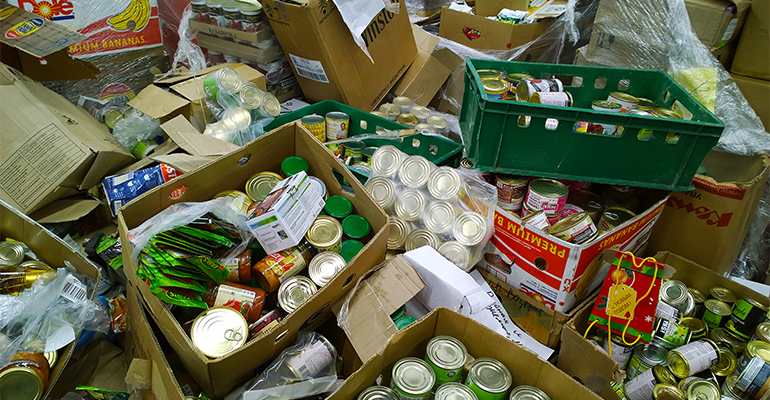
According to the latest annual report, supermarkets self-reported that food waste was reduced by a further 0.9% in procurement volume during 2023, showing that although larger reductions were made in previous years, improvements are still being made thanks to the Netherlands government-backed initiative.
Ingredients Network spoke to Martijntje Vollebregt, researcher on sustainable food processing at Wageningen University & Research (WUR), to find out more about the strategies supermarkets have been developing to make the improvements.
Discounting products close to their sell-by date
Vollebregt pointed out that one of the most successful measures has been to pre-empt the sell-by dates of perishable products by discounting them, instead of simply taking them off the shelf once the sell-by date is reached.
“The supermarkets have different ways to still offer these products to customers, it can be the regular shelf, or a special food waste cabinet and/or grouped into a bag, with a sales tag such as ‘Too Good To Go’. In the Netherlands, reduced pricing is actively applied for products with a short shelf life, and on bread,” Vollebregt said.
“This requires a strategic decision by supermarkets, necessitating a modified way of working in the supermarket outlets, infrastructure, communication on supermarkets magazine, etc. Of course, this also requires active shelf management in the outlets. Furthermore, supermarkets invest in new data tools to improve the match between forecast and sales.”
Supply chain efficiencies and shelf-life extension can also make the difference
Making improvements to the supply chain can also make a significant difference. Enhanced supply chain efficiencies can reduce the delivery times between the manufacturer and products arriving on store shelves, a particular boon for perishable goods.
Vollebregt explained that while short transportation times and adequate storage conditions are important factors in successful supply chain and in-store management, innovations in shelf-life extensions are equally as important, as they can also contribute to waste reduction.
AI technology is another innovation coming into play and assisting supermarkets in becoming more efficient. Marc Jansen, general director of the Dutch Food Retail Association, points to how AI is being used to improve the match between supply and demand, which is also spelling opportunities for upcycling food, like pasta sauce from leftover tomatoes.
While supermarket-led initiatives do require a significant investment of time and resources by the retailers, Vollebregt also explained that these strategies are easily transferable and could be adopted by supermarket chains in most parts of the world.
The aims of the programme in the future
Moving forward, the activities of the Food Waste Free United Foundation are designed to continue to help cut back on supermarket food waste as much as possible in the future.
“Our activities will continue over the coming years, aiming to contribute to significant food waste reduction,” said Vollebregt. “The Foundation’s activities include monitoring of food waste - including an update with the Dutch retailers in the coming years, stimulating solutions for businesses, reduction of food waste in households, and obtaining insights into which factors in legislation and agreements hamper food waste reduction.”
While Vollebregt pointed to cooperation on supply chain efficiencies between both suppliers and supermarkets becoming increasingly important in the future, she added that successfully tackling the problem of food waste is a multifaceted issue with many dimensions and a wide spectrum of solutions.
“Food waste comes with a multidimensional footprint that includes both the economy and the environment. Taking this into account, food waste reduction for products with a large environmental impact is of extra relevance,” Vollebregt said.

Get more of our news on Google
Set Ingredients Network as a 'Preferred Source' to get quicker access to the news you value.
Related news

Do the US dietary guidelines put UPFs under pressure?
10 Sep 2026
Will the US dietary guidelines change the way Americans eat, swapping ultra-processed foods for whole foods? We asked Dr Barry Popkin, renowned nutrition and obesity researcher.
Read more
Food fraud costs UK economy £2bn each year
9 Sep 2026
Food fraud is costing the UK economy up to £2 billion (€2.3 billion) every year although the food sector is more “resilient” than others, according to a recent study.
Read more
Kellogg accelerates work to remove artificial colours from all US cereals
3 Sep 2026
WK Kellogg has announced an accelerated timeline to eliminate all artificial colours and the chemical preservative, BHT, across its full US portfolio of cereals and cereal packaging.
Read more
Skimpflation: An ‘unfair’ and risky approach to keeping prices low
2 Sep 2026
Consumers see skimpflation – reducing the quality of ingredients due to rising costs – as more unfair than shrinkflation, making it a risky strategy according to recent research.
Read more
NielsenIQ’s EU barometer shows Britain leading in grocery inflation
31 Aug 2026
Britain was the only country to record grocery inflation above 2%, according to NielsenIQ data that compared Europe’s five biggest grocery markets from February to May 2026.
Read more
‘Urgent gaps’ in achieving 2030 food system goals
27 Aug 2026
Global food systems are failing to meet 2030 targets across indicators including health, environment, and resilience, according to a report co-authored by the Food and Agriculture Organisation (FAO).
Read more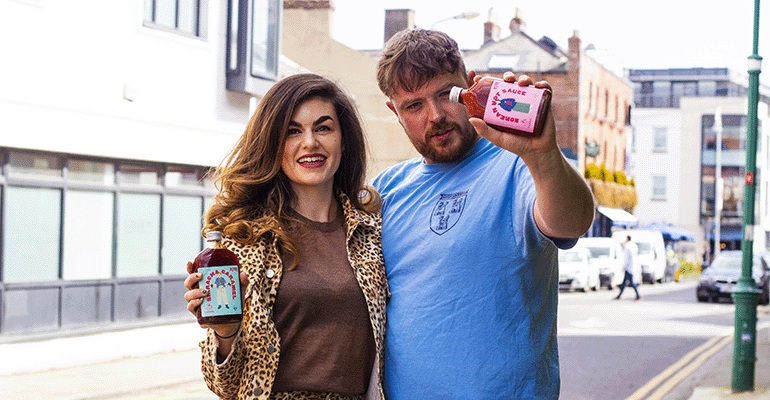
Chimac’s fusion sauces bring Korean flavours to Europe
25 Aug 2026
Irish sauce brand Chimac is tapping into Korea’s culinary traditions, bringing its flavours and products to European consumers who want a taste of K-food.
Read more
Global demand for instant noodles continues to rise
24 Aug 2026
Global demand for instant noodles reached 124.21 billion servings last year, representing a 0.7% year-on-year increase – or 900 million extra servings.
Read more
Popular barbecue staples experience sharp price increases
19 Aug 2026
The typical cost of US shoppers’ barbecue baskets has risen by 12% over the past year – the fastest annual rise in a decade, figures from The Economist show.
Read more
Hot NPD: Nissin launches first cold-water Cup Noodles
18 Aug 2026
Nissin is taking one of Japan’s most iconic instant meals in a completely new direction with the launch of the first cold water-only Cup Noodles in the brand’s 55-year history.
Read more