
Ingredients Categories
Finished Products
Finished Food Categories
- Bakery
- Beverages / Juices
- Cereal and grain products
- Confectionery
- Cooking Fats & Oils
- Dairy
- Egg products
- Fruits & Vegetables
- Infant & Baby food
- Meat, Poultry & Fish
- Nuts & Seeds products
- Other Finished Food Categories
- Pet Food
- Plant-based foods
- Prepared foods
- Sauces & Seasonings
- Sweet & Savoury Spreads
Specialised Finished Products
- Bee products
- Biotic products
- Dietary supplements
- Energy drinks
- Functional beverages
- Functional confectionery
- Functional food
- Functional powders
- Meal replacement products
- Nutricosmetics
- Other Specialised Finished Products
- Pet Dietary Supplements
- Pharma and OTC products
- Protein products
- Sugar replacers / Sweeteners
Health & Wellness Areas
Delivery Formats
Operations & Services
- 3D printing
- Analysis/ Testing
- Auditing & certifications
- Blending & mixing
- Bottling
- Certification
- Clinical trials
- Co-packing
- Coating
- Consulting
- Contract manufacturing
- Drying
- Electrospinning
- Encapsulating
- Enzymatic processing
- Extracting
- Extrusion
- Fat structuring
- Fermentation
- Filling
- Flavour development
- Freeze drying
- Granulating/ grinding/ milling / mixing
- High-pressure processing
- Labelling
- Other Operations & Services
- Packaging
- Packet filling
- Pasturising
- Quality assurance
- Saccharification
- Shear cell processing
- Spray drying
- Sterilisation
- Storage & Logistics
- Tabletting
- Toasting / roasting
- Ultra-high temperature processing
News
EU calls to harmonise allergen labelling increase
Natasha Spencer-Jolliffe, Freelance Journalist 1 Jan 2025Allergy awareness efforts focus on implementing a European reference laboratory and collaboration to standardise labels and support allergen identification.
Allergen labelling varies across European countries. Unifying standards and fostering collaboration throughout Europe could support the harmonisation of allergen labelling.
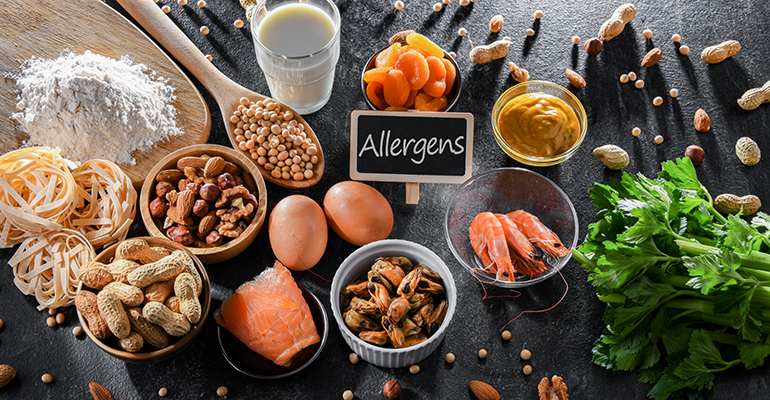
Wageningen University and Research, based in the Netherlands, has said that scientists and allergen-focused advocates are calling for a European reference laboratory to harmonise food and beverage labels. A European reference laboratory could manage the comprehensive research needed to achieve this and systematically monitor allergen handling on a region-wide scale.
“The growing complexity of the global food supply chain and increased public awareness of food allergies are key drivers for harmonisation in allergen labelling across the UK and the European Union (EU),” Caroline Benjamin, director of Food Allergy Aware, told Ingredients Network. “Inconsistent labelling practices can cause confusion for consumers, especially for those managing severe allergies,” Benjamin explained.
Single-nation led allergen developments
In 2024, the Netherlands adopted national legislation to regulate precautionary labels on foods and allergen cross-contamination. Following the directive’s introduction, by 2026, producers may only use labels like these if they have considered the risks of consumption when allergies are present.
Yet, this development only applies to the Netherlands and the 400,000 people with food allergies. As such, Nathalie Smits of Wageningen Food Safety Research, and colleagues from seven more European countries are calling on the EU to centralise allergen monitoring. “A consumer crossing the border cannot trust that labels mean the same thing they do in the Netherlands,” said Smits, adding “That is limiting, or even dangerous.”
The introduction of Natasha’s Law in the UK brought clarity for prepacked for direct sale (PPDS) foods, for example. However, currently, this regulation does not exist in the EU and can confuse UK consumers with food hypersensitivities (FHS) when travelling to EU countries. The UK Food Standards Agency (FSA) states that food hypersensitivities (FHS) refer to allergies, intolerances, and coeliac disease.
Making safe, informed food selections
Allergen incidents highlight the importance of best practice full labelling. “A harmonised approach will ensure transparency and build trust from the FHS consumer, which in turn will support the FHS consumer in making safe choices,” said Benjamin.
Furthermore, food businesses benefit from clearer regulations, reducing non-compliance risk and facilitating smoother cross-border trade. However, to achieve true harmonisation, allergen standards, and rules need to go beyond best practice. “The harmonisation needs to be regulated and not just best practice,” Benjamin added.
A lack of standardisation remains
Without harmonised allergen labelling in the EU, a lack of standardisation creates various risks for consumers and the wider food sector. As demonstrated by the concerns and challenges for FHS consumers, the non-harmonised allergen labelling standards create consumer safety risks. “Inconsistent allergen labelling can result in miscommunication, leading to accidental exposure and potentially life-threatening allergic reactions,” Benjamin explained.
For instance, varying definitions or interpretations of PPDS foods across countries might lead to gaps in allergen disclosure. PPDS foods refer to items packaged and sold at the same venue, such as at food service and hospitality locations.
Confusion can result in eroding consumer trust. “Discrepancies in allergen labelling undermine consumer confidence in the food industry's commitment to safety and transparency,” Benjamin added.
Varying rules in the EU also result in widespread confusion for businesses and staff. Differences in allergen labelling requirements increase the complexity of staff training and compliance, particularly for multinational organisations or suppliers exporting to multiple markets like the EU, APAC, and the US.
Looking towards the wider industry, businesses can also incur regulatory burdens. “Without harmonisation, businesses must navigate different national regulations when exporting to other countries, incurring additional costs for compliance and risking inadvertent errors,” Benjamin noted.
Adopting a standardised allergen labelling approach
If the EU does consider harmonised allergen labelling, Food Allergy Aware states there are numerous inclusions it needs to contain to overcome current challenges and risks.
Firstly, a harmonised allergen labelling framework should incorporate uniform definitions. “Clear, consistent definitions for terms like ‘prepacked’, ‘PPDS’ and ‘non-prepacked’ foods across all jurisdictions,” said Benjamin. Clarity is crucial throughout all facets of allergen labelling, including allergen icons and keys as it is not always clear if the icons indicate that food ‘contains’ or is ‘free from’.
In addition to transparency, comprehensive information is crucial, with Food Allergy Aware also recommending mandatory allergen declarations. Standardised formatting for allergen labelling, ensuring allergens are clearly identified with bold font, allergen boxes, or statements on all packaging and menus is advised. Comprehensive allergen lists also need to be included in this harmonisation, including “the EU’s top 14 allergens as a baseline, with room to consider emerging allergens and regional needs for example, legumes”, Benjamin explained.
Consumers need to be able to spot and act on any doubts they may have about the content of food and beverages and how this may affect their allergies. Precautionary Allergen Labelling (PAL) can support this with clear and regulated guidance on the use of “may contain” statements, reducing overuse and ensuring they are based on quantified risk assessments. “Currently, the levels are under discussion, but I can see that these may vary from country to country,” Benjamin added.
Training, education and resources providing consumer information and answering questions are also key. A harmonised approach can include digital support tools such as encouraging QR codes or apps that provide detailed allergen information, and supporting consumers with specific needs or complex allergies. Mandating training for food handlers and front-of-house staff helps to ensure understanding and compliance with allergen labelling requirements.
Cross-collaboration across sectors is vital, too. To achieve harmonisation, the industry needs regular stakeholder engagement, including allergy organisations, food businesses, and regulators, to adapt standards to evolving consumer and industry needs.
“By prioritising harmonisation, we can create a safer, more transparent food system that benefits allergy sufferers, supports businesses, and enhances public trust across the UK and EU,” Benjamin said.

Get more of our news on Google
Set Ingredients Network as a 'Preferred Source' to get quicker access to the news you value.
Related news

M&S launches own-brand pet food range
11 Sep 2026
UK retailer Marks & Spencer has launched its own-brand pet food line Paws & Pals – a well-timed and strategic move that will appeal to loyal shoppers, says a marketing expert.
Read more
Do the US dietary guidelines put UPFs under pressure?
10 Sep 2026
Will the US dietary guidelines change the way Americans eat, swapping ultra-processed foods for whole foods? We asked Dr Barry Popkin, renowned nutrition and obesity researcher.
Read more
Food fraud costs UK economy £2bn each year
9 Sep 2026
Food fraud is costing the UK economy up to £2 billion (€2.3 billion) every year although the food sector is more “resilient” than others, according to a recent study.
Read more
Kellogg accelerates work to remove artificial colours from all US cereals
3 Sep 2026
WK Kellogg has announced an accelerated timeline to eliminate all artificial colours and the chemical preservative, BHT, across its full US portfolio of cereals and cereal packaging.
Read more
‘Urgent gaps’ in achieving 2030 food system goals
27 Aug 2026
Global food systems are failing to meet 2030 targets across indicators including health, environment, and resilience, according to a report co-authored by the Food and Agriculture Organisation (FAO).
Read more
Chimac’s fusion sauces bring Korean flavours to Europe
25 Aug 2026
Irish sauce brand Chimac is tapping into Korea’s culinary traditions, bringing its flavours and products to European consumers who want a taste of K-food.
Read more
Savoury protein snacks shake up the on-the-go market
10 Aug 2026
Sweet flavours have dominated the high-protein snack category but savoury snacks, such as cheese bars and meat sticks, can appeal to health-conscious consumers.
Read more
Nestlé invests in regeneratively farmed wheat for KitKat
5 Aug 2026
Nestlé will pay a premium for Wildfarmed’s regeneratively farmed wheat but the CPG remains reticent to promote the move on packs of its KitKat bars.
Read more
How Secon Taste is putting upcycled snacks on shelves
4 Aug 2026
Hungarian zero-waste startup Secon Taste is turning surplus food into upcycled snacks such as fibre-packed granola, instant porridge, and a circular coffee-tasting box.
Read more
Codex sets global thresholds for ‘may contain’ labels
3 Aug 2026
Codex Alimentarius has adopted its first global guidance on when to use “may contain” allergen warnings, setting thresholds intended to stop the label being used as blanket legal cover.
Read more