
Ingredients Categories
Finished Products
Finished Food Categories
- Bakery
- Beverages / Juices
- Cereal and grain products
- Confectionery
- Cooking Fats & Oils
- Dairy
- Egg products
- Fruits & Vegetables
- Infant & Baby food
- Meat, Poultry & Fish
- Nuts & Seeds products
- Other Finished Food Categories
- Pet Food
- Plant-based foods
- Prepared foods
- Sauces & Seasonings
- Sweet & Savoury Spreads
Specialised Finished Products
- Bee products
- Biotic products
- Dietary supplements
- Energy drinks
- Functional beverages
- Functional confectionery
- Functional food
- Functional powders
- Meal replacement products
- Nutricosmetics
- Other Specialised Finished Products
- Pet Dietary Supplements
- Pharma and OTC products
- Protein products
- Sugar replacers / Sweeteners
Health & Wellness Areas
Delivery Formats
Operations & Services
- 3D printing
- Analysis/ Testing
- Auditing & certifications
- Blending & mixing
- Bottling
- Certification
- Clinical trials
- Co-packing
- Coating
- Consulting
- Contract manufacturing
- Drying
- Electrospinning
- Encapsulating
- Enzymatic processing
- Extracting
- Extrusion
- Fat structuring
- Fermentation
- Filling
- Flavour development
- Freeze drying
- Granulating/ grinding/ milling / mixing
- High-pressure processing
- Labelling
- Other Operations & Services
- Packaging
- Packet filling
- Pasturising
- Quality assurance
- Saccharification
- Shear cell processing
- Spray drying
- Sterilisation
- Storage & Logistics
- Tabletting
- Toasting / roasting
- Ultra-high temperature processing
News
EU issues Mondelēz with €337.5 million antitrust fine
Natasha Spencer-Jolliffe, Freelance Journalist 6 Jun 2024Mondelēz International has received a multi-million fine for hindering cross-border trade of its products, causing consumers to pay more for its products.
On 23 May 2024, the European Commission announced it had fined Mondelēz €337.5 million for hindering cross-border trade of chocolate, biscuits and coffee goods between member states. In April 2024, it was reported that the leading chocolate and biscuit producer would receive a fine for blocking cross-border sales .
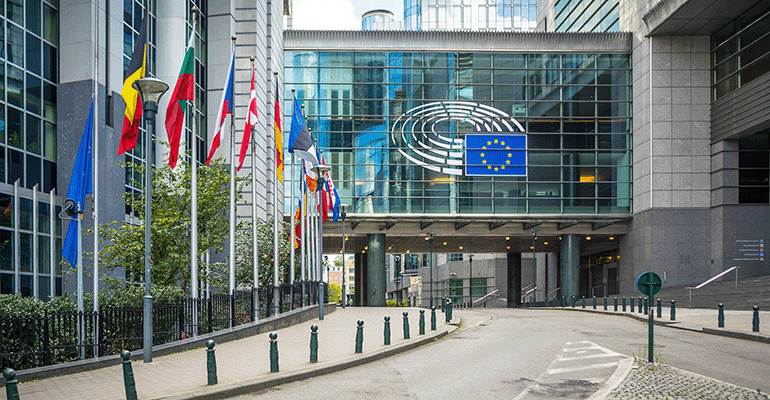
In a speech on the adoption of the antitrust decision against Mondelēz for cross-border trade restrictions, Margrethe Vestager, executive vice-president in charge of competition policy, said: “We find that Mondelēz illegally restricted retailers from sourcing these products from member states where prices are lower,” Vestager said. “This allowed Mondelēz to maintain higher prices. This harmed consumers, who ended up paying more for chocolate, biscuits, and coffee,” Vestager added.
In light of the ongoing cost-of-living crisis and the principles surrounding the free movement of goods in the single market, Vestager said consumers have the right to buy cheaper products when they can be sourced at a cheaper price elsewhere in the EU. In addition, she said they should be free to do so in supermarkets when retailers import the cheaper product.
“Any company that hinders this freedom engages in illegal behaviour and should be sanctioned accordingly,” Vestager said. Mondelēz’s actions signal a breach of EU competition rules, and the Commission “remains committed to bringing down unjustified barriers to ensure a better functioning of the single market”, she added.
In breach of anticompetition laws
US-headquartered Mondelēz is one of the world’s largest chocolate and biscuit producers. While the company’s name may be unfamiliar to consumers, its portfolio of brands— which span Oreo, Toblerone, Côte d’Or, Milka, Ritz, and TUC—are well-known household names.
Following the Commission’s investigation, it found Mondelēz in breach of EU competition rules in two key ways. Firstly, engaging in anticompetitive agreements or concerted practices restricting cross-border trade of various chocolate, biscuits and coffee products. Secondly, the Commission said Mondelēz had violated the rules by abusing its dominant position in certain national markets to sell chocolate tablets.
“Such illegal practices allowed Mondelēz to continue charging more for its own products, to the ultimate detriment of consumers in the EU,” the EU Commission said in a press release.
In response to Ingredient Network, an EU Commission’s spokesperson highlighted its position on the ruling and its potential impact on parallel trade.
Vestager said: “Prices for food differ between member states. Trade over borders of member states in the internal market can lower prices and increase the availability of products for consumers. This is especially important in times of high inflation.
“In today’s decision, we find that Mondelēz illegally limited cross-border sales across the EU. Mondelez did so to maintain higher prices for its products to the detriment of consumers. We have therefore fined Mondelēz €337.5 million.”
The Commission started exploring the case in 2019, conducting inspections at Mondelēz’s business premises.
Reaching the multi-million fine amount
Detailing the fine level, the Commission noted that the infringements covered a large part of the EU and lasted between 2006 and 2020, except for coffee products, which Mondelēz divested in 2015.
“In setting the level of the fine, the Commission took into account the gravity and duration of the infringements as well as the value of Mondelēz’ sales relating to the latter,” the Commission said. It also considered that this type of behaviour has already been sanctioned. “This is really not a novel case,” said Vestager.
The legislators based Mondelēz’s €337.5 million fine on its 2006 Guidelines on fines. In reaching this decision, the Commission considered Mondelēz’s cooperation with the Commission under its cooperation procedure, in which the confectionery giant expressly acknowledged its liability for the infringement of EU competition rules. As a result, the Commission granted Mondelēz a 15% fine reduction.
Preventing parallel trade
Parallel trade is when traders and retailers try to buy products in countries with lower prices and then trade them to markets with higher prices. Consequently, parallel trade typically results in price drops in countries where those products’ prices are higher. These price drops mean savings for customers at the checkout. Parallel trade, therefore, works to lower prices, increase competition, and strengthen consumer choice.
Restrictions on where products can be sold subsequently restrict parallel trade. Restrictions to such parallel trade prevent national markets from becoming isolated and lower product diversity. Without the relevant anticompetition laws in place, manufacturers or suppliers would be able to charge higher prices, impacting consumers’ pockets.
The EU Commission states: “Restrictions to parallel trade amount to non-regulatory barriers to a better functioning of the single market and are among the most serious restrictions of competition.”
Advocating for anticompetition
“We are determined to uphold the fundamental freedoms in the EU and to ensure that EU citizens have access to the biggest variety at the lowest prices that the market can offer,” Vestager said.
The European Commissioner for Competition says several ongoing investigations are taking place in the food and beverage sector, including food delivery services and energy drinks.
The EU Commission has created a whistleblower tool designed to make it easier for consumers to report anticompetitive behaviour. With enabling anonymity vital, the tool uses a specifically developed encrypted messaging system that allows two-way communications.

Get more of our news on Google
Set Ingredients Network as a 'Preferred Source' to get quicker access to the news you value.
Related news

Do the US dietary guidelines put UPFs under pressure?
10 Sep 2026
Will the US dietary guidelines change the way Americans eat, swapping ultra-processed foods for whole foods? We asked Dr Barry Popkin, renowned nutrition and obesity researcher.
Read more
Food fraud costs UK economy £2bn each year
9 Sep 2026
Food fraud is costing the UK economy up to £2 billion (€2.3 billion) every year although the food sector is more “resilient” than others, according to a recent study.
Read more
Kellogg accelerates work to remove artificial colours from all US cereals
3 Sep 2026
WK Kellogg has announced an accelerated timeline to eliminate all artificial colours and the chemical preservative, BHT, across its full US portfolio of cereals and cereal packaging.
Read more
Skimpflation: An ‘unfair’ and risky approach to keeping prices low
2 Sep 2026
Consumers see skimpflation – reducing the quality of ingredients due to rising costs – as more unfair than shrinkflation, making it a risky strategy according to recent research.
Read more
NielsenIQ’s EU barometer shows Britain leading in grocery inflation
31 Aug 2026
Britain was the only country to record grocery inflation above 2%, according to NielsenIQ data that compared Europe’s five biggest grocery markets from February to May 2026.
Read more
‘Urgent gaps’ in achieving 2030 food system goals
27 Aug 2026
Global food systems are failing to meet 2030 targets across indicators including health, environment, and resilience, according to a report co-authored by the Food and Agriculture Organisation (FAO).
Read more
Chimac’s fusion sauces bring Korean flavours to Europe
25 Aug 2026
Irish sauce brand Chimac is tapping into Korea’s culinary traditions, bringing its flavours and products to European consumers who want a taste of K-food.
Read more
Global demand for instant noodles continues to rise
24 Aug 2026
Global demand for instant noodles reached 124.21 billion servings last year, representing a 0.7% year-on-year increase – or 900 million extra servings.
Read more
Popular barbecue staples experience sharp price increases
19 Aug 2026
The typical cost of US shoppers’ barbecue baskets has risen by 12% over the past year – the fastest annual rise in a decade, figures from The Economist show.
Read more
Hot NPD: Nissin launches first cold-water Cup Noodles
18 Aug 2026
Nissin is taking one of Japan’s most iconic instant meals in a completely new direction with the launch of the first cold water-only Cup Noodles in the brand’s 55-year history.
Read more