
Ingredients Categories
Finished Products
Finished Food Categories
- Bakery
- Beverages / Juices
- Cereal and grain products
- Confectionery
- Cooking Fats & Oils
- Dairy
- Egg products
- Fruits & Vegetables
- Infant & Baby food
- Meat, Poultry & Fish
- Nuts & Seeds products
- Other Finished Food Categories
- Pet Food
- Plant-based foods
- Prepared foods
- Sauces & Seasonings
- Sweet & Savoury Spreads
Specialised Finished Products
- Bee products
- Biotic products
- Dietary supplements
- Energy drinks
- Functional beverages
- Functional confectionery
- Functional food
- Functional powders
- Meal replacement products
- Nutricosmetics
- Other Specialised Finished Products
- Pet Dietary Supplements
- Pharma and OTC products
- Protein products
- Sugar replacers / Sweeteners
Health & Wellness Areas
Delivery Formats
Operations & Services
- 3D printing
- Analysis/ Testing
- Auditing & certifications
- Blending & mixing
- Bottling
- Certification
- Clinical trials
- Co-packing
- Coating
- Consulting
- Contract manufacturing
- Drying
- Electrospinning
- Encapsulating
- Enzymatic processing
- Extracting
- Extrusion
- Fat structuring
- Fermentation
- Filling
- Flavour development
- Freeze drying
- Granulating/ grinding/ milling / mixing
- High-pressure processing
- Labelling
- Other Operations & Services
- Packaging
- Packet filling
- Pasturising
- Quality assurance
- Saccharification
- Shear cell processing
- Spray drying
- Sterilisation
- Storage & Logistics
- Tabletting
- Toasting / roasting
- Ultra-high temperature processing
News
High levels of lead and cadmium in protein powder, US study finds
Tessa Wiles, Content Editor - Food 31 Jan 2025A study by the Clean Label Project has found that 47% of 160 protein powders tested exceeded safety thresholds for heavy metals. The study highlights the urgent need for improved ingredient sourcing, increased transparency, and stricter regulations.
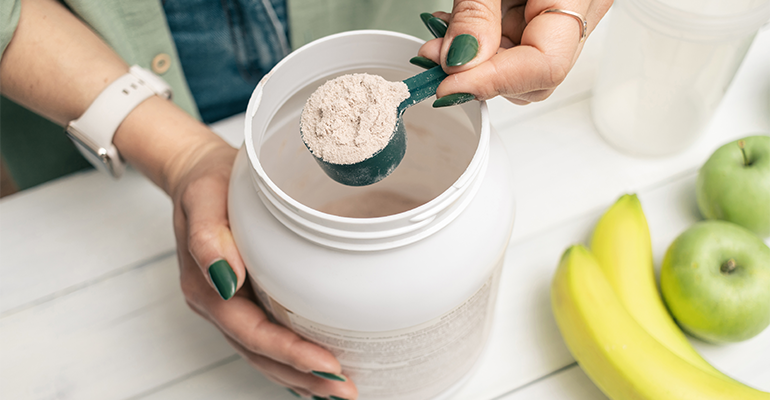
35,862 individual tests were conducted on 160 protein powders. The tests assessed four contaminants – lead, cadmium, arsenic, and mercury – and two bisphenols – BPA and BPS.
The protein powders came from 70 of the top-selling brands in the US, comprising 83% of the protein supplement market.
The organic protein powders tested contained three times more lead and twice the cadmium than non-organic products, while plant-based powders contained triple the amount of lead than whey-based powders. Chocolate powders were found to contain four times more lead than vanilla-flavoured powders.
Based on the findings, the authors note that “the products with the least lead are whey or collagen-based protein powders that are not chocolate flavoured.”
In addition, they state that if consumers are looking for low-contaminant options, “plant-based protein powders generally had the highest levels of detected contaminants, while whey-based protein powders consistently demonstrated lower levels.”
‘A wake-up call for consumers, manufacturers, retailers, and regulators’
Protein powders might deliver protein content, which is part of a healthy diet, yet they are not always the safest source. The Clean Label Project said the study “serves as a wake-up call for consumers, manufacturers, retailers, and regulators”.
The authors argue that consumers expect safe and pure protein powders, yet the findings point to significant gaps in quality control. In addition, many of the products tested contained contaminants not included on the nutrition labels.
Contaminants in the protein powders come from two primary sources: the soils where the ingredients are grown, and the product's packaging.
Clean Label Project did note that there is “some good news”, as its testing found that BPA has nearly been eliminated from packaging. It commends the industry’s response to both consumer demand and controversy around the chemical.
What does this mean for Europe?
Luca Bucchini, chair of the European Specialist Sports Nutrition Alliance (ESSNA) and managing director at Hylobates Consulting told Ingredients Network that the EU and the UK have stringent legal limits on heavy metals in food supplements. He explained that sports and active nutrition products, including protein powders and food supplements, are tightly regulated in the EU and UK, and that these regulations are both stringent and based on risk assessment.
He added that while some protein powders may not be covered by limits on heavy metals, “there is no evidence in Europe that we have an issue”.
Bucchini explained that BPA has been under scrutiny for several years, with strict limits already in place for its use in plastic food contact materials and coated products like metal cans. “The EU has recently banned BPA for food contact materials, and, since 2018, there have been stringent limits on its presence in food for packaging materials,” he added.
“While strict limits on BPA in plastic packaging and coated materials like metal cans have long been in place, this latest move requires businesses to eliminate BPA from plastics and resins within an 18-month phase-out period. This transition aims to safeguard the food supply chain while giving industry players sufficient time to adapt to the new regulations.”
How can brands in the EU reduce the risk of contamination in their products?
Bucchini explained that products can become contaminated inadvertently in the manufacturing process and throughout the supply chain in several ways.
“An early point of entry can be through raw materials. Contaminants can be at their most concentrated and therefore easier to detect in raw materials,” he said.
Bucchini stressed that to reduce the risk of contamination, brands, first and foremost, need to have robust supply chains and use reputable ingredient suppliers. He said: “Companies should question the geographical provenance of materials, who the supplier of these materials is, and what kind of safeguards the suppliers has put in place to minimise risks.”
Secondly, Bucchini said brands should be auditing their manufacturing facilities for potential contamination, and to add a layer of safety, test their finished products.

Get more of our news on Google
Set Ingredients Network as a 'Preferred Source' to get quicker access to the news you value.
Related news

M&S launches own-brand pet food range
11 Sep 2026
UK retailer Marks & Spencer has launched its own-brand pet food line Paws & Pals – a well-timed and strategic move that will appeal to loyal shoppers, says a marketing expert.
Read more
Do the US dietary guidelines put UPFs under pressure?
10 Sep 2026
Will the US dietary guidelines change the way Americans eat, swapping ultra-processed foods for whole foods? We asked Dr Barry Popkin, renowned nutrition and obesity researcher.
Read more
Food fraud costs UK economy £2bn each year
9 Sep 2026
Food fraud is costing the UK economy up to £2 billion (€2.3 billion) every year although the food sector is more “resilient” than others, according to a recent study.
Read more
Kellogg accelerates work to remove artificial colours from all US cereals
3 Sep 2026
WK Kellogg has announced an accelerated timeline to eliminate all artificial colours and the chemical preservative, BHT, across its full US portfolio of cereals and cereal packaging.
Read more
‘Urgent gaps’ in achieving 2030 food system goals
27 Aug 2026
Global food systems are failing to meet 2030 targets across indicators including health, environment, and resilience, according to a report co-authored by the Food and Agriculture Organisation (FAO).
Read more
Chimac’s fusion sauces bring Korean flavours to Europe
25 Aug 2026
Irish sauce brand Chimac is tapping into Korea’s culinary traditions, bringing its flavours and products to European consumers who want a taste of K-food.
Read more
Savoury protein snacks shake up the on-the-go market
10 Aug 2026
Sweet flavours have dominated the high-protein snack category but savoury snacks, such as cheese bars and meat sticks, can appeal to health-conscious consumers.
Read more
Nestlé invests in regeneratively farmed wheat for KitKat
5 Aug 2026
Nestlé will pay a premium for Wildfarmed’s regeneratively farmed wheat but the CPG remains reticent to promote the move on packs of its KitKat bars.
Read more
How Secon Taste is putting upcycled snacks on shelves
4 Aug 2026
Hungarian zero-waste startup Secon Taste is turning surplus food into upcycled snacks such as fibre-packed granola, instant porridge, and a circular coffee-tasting box.
Read more
Codex sets global thresholds for ‘may contain’ labels
3 Aug 2026
Codex Alimentarius has adopted its first global guidance on when to use “may contain” allergen warnings, setting thresholds intended to stop the label being used as blanket legal cover.
Read more