
Ingredients Categories
Finished Products
Finished Food Categories
- Bakery
- Beverages / Juices
- Cereal and grain products
- Confectionery
- Cooking Fats & Oils
- Dairy
- Egg products
- Fruits & Vegetables
- Infant & Baby food
- Meat, Poultry & Fish
- Nuts & Seeds products
- Other Finished Food Categories
- Pet Food
- Plant-based foods
- Prepared foods
- Sauces & Seasonings
- Sweet & Savoury Spreads
Specialised Finished Products
- Bee products
- Biotic products
- Dietary supplements
- Energy drinks
- Functional beverages
- Functional confectionery
- Functional food
- Functional powders
- Meal replacement products
- Nutricosmetics
- Other Specialised Finished Products
- Pet Dietary Supplements
- Pharma and OTC products
- Protein products
- Sugar replacers / Sweeteners
Health & Wellness Areas
Delivery Formats
Operations & Services
- 3D printing
- Analysis/ Testing
- Auditing & certifications
- Blending & mixing
- Bottling
- Certification
- Clinical trials
- Co-packing
- Coating
- Consulting
- Contract manufacturing
- Drying
- Electrospinning
- Encapsulating
- Enzymatic processing
- Extracting
- Extrusion
- Fat structuring
- Fermentation
- Filling
- Flavour development
- Freeze drying
- Granulating/ grinding/ milling / mixing
- High-pressure processing
- Labelling
- Other Operations & Services
- Packaging
- Packet filling
- Pasturising
- Quality assurance
- Saccharification
- Shear cell processing
- Spray drying
- Sterilisation
- Storage & Logistics
- Tabletting
- Toasting / roasting
- Ultra-high temperature processing
News
How will changing EU packaging rules affect the food and beverage industry?
Rik Moors 17 Apr 2025Food and beverage manufacturers operating in the European Union (EU) face significant packaging changes following the introduction of the updated Packaging and Packaging Waste Regulation (PPWR).
The legislation, which came into effect in February, introduces mandatory design and material standards aimed at reducing packaging waste, increasing recyclability, and shifting end-of-life costs on to producers.
.png)
From 12 August 2026, all companies placing packaged products on the EU market must comply with the new rules. The regulation applies across the entire supply chain – from primary packaging used by food manufacturers to retail, transport, and takeaway formats.
The European Commission is expected to issue further technical guidance ahead of the 2026 enforcement date.
A separate Circular Economy Act, scheduled for 2026, may introduce additional packaging-related measures, including incentives for reuse systems and circular materials.
Recyclability by design and extended producer responsibility
One of the central changes under the PPWR is the requirement that all packaging must be recyclable by 2030, both in design and practice. This will force manufacturers to eliminate complex multi-material formats, prioritise mono-material structures, and move away from hard-to-recycle plastics such as flexible laminates and black plastic.
Manufacturers must also ensure that plastic packaging meets minimum recycled content thresholds, which vary by polymer type. Some formats, including certain single-use plastic wraps for fresh produce and small portion packs, face outright restrictions.
The regulation reinforces extended producer responsibility (EPR), shifting the cost of collection, sorting, and recycling from municipalities to manufacturers. Producers will be required to register in each member state where they place packaged products on the market and will be charged fees based on recyclability and eco-design performance.
According to Marcelo Brull, sustainability manager at Informa Markets, this introduces a fundamental shift in how packaging is evaluated.
“What’s new is the link between how packaging is designed and how much producers pay: companies that invest in more recyclable or reusable packaging will likely see lower EPR fees. That’s a big incentive shift,” he said.
Brull emphasised that the regulation marks a transition from voluntary design targets to enforceable obligations across the bloc.
Impacts on food-contact materials and product formats
For food manufacturers, the new rules are expected to affect a wide range of packaging formats and may require changes to both material selection and structural design.
To comply with 80% recyclability by weight targets, companies will need to rework formats such as flexible sachets, film-sealed trays, and multi-layer laminates, which are currently not recyclable at scale. Brull noted that some of the biggest hurdles will be technical.
He said: “Many food and drink products rely on complex, multi-material packaging to preserve shelf life or meet safety standards, and those materials are often not recyclable. Even if packaging is technically recyclable, it might not be processed everywhere due to uneven infrastructure across member states.”
The regulation also bans the use of per- and polyfluorinated alkyl substances (PFAS) in food-contact materials above certain thresholds. These chemicals, used to provide water and grease resistance, are being phased out due to environmental persistence and potential health risks.
In addition, the law mandates that e-commerce and transport packaging formats must not exceed 50% empty space. This is expected to impact secondary and tertiary packaging for online grocery orders, shelf-ready units, and promotional multi-packs.
Labelling is another area of change. Companies will be required to provide recyclability and reuse instructions through standardised EU-wide labels or QR codes. These will need to be legible and accessible to end users and linked to approved collection and reuse systems.
Operational and market implications
Manufacturers are advised to begin packaging portfolio reviews ahead of the 2026 application date to assess compliance risks. Materials such as mono-material polyethylene, polypropylene, moulded fibre, and compostable bioplastics may become more prominent, though trade-offs in cost, availability, and performance remain.
Producers will also need to implement systems for data tracking, as EPR fees will be based on material types, weight, and recyclability scores. Many companies currently lack the infrastructure to capture and report this data across multiple national markets.
“Companies will need to improve how they track and report packaging data, which isn’t always in place nowadays,” said Brull. “There’s also the branding challenge. Changing packaging formats while staying true to your visual identity isn’t always easy.”
While short-term cost increases are likely, Brull noted that early compliance may provide competitive advantages in the long term.
“Costs will definitely rise in the short term, particularly for companies needing to reexamine their packaging portfolios... But over time, these investments can drive efficiency and resilience, and companies that act early may avoid higher costs later or even gain a competitive edge,” he said.

Get more of our news on Google
Set Ingredients Network as a 'Preferred Source' to get quicker access to the news you value.
Related news

M&S launches own-brand pet food range
11 Sep 2026
UK retailer Marks & Spencer has launched its own-brand pet food line Paws & Pals – a well-timed and strategic move that will appeal to loyal shoppers, says a marketing expert.
Read more
Do the US dietary guidelines put UPFs under pressure?
10 Sep 2026
Will the US dietary guidelines change the way Americans eat, swapping ultra-processed foods for whole foods? We asked Dr Barry Popkin, renowned nutrition and obesity researcher.
Read more
Food fraud costs UK economy £2bn each year
9 Sep 2026
Food fraud is costing the UK economy up to £2 billion (€2.3 billion) every year although the food sector is more “resilient” than others, according to a recent study.
Read more
Kellogg accelerates work to remove artificial colours from all US cereals
3 Sep 2026
WK Kellogg has announced an accelerated timeline to eliminate all artificial colours and the chemical preservative, BHT, across its full US portfolio of cereals and cereal packaging.
Read more
‘Urgent gaps’ in achieving 2030 food system goals
27 Aug 2026
Global food systems are failing to meet 2030 targets across indicators including health, environment, and resilience, according to a report co-authored by the Food and Agriculture Organisation (FAO).
Read more
Chimac’s fusion sauces bring Korean flavours to Europe
25 Aug 2026
Irish sauce brand Chimac is tapping into Korea’s culinary traditions, bringing its flavours and products to European consumers who want a taste of K-food.
Read more
Savoury protein snacks shake up the on-the-go market
10 Aug 2026
Sweet flavours have dominated the high-protein snack category but savoury snacks, such as cheese bars and meat sticks, can appeal to health-conscious consumers.
Read more
Nestlé invests in regeneratively farmed wheat for KitKat
5 Aug 2026
Nestlé will pay a premium for Wildfarmed’s regeneratively farmed wheat but the CPG remains reticent to promote the move on packs of its KitKat bars.
Read more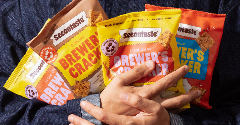
How Secon Taste is putting upcycled snacks on shelves
4 Aug 2026
Hungarian zero-waste startup Secon Taste is turning surplus food into upcycled snacks such as fibre-packed granola, instant porridge, and a circular coffee-tasting box.
Read more
Codex sets global thresholds for ‘may contain’ labels
3 Aug 2026
Codex Alimentarius has adopted its first global guidance on when to use “may contain” allergen warnings, setting thresholds intended to stop the label being used as blanket legal cover.
Read more