
Ingredients Categories
Finished Products
Finished Food Categories
- Bakery
- Beverages / Juices
- Cereal and grain products
- Confectionery
- Cooking Fats & Oils
- Dairy
- Egg products
- Fruits & Vegetables
- Infant & Baby food
- Meat, Poultry & Fish
- Nuts & Seeds products
- Other Finished Food Categories
- Pet Food
- Plant-based foods
- Prepared foods
- Sauces & Seasonings
- Sweet & Savoury Spreads
Specialised Finished Products
- Bee products
- Biotic products
- Dietary supplements
- Energy drinks
- Functional beverages
- Functional confectionery
- Functional food
- Functional powders
- Meal replacement products
- Nutricosmetics
- Other Specialised Finished Products
- Pet Dietary Supplements
- Pharma and OTC products
- Protein products
- Sugar replacers / Sweeteners
Health & Wellness Areas
Delivery Formats
Operations & Services
- 3D printing
- Analysis/ Testing
- Auditing & certifications
- Blending & mixing
- Bottling
- Certification
- Clinical trials
- Co-packing
- Coating
- Consulting
- Contract manufacturing
- Drying
- Electrospinning
- Encapsulating
- Enzymatic processing
- Extracting
- Extrusion
- Fat structuring
- Fermentation
- Filling
- Flavour development
- Freeze drying
- Granulating/ grinding/ milling / mixing
- High-pressure processing
- Labelling
- Other Operations & Services
- Packaging
- Packet filling
- Pasturising
- Quality assurance
- Saccharification
- Shear cell processing
- Spray drying
- Sterilisation
- Storage & Logistics
- Tabletting
- Toasting / roasting
- Ultra-high temperature processing
News
Indians enjoy first bites of cultivated chicken
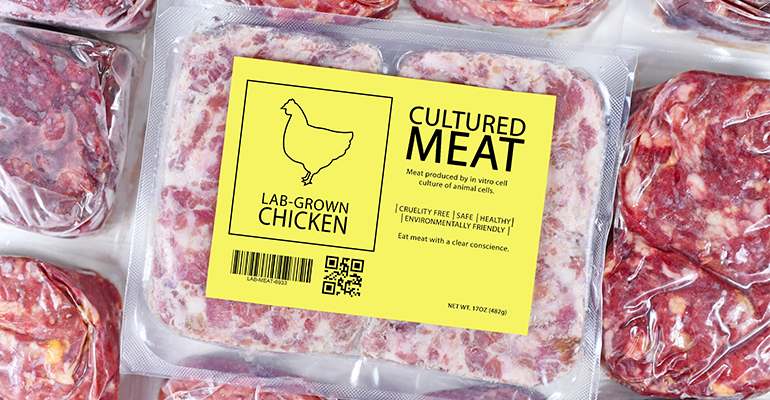
David Burrows, Freelance Journalist 13 Feb 2025The first public tasting of cultivated meat in India has taken place as the country prepares for the first commercial cultivated meat products – potentially as early as the end of this year.
“This event underscores [the potential of these meats] to revolutionise the industry ... and put India on the global map for sustainable food technology,” said Nilesh Lele, strategic advisor at BioKraft, which held the tasting in Mumbai.
Countries including Singapore, Israel, Hong Kong, and the US have already approved cultivated meat to be sold to consumers. Others, including India and the UK, are hoping to catch up fast as they encourage investment in biotechnology and provide regulatory clarity for companies developing the meats.
BioKraft, which uses 3D bioprinting technology to make cultivated chicken, is already working with the Food Safety and Standards Authority of India (FSSAI) – the country’s principal regulatory body. A regulatory dossier is currently being prepared, according to Mrunal Gund, the company’s innovation specialist. “We are one of the first to be preparing this kind of dossier,” she told Ingredients Network, with BioKraft “working closely” with the regulator.
Regulation of cultivated meats
Industry is trying to speed up regulatory clearance of these meats, with manufacturers and analysts pointing to considerable savings in carbon emissions and land and water use compared to conventionally-reared livestock. The environmental benefits are “likely to be tremendous”, according to the Good Food Institute (GFI), a non-profit organisation dedicated to alternative protein innovation.
A conventionally-reared chicken takes 45 days (or less) to rear, Gund explained, and you need quite a lot of space. There is also feed to consider, plus the energy, labour and costs that go into housing the birds. “Our process takes three days: it is time-efficient and really helpful in [getting the] texture [right],” she added. BioKraft’s chicken breasts are a hybrid, consisting of cultivated meat and plant proteins.
Regulators, meanwhile, have to ensure the harvested cells have no unintended consequences. In India, cultivated meat is not defined within the regulatory framework, but will likely be regulated as a novel food under the Approval of Non-Specified Food and Food Ingredients Regulations (NSF Regulations). Under these regulations, companies are required to apply for prior approval from the food authority before beginning the manufacturing, production, or import of a non-specified food (including novel) product. After seeking prior approval, the food business operator may apply for licensing to get the product to the consumers.
Countries in the Asia Pacific region are scrutinising their regulatory frameworks and working on safety and regulatory assessments for approval, with some countries already scrutinising applications (in the case of the Republic of Korea). The Indian regulatory pathway for cultivated meat is looking to follow a similar trajectory, said Chandana Tekkatte, science and technology manager at the GFI in India. “The FSSAI has in the past shown interest and inclination to scrutinise the regulatory and safety framework for cultivated meat,” she added.
Companies like BioKraft are confident they can make safe and sustainable cultivated meats that compete with (or even eventually outcompete) some conventional ones. However, it remains to be seen whether production can be scaled to such an extent that manufacturers achieve price parity with conventional meat.
The price of sustainable chicken
Tekkatte pointed to “significant breakthroughs” in the last year that have “demonstrated the economic feasibility of cultivated meat”. This includes a study led by Laura Pasitka from the Hebrew university of Jerusalem, in Israel, and R&D project manager at the GEA Group, which last year joined forces with Believer Meats to scale up cultivated meats. “Cultivated meat could become more affordable than you'd think,” she posted on social media.
Current cell cultivation technologies are largely drawn from the pharmaceutical industry, making the manufacturing process more expensive than traditional food production. Indeed, sceptics (and some investors) have questioned whether cultivated meat could ever reach cost parity with traditionally farmed meat. Pasitka’s study, published in Nature Food, offers hope: a techno-economic analysis for a theoretical production facility of 50,000l showed that “the cost of cultivated chicken can drop to within the range of organic chicken at US$6.2/lb by using perfusion technology”.
Tekkatte at GFI said this is the first study to provide real-world empirical evidence for key factors that influence the cost of production, such as media cost, metabolic efficiency, and achievable yields in a scalable bioprocess design.
Are consumers hungry for cultivated chicken?
BioKraft suggests on its website: “Our journey, filled with breakthroughs and setbacks, garnered a community of believers.” Do consumers believe in the products too?
India has the world’s largest vegetarian population, but chicken is the number one choice among the 60% who do eat meat. In a cross-country study on consumer acceptance of cultivated meat in the US, China, and India, published in Frontiers in Sustainable Food Systems in 2019, 56% of Indian consumers were already very or extremely likely to purchase cultivated meat regularly, putting India on par with other key markets like the US and China. Demand for meat in India is also projected to grow.
“When it comes to the consumer appetite for cultivated meat in India, the outlook is encouraging,” Tekkatte explained. “Widespread acceptance will hinge on consumer education, which will be critical to shaping perceptions and building trust.”
Indeed, if so-called ‘smart proteins’ like cultivated meat are to reach their full potential, consumers must trust them: they need to know that these foods are safe to eat and that their ingredients are clearly and accurately labelled. The industry is looking to the FSSAI to play a key role here: disseminating educational materials that demystify the technology and address common concerns will be “instrumental in fostering familiarity and trust among consumers”, according to GFI.
Gund said feedback from the tasting has been positive. She would like to run more tastings in the weeks and months to come. Research the company has conducted showed 59% of consumers were interested in trying cultivated chicken. “Indians are very interested in nutrition and sustainable products,” she added.
The company is moving into its own production facilities later this year and is also keen to look at cultivated seafood – another potentially huge market in India.

Get more of our news on Google
Set Ingredients Network as a 'Preferred Source' to get quicker access to the news you value.
Related news

Do the US dietary guidelines put UPFs under pressure?
10 Sep 2026
Will the US dietary guidelines change the way Americans eat, swapping ultra-processed foods for whole foods? We asked Dr Barry Popkin, renowned nutrition and obesity researcher.
Read more
Skimpflation: An ‘unfair’ and risky approach to keeping prices low
2 Sep 2026
Consumers see skimpflation – reducing the quality of ingredients due to rising costs – as more unfair than shrinkflation, making it a risky strategy according to recent research.
Read more
‘Urgent gaps’ in achieving 2030 food system goals
27 Aug 2026
Global food systems are failing to meet 2030 targets across indicators including health, environment, and resilience, according to a report co-authored by the Food and Agriculture Organisation (FAO).
Read more
Seven-Eleven uses microbial testing tech to extend katsudon shelf life
26 Aug 2026
Japanese retail company Seven-Eleven has improved its factory’s microbial environment to keep comfort-food staple, katsudon, fresher for longer.
Read more
Chimac’s fusion sauces bring Korean flavours to Europe
25 Aug 2026
Irish sauce brand Chimac is tapping into Korea’s culinary traditions, bringing its flavours and products to European consumers who want a taste of K-food.
Read more
Global demand for instant noodles continues to rise
24 Aug 2026
Global demand for instant noodles reached 124.21 billion servings last year, representing a 0.7% year-on-year increase – or 900 million extra servings.
Read more
China beverages: Is herbal innovation the future?
20 Aug 2026
Herbal and botanical innovation in China's drinks market continues to grow, with ingredients like astragalus root, ginger, and ginseng in the spotlight – and focus shifting far beyond refreshment.
Read more
Popular barbecue staples experience sharp price increases
19 Aug 2026
The typical cost of US shoppers’ barbecue baskets has risen by 12% over the past year – the fastest annual rise in a decade, figures from The Economist show.
Read more
Hot NPD: Nissin launches first cold-water Cup Noodles
18 Aug 2026
Nissin is taking one of Japan’s most iconic instant meals in a completely new direction with the launch of the first cold water-only Cup Noodles in the brand’s 55-year history.
Read more
Manam Chocolate aims to bring premium Indian cacao to 'the world stage'
11 Aug 2026
Craft chocolate brand Manam Chocolate is investing in local expansion and supply chain innovation throughout India as it works to build out the premium reputation of its locally produced cacao products.
Read more