
Ingredients Categories
Finished Products
Finished Food Categories
- Bakery
- Beverages / Juices
- Cereal and grain products
- Confectionery
- Cooking Fats & Oils
- Dairy
- Egg products
- Fruits & Vegetables
- Infant & Baby food
- Meat, Poultry & Fish
- Nuts & Seeds products
- Other Finished Food Categories
- Pet Food
- Plant-based foods
- Prepared foods
- Sauces & Seasonings
- Sweet & Savoury Spreads
Specialised Finished Products
- Bee products
- Biotic products
- Dietary supplements
- Energy drinks
- Functional beverages
- Functional confectionery
- Functional food
- Functional powders
- Meal replacement products
- Nutricosmetics
- Other Specialised Finished Products
- Pet Dietary Supplements
- Pharma and OTC products
- Protein products
- Sugar replacers / Sweeteners
Health & Wellness Areas
Delivery Formats
Operations & Services
- 3D printing
- Analysis/ Testing
- Auditing & certifications
- Blending & mixing
- Bottling
- Certification
- Clinical trials
- Co-packing
- Coating
- Consulting
- Contract manufacturing
- Drying
- Electrospinning
- Encapsulating
- Enzymatic processing
- Extracting
- Extrusion
- Fat structuring
- Fermentation
- Filling
- Flavour development
- Freeze drying
- Granulating/ grinding/ milling / mixing
- High-pressure processing
- Labelling
- Other Operations & Services
- Packaging
- Packet filling
- Pasturising
- Quality assurance
- Saccharification
- Shear cell processing
- Spray drying
- Sterilisation
- Storage & Logistics
- Tabletting
- Toasting / roasting
- Ultra-high temperature processing
News
Israel approves Aleph Farms’ cell-cultured beef in world first
Will Chu, Freelance Journalist 1 Feb 2024Israel has granted the first regulatory approval for the commercial sale of cultivated beef, joining the US and Singapore in officially recognising cultivated meat’s role towards protein diversification.
In a world first, Aleph Farms received a ‘No Questions’ letter from the country’s Ministry of Health (MoH) signalling the go-ahead for the company to commercialise its products in Israel.
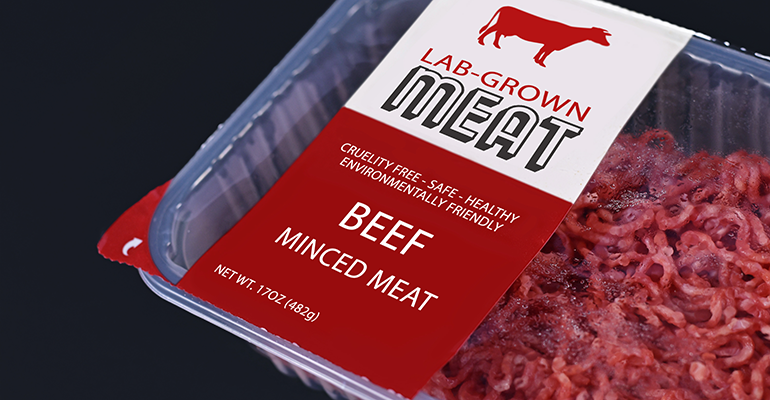
Aleph Farms also revealed that it had filed for regulatory approval in Singapore, Switzerland, the UK and the US, and was “advancing its applications” in other markets.
“With its global leadership in cellular agriculture, Israel continues to push for greater regional integration and economic collaboration, which will be crucial for stabilizing the region,” said Didier Toubia, CEO and co-founder of Aleph Farms.
“We believe that addressing joint challenges like food security is the best way to ensure the prosperity of the Middle East and other parts of the world that rely heavily on massive food imports, especially in Asia.”
First cultivated chicken ingredient approval for GOOD Meat in Singapore
The news signals the first ever such approval for non-chicken cultivated meat anywhere in the world and is also the first for cultivated meat of any kind in the Middle East.
It also follows the announcement in Dec 2020 of the first regulatory approval for a cultivated chicken ingredient from US firm GOOD Meat – the cultivated meat division of Eat Just – in Singapore.
Later, GOOD Meat and another US-based firm UPSIDE Foods received regulatory approval in the US for their respective cultivated chicken products.
The first Aleph Farm product to be introduced to diners in Israel — the cultivated Petit Steak — is made of non-modified, non-immortalized cells of a premium Black Angus cow, as well as a plant protein matrix made of soy and wheat.
Aside from starter cells that come from one of the Black Angus cow’s fertilized eggs, there are zero animal-derived components (ie no foetal bovine serum) in the cultivation process and the final product.
No antibiotics are used in production, nor are any present in the final product, added Aleph Farms, who go onto highlight the “controlled and traceable process, including an aseptic production environment, increases transparency and greatly reduces any risk of contamination.”
Vital Meat submits novel food regulatory application to Singapore
Efforts by the EU to keep pace with regulatory change have been slow with the region yet to grant regulatory approval for a cultivated meat product.
Earlier this month, French firm Vital Meat submitted a novel food regulatory application to the Singapore Food Agency (SFA) for its cultivated chicken products.
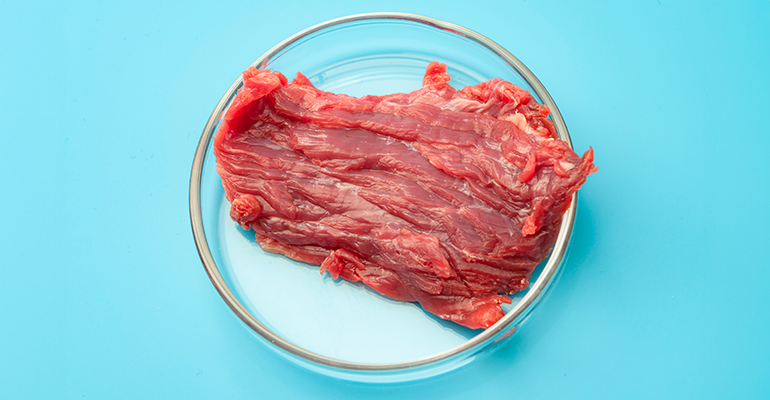 Pictured: Lab grown beef | © iStock/Moussa81
In April 2022, Israel renewed its efforts in pushing cultivated meat’s agenda, investing €16m ($18m) in government grants to the world’s largest cultivated meat consortium of private firms and research institutions.
The consortium, made up of 14 Israeli food tech startups, and 10 universities and research institutions, would receive funding for a period of three years, and would be co-led by Gaya Savyon, a grantee of the Good Food Institute Israel (GFI),
Israel’s PM: News is ‘nothing less than history for alternative protein field’
Commenting on Aleph Farms’ landmark achievement, Benjamin Netanyahu, Israel’s Prime Minister said: “Today’s news is nothing less than history for the State of Israel, for the field of alternative proteins, and of course for animals in Israel and around the world.
“The State of Israel is a trailblazer in this field, and for the food technology companies propelling it forward, their efforts demonstrate both great responsibility and tremendous courage.
This news is an enormous success for food security, food safety, climate action and animal welfare. I want to thank the pioneers of our generation – the trailblazers. You are the hope for a better future.”
Bruce Friedrich, founder and President of The Good Food Institute added: “This announcement marks a critical leap in the global race to make the meat that people love, in a way that’s better for our climate, biodiversity, and food security.
“Congratulations to the team at Aleph Farms on becoming the third company in the world to secure regulatory approval for cultivated meat and the first for a cultivated beef product,” he added.
“We’re thrilled that consumers in Israel will soon be able, like those in the US and Singapore, to purchase these delicious products.”

Get more of our news on Google
Set Ingredients Network as a 'Preferred Source' to get quicker access to the news you value.
Related news

Do the US dietary guidelines put UPFs under pressure?
10 Sep 2026
Will the US dietary guidelines change the way Americans eat, swapping ultra-processed foods for whole foods? We asked Dr Barry Popkin, renowned nutrition and obesity researcher.
Read more
Food fraud costs UK economy £2bn each year
9 Sep 2026
Food fraud is costing the UK economy up to £2 billion (€2.3 billion) every year although the food sector is more “resilient” than others, according to a recent study.
Read more
Kellogg accelerates work to remove artificial colours from all US cereals
3 Sep 2026
WK Kellogg has announced an accelerated timeline to eliminate all artificial colours and the chemical preservative, BHT, across its full US portfolio of cereals and cereal packaging.
Read more
Skimpflation: An ‘unfair’ and risky approach to keeping prices low
2 Sep 2026
Consumers see skimpflation – reducing the quality of ingredients due to rising costs – as more unfair than shrinkflation, making it a risky strategy according to recent research.
Read more
‘Urgent gaps’ in achieving 2030 food system goals
27 Aug 2026
Global food systems are failing to meet 2030 targets across indicators including health, environment, and resilience, according to a report co-authored by the Food and Agriculture Organisation (FAO).
Read more
Seven-Eleven uses microbial testing tech to extend katsudon shelf life
26 Aug 2026
Japanese retail company Seven-Eleven has improved its factory’s microbial environment to keep comfort-food staple, katsudon, fresher for longer.
Read more
Chimac’s fusion sauces bring Korean flavours to Europe
25 Aug 2026
Irish sauce brand Chimac is tapping into Korea’s culinary traditions, bringing its flavours and products to European consumers who want a taste of K-food.
Read more
Global demand for instant noodles continues to rise
24 Aug 2026
Global demand for instant noodles reached 124.21 billion servings last year, representing a 0.7% year-on-year increase – or 900 million extra servings.
Read more
China beverages: Is herbal innovation the future?
20 Aug 2026
Herbal and botanical innovation in China's drinks market continues to grow, with ingredients like astragalus root, ginger, and ginseng in the spotlight – and focus shifting far beyond refreshment.
Read more
Popular barbecue staples experience sharp price increases
19 Aug 2026
The typical cost of US shoppers’ barbecue baskets has risen by 12% over the past year – the fastest annual rise in a decade, figures from The Economist show.
Read more