
Ingredients Categories
Finished Products
Finished Food Categories
- Bakery
- Beverages / Juices
- Cereal and grain products
- Confectionery
- Cooking Fats & Oils
- Dairy
- Egg products
- Fruits & Vegetables
- Infant & Baby food
- Meat, Poultry & Fish
- Nuts & Seeds products
- Other Finished Food Categories
- Pet Food
- Plant-based foods
- Prepared foods
- Sauces & Seasonings
- Sweet & Savoury Spreads
Specialised Finished Products
- Bee products
- Biotic products
- Dietary supplements
- Energy drinks
- Functional beverages
- Functional confectionery
- Functional food
- Functional powders
- Meal replacement products
- Nutricosmetics
- Other Specialised Finished Products
- Pet Dietary Supplements
- Pharma and OTC products
- Protein products
- Sugar replacers / Sweeteners
Health & Wellness Areas
Delivery Formats
Operations & Services
- 3D printing
- Analysis/ Testing
- Auditing & certifications
- Blending & mixing
- Bottling
- Certification
- Clinical trials
- Co-packing
- Coating
- Consulting
- Contract manufacturing
- Drying
- Electrospinning
- Encapsulating
- Enzymatic processing
- Extracting
- Extrusion
- Fat structuring
- Fermentation
- Filling
- Flavour development
- Freeze drying
- Granulating/ grinding/ milling / mixing
- High-pressure processing
- Labelling
- Other Operations & Services
- Packaging
- Packet filling
- Pasturising
- Quality assurance
- Saccharification
- Shear cell processing
- Spray drying
- Sterilisation
- Storage & Logistics
- Tabletting
- Toasting / roasting
- Ultra-high temperature processing
News
Italy moves to ‘protect farmers’ and ‘culinary tradition’ with lab-grown meat ban
Will Chu, Freelance Journalist 8 Dec 2023
The Italian Government has confirmed plans to ban the production, sale or import of cultivated meat, citing a need to protect the country’s culinary culture and agricultural industry.
In a bill passed by Italy’s Chamber of Deputies last month, manufacturers are subject to restrictions on what they can label plant-based meat alternatives, with meat-based terms such as ‘salami’ or ‘steak,’ prohibited.
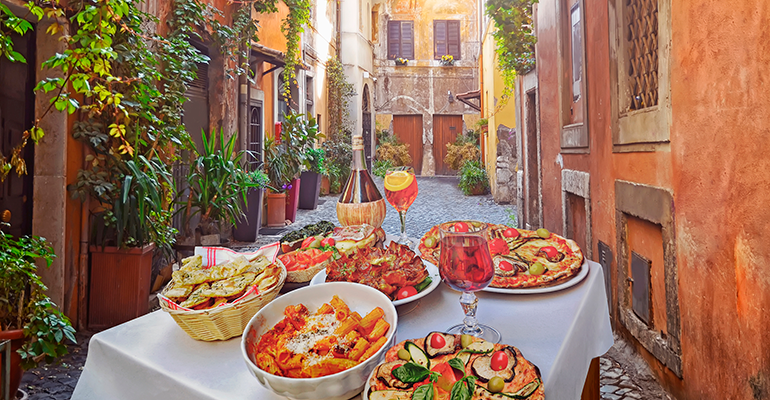
Under further terms of the bill put forward by Prime Minister Giorgia Meloni’s right-wing government, anyone found guilty of breaching the cultivated meat prohibition could face fines of up to €60,000.
During the recent COP28 summit in Dubai, Prime Minister Meloni said: “The promulgation of the law on synthetic food is an achievement that shows how Italy has become a vector, model and political avant-garde.
Italy’s Minister for Agriculture, Francesco Lollobrigada added: “With the decree of the law strongly demanded by the Meloni Government, Italy confirms itself as the first Nation in the world to defend its own agri-food production heritage and the health of its citizens from the risks of synthetic food.”
The EU continues to resist calls to approve cultivated meat
Essentially, the ban looks to safeguard the livelihoods of farmers and the country’s culinary traditions with Italian MPs citing cultivated meat as contributing to “erasing our traditional food system.”
At the time of writing, the EU has not given the novel food regulatory approval, with signs pointing towards the region’s government agencies rejecting the proposal.
News of the ban was also rejected by the Good Food Institute (GFI) Europe, a nonprofit think tank with interests in building a more sustainable food system by encouraging alternative meat production.
“This bill not only deprives consumers of choice but also isolates Italy from the investment and job creation offered by this burgeoning industry,” said Francesca Gallelli, public affairs consultant at GFI Europe.
“The debate surrounding cultivated meat in Italy has been fuelled by misinformation, as hearings in the Senate intentionally excluded cultivated meat companies and supporters while allowing false claims from opponents of this sustainable food.”
Italy’s ban could be in violation of EU law and principles of the single market
Gallelli added that the organisation welcomed the intention of the government to submit the law to EU scrutiny, where member states could voice their concerns about the ban’s potential violation of the single market.
 © iStock/photovideostock
European policy experts have stated that Italy may not be able to enforce a ban on the sale of cultivated meat within the EU region, owing to the common single market that permits the free movement of goods and services.
However, Lollobrigida said he did not expect problems from the EU, which “holds the principle that the identity of peoples must be preserved”.
One prominent supporter of the government’s plans is farmers' association Coldiretti. Its president Ettore Prandini said of the Bill’s passing: “Italy is a world leader in food quality and safety. The country has a duty to lead the way in policies that protect citizens' health.”
Referencing the recent mad cow disease scandal, Prandini pointed out that Italy was the first country to adopt national rules for the obligation to label the origin of food.
“As a result the European Union is progressively aligning itself with the overcoming of doubts and disputes that they are now part of the past," he added.
Is Italy’s cultivated meat ban a step back compared to the rest of Europe?
Italy’s ban on cultivated meat is at odds with other European governments that are eager to promote the benefits of cultivated meat.
In 2022, the Netherlands approved €60m of public funding for research and development of cultivated meat and precision fermentation.
Meanwhile, the UK government has set aside €14m (£12m) for research into alternative proteins that includes cultivated meat, while Denmark recently revealed details of a national plan to support the development and uptake of plant-based meat.
Other countries looking into the benefits of cultivated meat include Spain, which recently invested €5.2m into research looking at the possibilities of cultivated meat in warding off food-related diseases.
In Catalonia, the federal government recently invested €7m in research facilities designed to aid firms scale up the production of plant-based meat and fermentation.

Get more of our news on Google
Set Ingredients Network as a 'Preferred Source' to get quicker access to the news you value.
Related news

Do the US dietary guidelines put UPFs under pressure?
10 Sep 2026
Will the US dietary guidelines change the way Americans eat, swapping ultra-processed foods for whole foods? We asked Dr Barry Popkin, renowned nutrition and obesity researcher.
Read more
Food fraud costs UK economy £2bn each year
9 Sep 2026
Food fraud is costing the UK economy up to £2 billion (€2.3 billion) every year although the food sector is more “resilient” than others, according to a recent study.
Read more
Kellogg accelerates work to remove artificial colours from all US cereals
3 Sep 2026
WK Kellogg has announced an accelerated timeline to eliminate all artificial colours and the chemical preservative, BHT, across its full US portfolio of cereals and cereal packaging.
Read more
Skimpflation: An ‘unfair’ and risky approach to keeping prices low
2 Sep 2026
Consumers see skimpflation – reducing the quality of ingredients due to rising costs – as more unfair than shrinkflation, making it a risky strategy according to recent research.
Read more
‘Urgent gaps’ in achieving 2030 food system goals
27 Aug 2026
Global food systems are failing to meet 2030 targets across indicators including health, environment, and resilience, according to a report co-authored by the Food and Agriculture Organisation (FAO).
Read more
Seven-Eleven uses microbial testing tech to extend katsudon shelf life
26 Aug 2026
Japanese retail company Seven-Eleven has improved its factory’s microbial environment to keep comfort-food staple, katsudon, fresher for longer.
Read more
Chimac’s fusion sauces bring Korean flavours to Europe
25 Aug 2026
Irish sauce brand Chimac is tapping into Korea’s culinary traditions, bringing its flavours and products to European consumers who want a taste of K-food.
Read more
Global demand for instant noodles continues to rise
24 Aug 2026
Global demand for instant noodles reached 124.21 billion servings last year, representing a 0.7% year-on-year increase – or 900 million extra servings.
Read more
China beverages: Is herbal innovation the future?
20 Aug 2026
Herbal and botanical innovation in China's drinks market continues to grow, with ingredients like astragalus root, ginger, and ginseng in the spotlight – and focus shifting far beyond refreshment.
Read more
Popular barbecue staples experience sharp price increases
19 Aug 2026
The typical cost of US shoppers’ barbecue baskets has risen by 12% over the past year – the fastest annual rise in a decade, figures from The Economist show.
Read more