
Ingredients Categories
Finished Products
Finished Food Categories
- Bakery
- Beverages / Juices
- Cereal and grain products
- Confectionery
- Cooking Fats & Oils
- Dairy
- Egg products
- Fruits & Vegetables
- Infant & Baby food
- Meat, Poultry & Fish
- Nuts & Seeds products
- Other Finished Food Categories
- Pet Food
- Plant-based foods
- Prepared foods
- Sauces & Seasonings
- Sweet & Savoury Spreads
Specialised Finished Products
- Bee products
- Biotic products
- Dietary supplements
- Energy drinks
- Functional beverages
- Functional confectionery
- Functional food
- Functional powders
- Meal replacement products
- Nutricosmetics
- Other Specialised Finished Products
- Pet Dietary Supplements
- Pharma and OTC products
- Protein products
- Sugar replacers / Sweeteners
Health & Wellness Areas
Delivery Formats
Operations & Services
- 3D printing
- Analysis/ Testing
- Auditing & certifications
- Blending & mixing
- Bottling
- Certification
- Clinical trials
- Co-packing
- Coating
- Consulting
- Contract manufacturing
- Drying
- Electrospinning
- Encapsulating
- Enzymatic processing
- Extracting
- Extrusion
- Fat structuring
- Fermentation
- Filling
- Flavour development
- Freeze drying
- Granulating/ grinding/ milling / mixing
- High-pressure processing
- Labelling
- Other Operations & Services
- Packaging
- Packet filling
- Pasturising
- Quality assurance
- Saccharification
- Shear cell processing
- Spray drying
- Sterilisation
- Storage & Logistics
- Tabletting
- Toasting / roasting
- Ultra-high temperature processing
News
Marks & Spencer brings ‘brain foods’ to the retail space
Simon Pitman, Freelance Journalist 3 Mar 2025Marks & Spencer is capitalising on increased consumer interest in “brain food” with the launch of a new product range designed to support cognitive health.
The retailer partnered with supplier Wholebake to launch the Brain Ball – which contains freeze-dried blueberries, raspberries, and strawberries, as well as chicory fibre and almonds – with a national TV advertising campaign that ran throughout the UK.
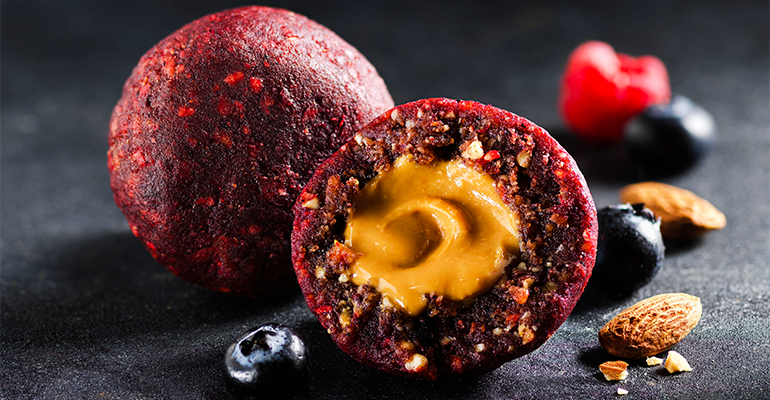
High in zinc and iron, and bearing the retailer’s Eat Well seal, it is the lead product in the retailer’s new Brain Food range.
“The range is likely to appeal to the 40-plus female consumer who is looking to snack more healthily and push back against the effects of ageing. High interest in menopause and self-care – think tracking devices – and the visibility of related social media influencers will continue to engage this audience,” said Dr Carrie Ruxton, dietitian and founder of Nutrition Communications.
M&S Brain Food: A range formulated for optimal cognitive function
The term “brain food” is making waves as consumer awareness rises about the link between nutrition and brain function.
According to Marks & Spencer product developer Martha Coakley, the Brain Ball is the result of an in-depth journey in conjunction with Wholebake to develop a product with the right ingredients to support brain health.
“Alongside other innovative health products, this range offers delicious and convenient ways to support your wellbeing. This collaboration with Wholebake highlights our focus on delivering quality, innovation, and value with local partners,” she said.
The Brain Ball is the hero product of the new 13-strong line-up championing six key areas of nutrition for brain function that are commonly lacking in the average diet. Other products in the range, which was launched last month, include the Blueberry and Walnut Shot, Super Smoothie, Mixed Berry Bar, and Tropical Kefir Shot.
Is Marks & Spencer breaking new ground?
While Ruxton believes that Marks & Spencer is pushing boundaries in the large-scale food retail space, she also believes that more could be done to educate consumers regarding the benefits of the range and how the products work.
“The [Brain Food] range means that consumers can find functional foods on the regular shopping aisle which enables them to be part of the regular shop,” said Ruxton.
However, she said the retailer needed to provide more reasons for consumers to relate to the product line and educate them on why the nutrients they provide are beneficial for brain health.
“I looked for the full nutritional analysis on the M&S website but could not see how much vitamin D, iodine, [vitamin] B12, or omega-3 was present per 100 g – or, more importantly, per serving,” she said.
“I think Marks & Spencer needs to make this information more accessible to consumers and explain how these nutrients help the brain beyond the basic wording of the health claims regulation.”
Making brain health benefits more accessible
Where the new range does break boundaries is by providing specific nutrients for brain health in an easily accessible way, Ruxton argued.
“The innovation for me is making nutrients such as omega-3 (DHA), iron, iodine, folate, zinc, and vitamin B12 more accessible in a palatable, healthy snack format,” she explained. “The nutrients themselves are not innovative, as we’ve known for years that DHA is important for brain function.”
One thing that may present barriers for the brain food category is the fact that UK nutrition and health claims have remained unchanged for decades, with new science and developments having to be grandfathered into the existing claims.
Ruxton believes that this points to the need for a major overhaul so that retailers like Marks & Spencer can make more substantiated claims.
Will so-called ‘brain food’ launches really take off?
While there has been an increase in launch activity for brain foods and associated supplements, Ruxton believes it is not something that is currently on the radar.
That said, Marks & Spencer could be well placed to take advantage if it does develop into something more, she added.
“There was a big trend for omega-3s around 10 to 15 years ago which fizzled out, I think because manufacturers struggled to get DHA into the right kind of products,” she explained. “Marks & Spencer has combined the long-standing trend for snackification with functional ingredients at a price point which suits their consumers.”

Get more of our news on Google
Set Ingredients Network as a 'Preferred Source' to get quicker access to the news you value.
Related news

Do the US dietary guidelines put UPFs under pressure?
10 Sep 2026
Will the US dietary guidelines change the way Americans eat, swapping ultra-processed foods for whole foods? We asked Dr Barry Popkin, renowned nutrition and obesity researcher.
Read more
Food fraud costs UK economy £2bn each year
9 Sep 2026
Food fraud is costing the UK economy up to £2 billion (€2.3 billion) every year although the food sector is more “resilient” than others, according to a recent study.
Read more
Kellogg accelerates work to remove artificial colours from all US cereals
3 Sep 2026
WK Kellogg has announced an accelerated timeline to eliminate all artificial colours and the chemical preservative, BHT, across its full US portfolio of cereals and cereal packaging.
Read more
Skimpflation: An ‘unfair’ and risky approach to keeping prices low
2 Sep 2026
Consumers see skimpflation – reducing the quality of ingredients due to rising costs – as more unfair than shrinkflation, making it a risky strategy according to recent research.
Read more
NielsenIQ’s EU barometer shows Britain leading in grocery inflation
31 Aug 2026
Britain was the only country to record grocery inflation above 2%, according to NielsenIQ data that compared Europe’s five biggest grocery markets from February to May 2026.
Read more
‘Urgent gaps’ in achieving 2030 food system goals
27 Aug 2026
Global food systems are failing to meet 2030 targets across indicators including health, environment, and resilience, according to a report co-authored by the Food and Agriculture Organisation (FAO).
Read more
Chimac’s fusion sauces bring Korean flavours to Europe
25 Aug 2026
Irish sauce brand Chimac is tapping into Korea’s culinary traditions, bringing its flavours and products to European consumers who want a taste of K-food.
Read more
Global demand for instant noodles continues to rise
24 Aug 2026
Global demand for instant noodles reached 124.21 billion servings last year, representing a 0.7% year-on-year increase – or 900 million extra servings.
Read more
Popular barbecue staples experience sharp price increases
19 Aug 2026
The typical cost of US shoppers’ barbecue baskets has risen by 12% over the past year – the fastest annual rise in a decade, figures from The Economist show.
Read more
Hot NPD: Nissin launches first cold-water Cup Noodles
18 Aug 2026
Nissin is taking one of Japan’s most iconic instant meals in a completely new direction with the launch of the first cold water-only Cup Noodles in the brand’s 55-year history.
Read more