
Ingredients Categories
Finished Products
Finished Food Categories
- Bakery
- Beverages / Juices
- Cereal and grain products
- Confectionery
- Cooking Fats & Oils
- Dairy
- Egg products
- Fruits & Vegetables
- Infant & Baby food
- Meat, Poultry & Fish
- Nuts & Seeds products
- Other Finished Food Categories
- Pet Food
- Plant-based foods
- Prepared foods
- Sauces & Seasonings
- Sweet & Savoury Spreads
Specialised Finished Products
- Bee products
- Biotic products
- Dietary supplements
- Energy drinks
- Functional beverages
- Functional confectionery
- Functional food
- Functional powders
- Meal replacement products
- Nutricosmetics
- Other Specialised Finished Products
- Pet Dietary Supplements
- Pharma and OTC products
- Protein products
- Sugar replacers / Sweeteners
Health & Wellness Areas
Delivery Formats
Operations & Services
- 3D printing
- Analysis/ Testing
- Auditing & certifications
- Blending & mixing
- Bottling
- Certification
- Clinical trials
- Co-packing
- Coating
- Consulting
- Contract manufacturing
- Drying
- Electrospinning
- Encapsulating
- Enzymatic processing
- Extracting
- Extrusion
- Fat structuring
- Fermentation
- Filling
- Flavour development
- Freeze drying
- Granulating/ grinding/ milling / mixing
- High-pressure processing
- Labelling
- Other Operations & Services
- Packaging
- Packet filling
- Pasturising
- Quality assurance
- Saccharification
- Shear cell processing
- Spray drying
- Sterilisation
- Storage & Logistics
- Tabletting
- Toasting / roasting
- Ultra-high temperature processing
News
Mondelēz International wants a delay to EU deforestation law
Natasha Spencer-Jolliffe, Freelance Journalist 28 Jul 2025As the leading global confectionery giant calls for a postponement, is the European Union Deforestation Regulation (EUDR) about to be delayed again?
Mondelēz International, the global confectionery and snacks company behind brands like Cadbury, Oreo, and Ritz, is calling for a further extension of the European Union Deforestation Regulation’s (EUDR) implementation date.
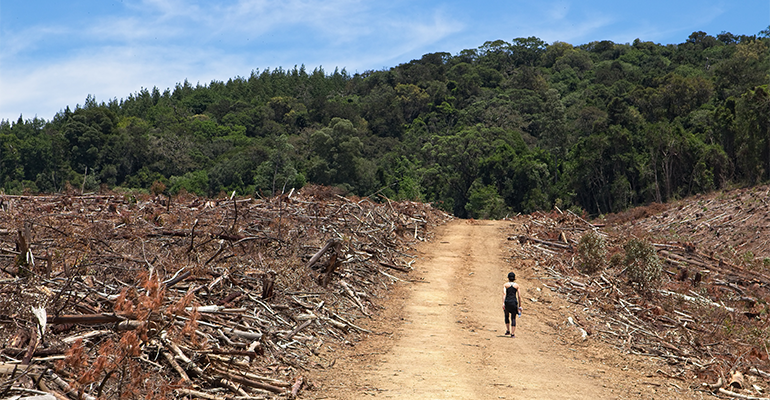
Set for December 2025 for large companies and 2026 for small-to-medium businesses (SMEs), the European Commission has already pushed back the introductory date of the law by a year, from 2024 to 2025, following industry demands for more time for its arrival. Companies producing and using cocoa, coffee, beef, soy, and palm oil (commodities that the EUDR places stipulations on) urged for further clarification on the regulation’s exact requirements to enable them to prepare effectively.
However, Mondelēz’s request for further postponement appears to echo ongoing concerns around the EUDR and its requirements since it was first outlined in 2019 in Commission Communication on Stepping up EU Action to Protect and Restore the World’s Forests.
Countries and companies have urged the Commission for a deeper understanding of the far-reaching implications of the deforestation law.
Cadbury-creating confectioner calls for delay at crunch time
With five months to go until the postponed EUDR implementation date, Mondelēz is urging a further one-year delay to its arrival. Speaking at the European Parliament in June 2025, the company’s vice president of corporate and government affairs for Europe, Massimiliano Di Domenico, called for more time to prepare for the law amid ongoing cocoa supply chain issues and compliance concerns.
Massimiliano Di Domenico affirmed Mondelēz’s backing of the EUDR but said “successful implementation must reflect on-the-ground realities, especially for smallholder farmers in the countries of origin”, posting his comments on LinkedIn.
“The cocoa sector is under huge pressure: soaring prices, declining production, and origin countries still scaling up digital capacity with clear implications for the whole value chain,” Di Domenico added.
Describing its “clear and ambitious objectives” that reflect its full support of the EUDR ambition, Di Domenico referred to Mondelēz’s Snacking Made Right sustainability framework and environmental, social and governance (ESG) targets.
The confectioner has set several goals for 2025 relating to ingredients, packaging, and social impact. It strives to source 100% of cocoa volume for chocolate volume through its Cocoa Life and cover all Cocoa Life communities in West Africa with Child Labour Monitoring and Remediation Systems. Mondelēz also aims to lower virgin plastic by 5%, virgin rigid plastic by 25%, and have at least 98% of its packaging designed to be recyclable by 2025.
Mondelēz stated its calls for a delay to the EUDR’s implementation come amid the challenges the cocoa industry continues to face. “That’s why we are respectfully, transparently and responsibly calling for a 12-month delay—not to dilute ambition, but to enable practical, inclusive, and effective implementation,” said Di Domenico.
The company stated it is adopting this position to enable it to meet the EUDR’s requirements in full. “We cannot afford to compromise long-term sustainability goals with the many short-term implementation gaps and lack of clarity,” Di Domenico added.
Confectioners continue to champion 2025 date
Other cocoa companies are detailing the actions they are taking and continuing to introduce ahead of the EUDR coming into force. A year ago, in July 2024, several other confectionery conglomerates, including Nestlé, Mars Wrigley, and Ferrero, showed their support for the EUDR’s arrival, Reuters reported.
International confectionery company Barry Callebaut has stated its commitment to developing end-to-end traceability ahead of the EUDR. In doing so, it seeks to contribute to achieving a sustainable and traceable cocoa and chocolate supply chain through “best-in-class sustainability”.
Chocolate manufacturer and supplier Luker Chocolate made 100% of its shipments to Europe EUDR-compliant in October 2024. The brand provides verifiable traceability and communicates evidence of zero deforestation or labour rights violations through its LukerTrace system.
Chocolate company Hames Chocolates announced they believe the EUDR’s arrival will result in more robust sourcing standards, elevated costs and compliance burdens, but also market opportunities and collaboration. Stating its commitment to sustainable sourcing, it has noted the SME’s deadline to be compliant with EUDR of 30th June 2026, stating “our supply chain expects to be ready for EUDR before this time”.

Get more of our news on Google
Set Ingredients Network as a 'Preferred Source' to get quicker access to the news you value.
Related news

Do the US dietary guidelines put UPFs under pressure?
10 Sep 2026
Will the US dietary guidelines change the way Americans eat, swapping ultra-processed foods for whole foods? We asked Dr Barry Popkin, renowned nutrition and obesity researcher.
Read more
Food fraud costs UK economy £2bn each year
9 Sep 2026
Food fraud is costing the UK economy up to £2 billion (€2.3 billion) every year although the food sector is more “resilient” than others, according to a recent study.
Read more
Kellogg accelerates work to remove artificial colours from all US cereals
3 Sep 2026
WK Kellogg has announced an accelerated timeline to eliminate all artificial colours and the chemical preservative, BHT, across its full US portfolio of cereals and cereal packaging.
Read more
Skimpflation: An ‘unfair’ and risky approach to keeping prices low
2 Sep 2026
Consumers see skimpflation – reducing the quality of ingredients due to rising costs – as more unfair than shrinkflation, making it a risky strategy according to recent research.
Read more
NielsenIQ’s EU barometer shows Britain leading in grocery inflation
31 Aug 2026
Britain was the only country to record grocery inflation above 2%, according to NielsenIQ data that compared Europe’s five biggest grocery markets from February to May 2026.
Read more
‘Urgent gaps’ in achieving 2030 food system goals
27 Aug 2026
Global food systems are failing to meet 2030 targets across indicators including health, environment, and resilience, according to a report co-authored by the Food and Agriculture Organisation (FAO).
Read more
Chimac’s fusion sauces bring Korean flavours to Europe
25 Aug 2026
Irish sauce brand Chimac is tapping into Korea’s culinary traditions, bringing its flavours and products to European consumers who want a taste of K-food.
Read more
Global demand for instant noodles continues to rise
24 Aug 2026
Global demand for instant noodles reached 124.21 billion servings last year, representing a 0.7% year-on-year increase – or 900 million extra servings.
Read more
Popular barbecue staples experience sharp price increases
19 Aug 2026
The typical cost of US shoppers’ barbecue baskets has risen by 12% over the past year – the fastest annual rise in a decade, figures from The Economist show.
Read more
Hot NPD: Nissin launches first cold-water Cup Noodles
18 Aug 2026
Nissin is taking one of Japan’s most iconic instant meals in a completely new direction with the launch of the first cold water-only Cup Noodles in the brand’s 55-year history.
Read more