
Ingredients Categories
Finished Products
Finished Food Categories
- Bakery
- Beverages / Juices
- Cereal and grain products
- Confectionery
- Cooking Fats & Oils
- Dairy
- Egg products
- Fruits & Vegetables
- Infant & Baby food
- Meat, Poultry & Fish
- Nuts & Seeds products
- Other Finished Food Categories
- Pet Food
- Plant-based foods
- Prepared foods
- Sauces & Seasonings
- Sweet & Savoury Spreads
Specialised Finished Products
- Bee products
- Biotic products
- Dietary supplements
- Energy drinks
- Functional beverages
- Functional confectionery
- Functional food
- Functional powders
- Meal replacement products
- Nutricosmetics
- Other Specialised Finished Products
- Pet Dietary Supplements
- Pharma and OTC products
- Protein products
- Sugar replacers / Sweeteners
Health & Wellness Areas
Delivery Formats
Operations & Services
- 3D printing
- Analysis/ Testing
- Auditing & certifications
- Blending & mixing
- Bottling
- Certification
- Clinical trials
- Co-packing
- Coating
- Consulting
- Contract manufacturing
- Drying
- Electrospinning
- Encapsulating
- Enzymatic processing
- Extracting
- Extrusion
- Fat structuring
- Fermentation
- Filling
- Flavour development
- Freeze drying
- Granulating/ grinding/ milling / mixing
- High-pressure processing
- Labelling
- Other Operations & Services
- Packaging
- Packet filling
- Pasturising
- Quality assurance
- Saccharification
- Shear cell processing
- Spray drying
- Sterilisation
- Storage & Logistics
- Tabletting
- Toasting / roasting
- Ultra-high temperature processing
News
Notpla's seaweed-based solution sets a new standard for eco-friendly packaging
Tessa Wiles, Content Editor - Food 6 Dec 2023
Notpla’s seaweed-based packaging has become the first material to be recognised by the Dutch government as plastic-free under the European Single Use Plastics Directive, reducing reliance on traditional plastics, and promoting sustainability amid upcoming bans and taxes on disposable plastic food packaging across Europe.
This achievement follows a nine-month verification process overseen by the Dutch government, which scrutinised thousands of products. The Dutch environmental authority, ILT, took a comprehensive approach, which involved the inclusion of technologies claiming to be "plastic-free," such as aqueous dispersion coating, in its classification of plastics.

Notpla, a London-based startup that makes plastic alternative packaging from seaweed, was confirmed as fully compliant with the European Single Use Plastics Directive (SUPD), which was introduced in 2021. Notpla’s natural polymer without chemical modifications aligns with the Netherlands' strict stance on enforcing the directive, which includes a recently introduced tax on disposable cups and containers that contain plastic.
Ingredients Network spoke with Paul Foulkes-Arellano, founder of Circuthon Consulting, which focuses on circular innovation and sustainability. When asked about the importance of Notpla's achievement, Foulkes-Arellano said: "It’s particularly significant as it’s not something you can buy and pay a subscription for. Most of these certifications come from profit-making companies who are interested in selling as many subscriptions as possible."
Notpla's sustainable approach
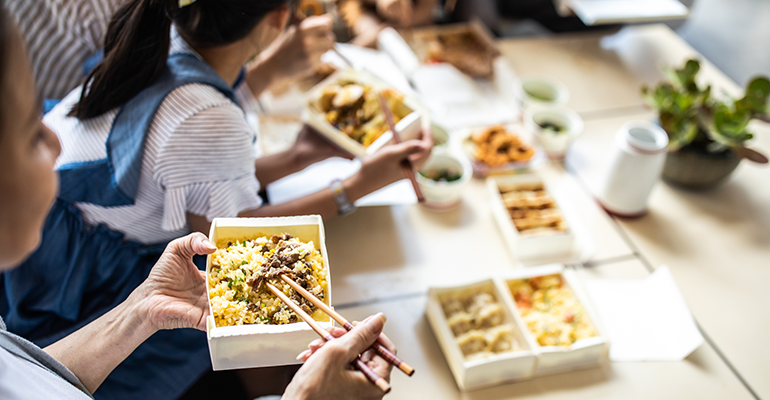
Notpla's packaging uses seaweed, which is abundantly available, growing quickly without the need for freshwater, land or fertiliser. Unlike conventional containers and bioplastic alternatives that often incorporate fossil-based coatings, Notpla's packaging requires no chemical modifications or petrol-based coatings. Made from kraft cardboard and 100% natural seaweed coating, it can be recycled with existing paper streams or composted at home, leaving no trace behind- similar to the natural decomposition of fruit waste.
The potential environmental impact of Notpla is substantial, with the Netherlands discarding 19 million plastic cups and food packaging pieces daily, according to the former state secretary for environment, Vivianne Heijnen. In a press release, Notpla said that its packaging has the potential to prevent a minimum of 15 million single-use plastic packaging units from being produced in the Netherlands alone.
 © iStock/miodrag ignjatovic
This is particularly significant given the surge in single-use plastic food containers during the Covid-19 pandemic, which saw restaurants shifting to take-away and food deliveries. This resulted in a remarkable global increase of over 75% in gross merchandise volume for most major food delivery services in 2020. Adding to this impact, Statistica's data reveals that the number of users of online meal delivery services reached 1.9 billion in 2023, marking an increase of over 200 million from the previous year. Projections suggest that by 2027, users are expected to reach around 2.4 billion, highlighting the sustained growth in online meal delivery services.
The future of sustainable packaging
Notpla’s seaweed-based packaging offers SUPD compliance assurance, exempting it from upcoming bans and taxes on disposable plastic food packaging across Europe. Businesses in the Netherlands adopting Notpla's packaging may find relief from the plastic tax introduced by the Dutch government. Additionally, with the Single-Use Plastic Ban in England now in effect, Notpla's success may be a milestone in the future of sustainable packaging.
When asked about the impact on the broader narrative around sustainability and combating single-use plastics, Foulkes-Arellano stated: "National recognition is a 'gold standard.' If governments take a more active role in scientifically determining what is correct and what is mere greenwash, then we will make good progress towards a less polluted world. Northern Europe is the global apex of good practice. Every nation in the world looks to the EU and Northern Europe for the bases for their own legislation."
In response to this achievement, Notpla has entered a strategic partnership with Dutch manufacturer Conpax to distribute plastic-free food packaging throughout the BENELUX regions (Belgium, the Netherlands, and Luxembourg).
Notably, food delivery companies are also embracing Notpla. Thuisbezorgd, a Dutch food delivery service, recently partnered with Notpla, advertising exclusive kraft boxes with seaweed lining for restaurants. This aligns with the growing trend of consumers seeking environmentally conscious choices in their food packaging: 48% of customers avoid providers who are not actively trying to reduce their use of non-recyclable plastic packaging, according to the European Packaging Preferences 2020 report, produced by Two Sides.

Get more of our news on Google
Set Ingredients Network as a 'Preferred Source' to get quicker access to the news you value.
Related news
Do the US dietary guidelines put UPFs under pressure?
10 Sep 2026
Will the US dietary guidelines change the way Americans eat, swapping ultra-processed foods for whole foods? We asked Dr Barry Popkin, renowned nutrition and obesity researcher.
Read more
Food fraud costs UK economy £2bn each year
9 Sep 2026
Food fraud is costing the UK economy up to £2 billion (€2.3 billion) every year although the food sector is more “resilient” than others, according to a recent study.
Read more
Health and wellness engagement matures across Middle East and Africa
4 Sep 2026
Many consumers in the Middle East and Africa are now proactively engaged in health and wellness, looking to integrate better habits and products into their daily lives, say experts.
Read more
Kellogg accelerates work to remove artificial colours from all US cereals
3 Sep 2026
WK Kellogg has announced an accelerated timeline to eliminate all artificial colours and the chemical preservative, BHT, across its full US portfolio of cereals and cereal packaging.
Read more
Skimpflation: An ‘unfair’ and risky approach to keeping prices low
2 Sep 2026
Consumers see skimpflation – reducing the quality of ingredients due to rising costs – as more unfair than shrinkflation, making it a risky strategy according to recent research.
Read more
‘Urgent gaps’ in achieving 2030 food system goals
27 Aug 2026
Global food systems are failing to meet 2030 targets across indicators including health, environment, and resilience, according to a report co-authored by the Food and Agriculture Organisation (FAO).
Read more
Global demand for instant noodles continues to rise
24 Aug 2026
Global demand for instant noodles reached 124.21 billion servings last year, representing a 0.7% year-on-year increase – or 900 million extra servings.
Read more
Savoury protein snacks shake up the on-the-go market
10 Aug 2026
Sweet flavours have dominated the high-protein snack category but savoury snacks, such as cheese bars and meat sticks, can appeal to health-conscious consumers.
Read more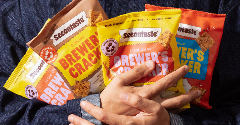
How Secon Taste is putting upcycled snacks on shelves
4 Aug 2026
Hungarian zero-waste startup Secon Taste is turning surplus food into upcycled snacks such as fibre-packed granola, instant porridge, and a circular coffee-tasting box.
Read more
EU sets maximum MOAH levels to protect human health
28 Jul 2026
The EU will adopt maximum levels for mineral oil aromatic hydrocarbons (MOAH) in food to protect human health. What do manufacturers need to know?
Read more