
Ingredients Categories
Finished Products
Finished Food Categories
- Bakery
- Beverages / Juices
- Cereal and grain products
- Confectionery
- Cooking Fats & Oils
- Dairy
- Egg products
- Fruits & Vegetables
- Infant & Baby food
- Meat, Poultry & Fish
- Nuts & Seeds products
- Other Finished Food Categories
- Pet Food
- Plant-based foods
- Prepared foods
- Sauces & Seasonings
- Sweet & Savoury Spreads
Specialised Finished Products
- Bee products
- Biotic products
- Dietary supplements
- Energy drinks
- Functional beverages
- Functional confectionery
- Functional food
- Functional powders
- Meal replacement products
- Nutricosmetics
- Other Specialised Finished Products
- Pet Dietary Supplements
- Pharma and OTC products
- Protein products
- Sugar replacers / Sweeteners
Health & Wellness Areas
Delivery Formats
Operations & Services
- 3D printing
- Analysis/ Testing
- Auditing & certifications
- Blending & mixing
- Bottling
- Certification
- Clinical trials
- Co-packing
- Coating
- Consulting
- Contract manufacturing
- Drying
- Electrospinning
- Encapsulating
- Enzymatic processing
- Extracting
- Extrusion
- Fat structuring
- Fermentation
- Filling
- Flavour development
- Freeze drying
- Granulating/ grinding/ milling / mixing
- High-pressure processing
- Labelling
- Other Operations & Services
- Packaging
- Packet filling
- Pasturising
- Quality assurance
- Saccharification
- Shear cell processing
- Spray drying
- Sterilisation
- Storage & Logistics
- Tabletting
- Toasting / roasting
- Ultra-high temperature processing
News
Novel food safety platform could eliminate animal testing
Natasha Mentink, Freelance Journalist 21 Dec 2023
The European Food Safety Authority (EFSA) has introduced a new platform that has the potential to eliminate animal testing in the food industry.
Traditionally, safety assessments for food and feed chemicals have relied on animal testing-based evidence. However, there is growing concern about this practice's ethical implications and scientific validity.
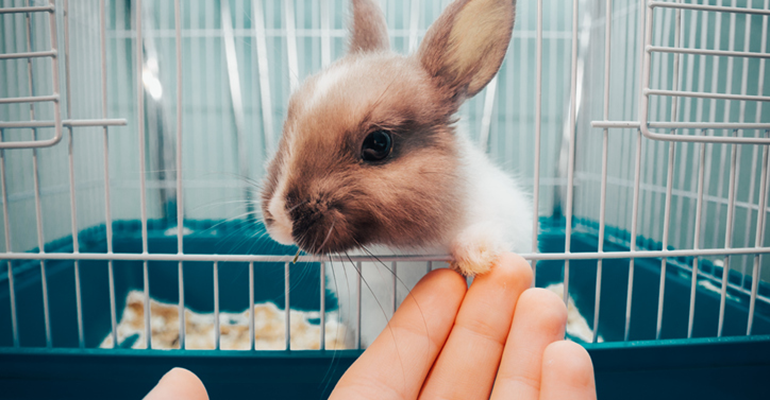
Scientists and society as a whole are increasingly calling for food production to be safe without the use of animal testing. Not only does this aim to reduce animal suffering, but it also acknowledges that mice and other test animals may not accurately represent humans.
EFSA’s platform, known as TKPlate, offers a new method to model and predict the toxicity of chemicals, potentially eliminating the need for animal testing.
"Society and scientists want food, feed, and the environment to be safe from chemical harm without using animal testing, not only to reduce animal suffering but also because mice and other test animals are not the same as humans," said a spokesperson for EFSA.
The Parma-based authority has supported risk assessment approaches that minimise animal testing and promote alternative methods, including lab tests and computer simulations.
Mimic the information received from animal testing without using animals
The food industry now stands on the brink of a significant shift with the introduction of TKPlate. The tool offers an alternative approach to animal testing by delivering more accurate information on toxicokinetics (TK)—how the body processes chemicals—and toxicodynamics (TD)—the effects chemicals have on the body.
By harnessing this technology, food businesses can obtain higher-quality data for risk assessment while concurrently reducing their reliance on animal testing. The introduction of TKPlate aligns with the efforts to promote the 3Rs of animal testing: replace, reduce, and refine.
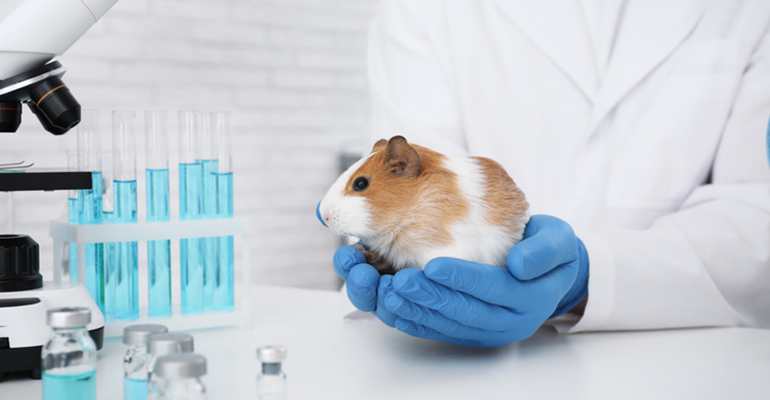
Aside from offering a more ethical approach, TKPlate also has practical benefits. Traditional animal tests can take upwards of 90 days, with additional time needed for preparation and analysis. In contrast, TKPlate enables assessors to produce preliminary evaluations in minutes. The platform can also handle assessments for chemical mixtures, which are typically more challenging to do in an experiment and require more animals.
 © iStock/Liudmila Chernetska
“Increasingly, tools like TKPlate will be able to mimic these chemical and biological processes as well as—perhaps in some cases even better than—experiments on mice, rats or other test animals,” a spokesperson for EFSA told Ingredients Network. As a result, this will produce more robust and reliable data for risk assessment in the long run.
The models and the platform have already been tested and validated with several datasets, including more than 30 compounds for some species. “We have already started projects to develop TKPlate further and produce more models for version 2.0," said the spokesperson. "These will aim to increase the input data behind the models and the number of species to produce even more accurate and reliable results,” EFSA's spokesperson added.
Providing safety assurance
By employing this new approach, the food industry can reduce the necessity for further experiments on animals. TKPlate's interface allows risk assessors and toxicologists to model TK and TD processes for all species included. Users can run the models and obtain concentrations and predicted effects by selecting the species, chemicals, and exposure parameters, eliminating the need for new experiments and reducing reliance on animal data.
As TKPlate continues to undergo testing and validation for various chemicals, EFSA is also working to determine how it can be applied in specific risk assessments. The open-source platform enables scientists and risk assessors to access and utilise it as needed. EFSA is guiding its user guide and case studies, with plans to release more examples in the future.
Legal limitations restrict widespread use
Despite the advancements, some areas of European law related to the food and feed chain still require animal study results for market authorisation procedures. Therefore, EFSA advocates for TKPlate to be used as a complementary source of evidence rather than an outright replacement, at least for the time being.
Some areas of European law relating to the food and feed chain, especially related to market authorisation procedures for regulated products like pesticides, food additives, or novel foods, specifically require the submission of results from animal studies, the EFSA stated. "To do this differently means changing the law, which is out of EFSA's hands," the spokesperson said.
Although it may be premature to expect a global shift, the progress made by EFSA with TKPlate is a promising step towards reducing animal testing in food safety assessments. While the worldwide impact of animal-free testing is yet to be widespread, discussions are growing, with TKPlate being a topic of interest at the 13th Global Summit on Regulatory Science.
 © iStock/vadimrysev
While TKPlate is being tested and validated for various chemicals, its implementation in risk assessments will be assessed on a case-by-case basis. EFSA acknowledges that different countries and regions have regulatory frameworks and data requirements. TKPlate has the potential to provide valuable information on kinetics and dynamics without the need for testing, allowing for the extrapolation of in vitro data to in vivo situations.
“We'll implement the use of TKPlate as a complementary source of evidence generated within minutes alongside animal data, for example, to predict the elimination or persistence of chemicals and support the validation of conclusions when data is lacking,” the spokesperson said.
The potential for an animal-free testing future is stirring excitement and ethical considerations across the food industry. As regulatory bodies and scientists collaborate and share knowledge, the food industry could soon see a new era where animal experiments become a rarity rather than the norm.

Get more of our news on Google
Set Ingredients Network as a 'Preferred Source' to get quicker access to the news you value.
Related news

Do the US dietary guidelines put UPFs under pressure?
10 Sep 2026
Will the US dietary guidelines change the way Americans eat, swapping ultra-processed foods for whole foods? We asked Dr Barry Popkin, renowned nutrition and obesity researcher.
Read more
Food fraud costs UK economy £2bn each year
9 Sep 2026
Food fraud is costing the UK economy up to £2 billion (€2.3 billion) every year although the food sector is more “resilient” than others, according to a recent study.
Read more
Kellogg accelerates work to remove artificial colours from all US cereals
3 Sep 2026
WK Kellogg has announced an accelerated timeline to eliminate all artificial colours and the chemical preservative, BHT, across its full US portfolio of cereals and cereal packaging.
Read more
Skimpflation: An ‘unfair’ and risky approach to keeping prices low
2 Sep 2026
Consumers see skimpflation – reducing the quality of ingredients due to rising costs – as more unfair than shrinkflation, making it a risky strategy according to recent research.
Read more
‘Urgent gaps’ in achieving 2030 food system goals
27 Aug 2026
Global food systems are failing to meet 2030 targets across indicators including health, environment, and resilience, according to a report co-authored by the Food and Agriculture Organisation (FAO).
Read more
Seven-Eleven uses microbial testing tech to extend katsudon shelf life
26 Aug 2026
Japanese retail company Seven-Eleven has improved its factory’s microbial environment to keep comfort-food staple, katsudon, fresher for longer.
Read more
Chimac’s fusion sauces bring Korean flavours to Europe
25 Aug 2026
Irish sauce brand Chimac is tapping into Korea’s culinary traditions, bringing its flavours and products to European consumers who want a taste of K-food.
Read more
Global demand for instant noodles continues to rise
24 Aug 2026
Global demand for instant noodles reached 124.21 billion servings last year, representing a 0.7% year-on-year increase – or 900 million extra servings.
Read more
China beverages: Is herbal innovation the future?
20 Aug 2026
Herbal and botanical innovation in China's drinks market continues to grow, with ingredients like astragalus root, ginger, and ginseng in the spotlight – and focus shifting far beyond refreshment.
Read more
Popular barbecue staples experience sharp price increases
19 Aug 2026
The typical cost of US shoppers’ barbecue baskets has risen by 12% over the past year – the fastest annual rise in a decade, figures from The Economist show.
Read more