
Ingredients Categories
Finished Products
Finished Food Categories
- Bakery
- Beverages / Juices
- Cereal and grain products
- Confectionery
- Cooking Fats & Oils
- Dairy
- Egg products
- Fruits & Vegetables
- Infant & Baby food
- Meat, Poultry & Fish
- Nuts & Seeds products
- Other Finished Food Categories
- Pet Food
- Plant-based foods
- Prepared foods
- Sauces & Seasonings
- Sweet & Savoury Spreads
Specialised Finished Products
- Bee products
- Biotic products
- Dietary supplements
- Energy drinks
- Functional beverages
- Functional confectionery
- Functional food
- Functional powders
- Meal replacement products
- Nutricosmetics
- Other Specialised Finished Products
- Pet Dietary Supplements
- Pharma and OTC products
- Protein products
- Sugar replacers / Sweeteners
Health & Wellness Areas
Delivery Formats
Operations & Services
- 3D printing
- Analysis/ Testing
- Auditing & certifications
- Blending & mixing
- Bottling
- Certification
- Clinical trials
- Co-packing
- Coating
- Consulting
- Contract manufacturing
- Drying
- Electrospinning
- Encapsulating
- Enzymatic processing
- Extracting
- Extrusion
- Fat structuring
- Fermentation
- Filling
- Flavour development
- Freeze drying
- Granulating/ grinding/ milling / mixing
- High-pressure processing
- Labelling
- Other Operations & Services
- Packaging
- Packet filling
- Pasturising
- Quality assurance
- Saccharification
- Shear cell processing
- Spray drying
- Sterilisation
- Storage & Logistics
- Tabletting
- Toasting / roasting
- Ultra-high temperature processing
News
Partnership plans to scale cultivated meat production
Natasha Spencer-Jolliffe, Freelance Journalist 21 Mar 2025Food technology innovator Ever After Foods (EAF) and multinational food leader Bühler are striving to overcome hurdles to access and accelerate the development of cultivated meat.
On 19 February 2025, foodtech innovator and cultivated meat producer Ever After Foods (EAF) and global food and feed industry leader Bühler announced their cultivated meat collaboration to progress and scale efficient and high-yield production for the global food manufacturing industry.
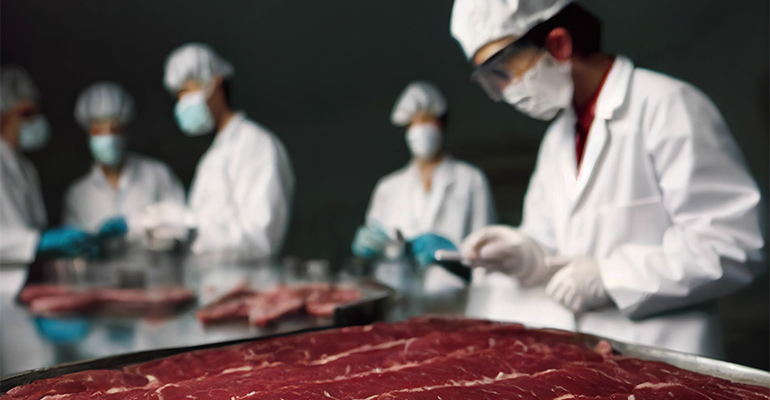
EAF and Bühler have teamed up to address the significant challenges in the global food chain, particularly the need to feed a growing population sustainably. The partnership plans to develop and introduce a commercial-scale cultivated meat production system.
“Scaling cultivated meat production and distribution is essential to provide a reliable and sustainable source of protein,” Eyal Rosenthal, CEO of EAF, told Ingredients Network. The duo believes this is crucial for meeting the protein demands of a growing global population while minimising resource use and environmental impact.
“Cultivated meat can be produced locally in urban areas, reducing reliance on long global supply chains and improving food security,” said Rosenthal.
Using innovative tech to develop cultivated meat
Technological advancement is at the centre of the duo’s joint commercial activities. The duo aims to bring commercially cultivated meat production to market at a ten-fold lower scale than existing market technologies.
Bühler seeks to produce and develop equipment to provide market-ready, sustainable, healthy, and affordable cellular products using biotechnology capabilities. EAF will utilise its patented production system, a proprietary edible packed-bed (EPB) technology platform, to develop cultivated meat production at scale.
The pair’s efforts strive to help the cultivated meat sector keep pace with the increasing global population’s growing protein demands.
“The global food chain faces significant challenges if we are to successfully and sustainably feed our growing population,” said Ian Roberts, CTO at Bühler. “How we produce and consume protein will continue to change, and our protein system must transition to deliver this,” Roberts added.
Replicating favourable meat properties, at scale
Combining food production and technology, EAF said that cultivated meat producers can lower production costs by over 90% while achieving production efficiency and gaining biological advantages, including enhanced nutritional value and superior flavour.
To date, EAF has deployed its technology to prompt the natural production of muscle and fat tissues for beef, chicken, duck, and fish cells. Utilising its patented system to maximise the sensorial experience of eating cultivated meat, EAF seeks to replicate conventional animal-derived meat in taste, texture, and overall enjoyment.
“Existing equipment and solutions from the biotechnology and pharmaceutical industries are not suitable for the food industry and cannot scale to meet the demands of cultivated meat production,” Rosenthal explained.
Gaining consumer approval
Overcoming regulatory and consumer acceptance obstacles will be key to the success of cultivated meat. “However, the main challenge for cultivated meat is the difficulty of scaling current technologies to achieve positive unit economics,” said Rosenthal.
The primary barrier to scaling cultivated meat production is the reliance on equipment and technologies adapted from the pharmaceutical industry, which are unsuitable for the cultivated meat industry. Mammalian cells are not well-suited to grow in large, stirred tanks, as they cannot survive the high mechanical stress imposed on them. To properly grow tissues, these cells require a solid environment mimicking natural growth conditions with very low mechanical stress.
“Due to the inefficient, high-stress environment of standard stirred-tank technologies, the cultured output is only around 2-4% of the working volume,” Rosenthal said.
For example, only around 4-8 kilograms of cultivated mass can be produced from a 200-litre reactor. “These limitations have hindered cultivated meat companies from scaling up to reactors with capacities of thousands of litres, which would be massive but necessary for profitable production,” Rosenthal added. Additionally, high equipment costs and long, unpredictable research and development timelines have made scaling up expensive and challenging to fund.
Instead of the 2-4% output typical of conventional methods, EAF’s technology and bioreactor system provide a low-stress environment to help achieve more than 40% cultivated mass per working volume. For instance, a 200L reactor can produce over 80kg of cultivated meat.
“This efficiency means we require up to 20 times lower scale to achieve the same output, significantly reducing development time, capital expenditures, and the amount and cost of growth medium needed,” Rosenthal said.

Get more of our news on Google
Set Ingredients Network as a 'Preferred Source' to get quicker access to the news you value.
Related news

Do the US dietary guidelines put UPFs under pressure?
10 Sep 2026
Will the US dietary guidelines change the way Americans eat, swapping ultra-processed foods for whole foods? We asked Dr Barry Popkin, renowned nutrition and obesity researcher.
Read more
Skimpflation: An ‘unfair’ and risky approach to keeping prices low
2 Sep 2026
Consumers see skimpflation – reducing the quality of ingredients due to rising costs – as more unfair than shrinkflation, making it a risky strategy according to recent research.
Read more
‘Urgent gaps’ in achieving 2030 food system goals
27 Aug 2026
Global food systems are failing to meet 2030 targets across indicators including health, environment, and resilience, according to a report co-authored by the Food and Agriculture Organisation (FAO).
Read more
Seven-Eleven uses microbial testing tech to extend katsudon shelf life
26 Aug 2026
Japanese retail company Seven-Eleven has improved its factory’s microbial environment to keep comfort-food staple, katsudon, fresher for longer.
Read more
Chimac’s fusion sauces bring Korean flavours to Europe
25 Aug 2026
Irish sauce brand Chimac is tapping into Korea’s culinary traditions, bringing its flavours and products to European consumers who want a taste of K-food.
Read more
Global demand for instant noodles continues to rise
24 Aug 2026
Global demand for instant noodles reached 124.21 billion servings last year, representing a 0.7% year-on-year increase – or 900 million extra servings.
Read more
China beverages: Is herbal innovation the future?
20 Aug 2026
Herbal and botanical innovation in China's drinks market continues to grow, with ingredients like astragalus root, ginger, and ginseng in the spotlight – and focus shifting far beyond refreshment.
Read more
Popular barbecue staples experience sharp price increases
19 Aug 2026
The typical cost of US shoppers’ barbecue baskets has risen by 12% over the past year – the fastest annual rise in a decade, figures from The Economist show.
Read more
Hot NPD: Nissin launches first cold-water Cup Noodles
18 Aug 2026
Nissin is taking one of Japan’s most iconic instant meals in a completely new direction with the launch of the first cold water-only Cup Noodles in the brand’s 55-year history.
Read more
Manam Chocolate aims to bring premium Indian cacao to 'the world stage'
11 Aug 2026
Craft chocolate brand Manam Chocolate is investing in local expansion and supply chain innovation throughout India as it works to build out the premium reputation of its locally produced cacao products.
Read more