
Ingredients Categories
Finished Products
Finished Food Categories
- Bakery
- Beverages / Juices
- Cereal and grain products
- Confectionery
- Cooking Fats & Oils
- Dairy
- Egg products
- Fruits & Vegetables
- Infant & Baby food
- Meat, Poultry & Fish
- Nuts & Seeds products
- Other Finished Food Categories
- Pet Food
- Plant-based foods
- Prepared foods
- Sauces & Seasonings
- Sweet & Savoury Spreads
Specialised Finished Products
- Bee products
- Biotic products
- Dietary supplements
- Energy drinks
- Functional beverages
- Functional confectionery
- Functional food
- Functional powders
- Meal replacement products
- Nutricosmetics
- Other Specialised Finished Products
- Pet Dietary Supplements
- Pharma and OTC products
- Protein products
- Sugar replacers / Sweeteners
Health & Wellness Areas
Delivery Formats
Operations & Services
- 3D printing
- Analysis/ Testing
- Auditing & certifications
- Blending & mixing
- Bottling
- Certification
- Clinical trials
- Co-packing
- Coating
- Consulting
- Contract manufacturing
- Drying
- Electrospinning
- Encapsulating
- Enzymatic processing
- Extracting
- Extrusion
- Fat structuring
- Fermentation
- Filling
- Flavour development
- Freeze drying
- Granulating/ grinding/ milling / mixing
- High-pressure processing
- Labelling
- Other Operations & Services
- Packaging
- Packet filling
- Pasturising
- Quality assurance
- Saccharification
- Shear cell processing
- Spray drying
- Sterilisation
- Storage & Logistics
- Tabletting
- Toasting / roasting
- Ultra-high temperature processing
News
Tantrums and treats: Baby food manufacturers given 18 months to cut sugar and salt
David Burrows, Freelance Journalist 27 Aug 2025UK baby food manufacturers have been given 18 months to cut sugar and salt levels in their products, as well as tackle “misleading labelling” that “conflicts with official feeding advice”.
The UK Government’s new guidelines for commercial baby food – which apply to children up to 36 months – prompted some critics to throw their toys out of the pram.

“We risk demonising good in the impossible pursuit of perfection,” said Claire Baseley, a freelance nutritionist who has worked for the industry for 17 years.
Meanwhile, brands such as Ella’s Kitchen questioned whether some of their products will be captured under the new voluntary guidelines.
Cut out sugar, salt, and misleading marketing, manufacturers told
Research published in April by the University of Leeds claimed that the UK’s baby food market is “awash with ‘low-quality’ products with poor nutrition masked by misleading names and on-pack messaging”.
Baby food businesses have now been challenged by the UK Government to change the recipes for their products to reduce levels of salt and sugar without the use of sweeteners (which are not permitted for use in commercial baby food).
The guidelines will also tackle what is referred to as “misleading labelling” that “often conflicts with official feeding advice”. For example, some products labelled as snacks for babies from seven months onwards directly contradict government recommendations that children aged six to 12 months do not need snacks between meals – only milk.
A public relations firm representing Ella’s Kitchen told the BBC that products like its Carrot and Parsnip Melty Puffs and Tomato and Basil Melty Sticks are intended to be part of a meal, despite being marketed in the “finger foods” section of the company’s website and as “snacks” on supermarket websites.
Ali Morpeth, a registered nutritionist and co-founder of the consultancy Planeatry Alliance, said one of “the most positive steps in the guidance is the identification of confectionery”.
The government’s note reads: “Some of the bestselling baby finger food products, often marketed as snacks, can be as high in sugar as standard confectionery products.”
So, for baby finger foods and snacks: “Products that contain high levels of sugar, and are not able to be reformulated, should be considered more like confectionery. These are not appropriate for children aged up to 36 months.”
Manufacturers will also be told to cease using misleading marketing claims that make products appear healthier than they are – for example, products with labels such as “contains no nasties” – when products may be high in sugar.
Hannah Brisden, head of policy and advocacy at the Food Foundation, a charity that promotes solutions to achieve a sustainable food system, said: “Today’s announcement on commercial baby foods highlights the need to protect families from aggressive marketing and end misleading claims on sugary products.
“Our research found up to 43 claims on a single baby snack, despite many being high in sugar.”
Sugar and salt guidelines could act as a barrier to fruit and veg consumption
Others warned that the guidelines risked demonising certain food groups, and could result in young children struggling to eat enough fruit and veg.
“I do get the call for a restriction on marketing claims, but I struggle to accept the message that puréed fruit, that’s the same nutritional composition as the same recipe made at home, is something inherently bad, akin to a can of Coke,” said Baseley. “We need to be very careful how we talk to consumers.”
Some experts noted that the regulations around labelling are not fit for purpose or properly policed.
The industry’s progress towards implementing the sugar and salt guidelines will be monitored by the UK Government, with a progress report expected sometime after February 2027. The metrics used for tracking progress have not yet been finalised.
Data from the UK’s National Diet and Nutrition Survey, published in June, shows that more than two-thirds of children aged 18 months to three years are eating too much sugar, while more than one-fifth of children aged four to five years are overweight or living with obesity in England.

Get more of our news on Google
Set Ingredients Network as a 'Preferred Source' to get quicker access to the news you value.
Related news

M&S launches own-brand pet food range
11 Sep 2026
UK retailer Marks & Spencer has launched its own-brand pet food line Paws & Pals – a well-timed and strategic move that will appeal to loyal shoppers, says a marketing expert.
Read more
Do the US dietary guidelines put UPFs under pressure?
10 Sep 2026
Will the US dietary guidelines change the way Americans eat, swapping ultra-processed foods for whole foods? We asked Dr Barry Popkin, renowned nutrition and obesity researcher.
Read more
Food fraud costs UK economy £2bn each year
9 Sep 2026
Food fraud is costing the UK economy up to £2 billion (€2.3 billion) every year although the food sector is more “resilient” than others, according to a recent study.
Read more
Kellogg accelerates work to remove artificial colours from all US cereals
3 Sep 2026
WK Kellogg has announced an accelerated timeline to eliminate all artificial colours and the chemical preservative, BHT, across its full US portfolio of cereals and cereal packaging.
Read more
‘Urgent gaps’ in achieving 2030 food system goals
27 Aug 2026
Global food systems are failing to meet 2030 targets across indicators including health, environment, and resilience, according to a report co-authored by the Food and Agriculture Organisation (FAO).
Read more
Chimac’s fusion sauces bring Korean flavours to Europe
25 Aug 2026
Irish sauce brand Chimac is tapping into Korea’s culinary traditions, bringing its flavours and products to European consumers who want a taste of K-food.
Read more
Savoury protein snacks shake up the on-the-go market
10 Aug 2026
Sweet flavours have dominated the high-protein snack category but savoury snacks, such as cheese bars and meat sticks, can appeal to health-conscious consumers.
Read more
Nestlé invests in regeneratively farmed wheat for KitKat
5 Aug 2026
Nestlé will pay a premium for Wildfarmed’s regeneratively farmed wheat but the CPG remains reticent to promote the move on packs of its KitKat bars.
Read more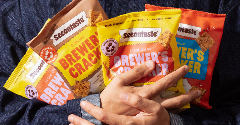
How Secon Taste is putting upcycled snacks on shelves
4 Aug 2026
Hungarian zero-waste startup Secon Taste is turning surplus food into upcycled snacks such as fibre-packed granola, instant porridge, and a circular coffee-tasting box.
Read more
Codex sets global thresholds for ‘may contain’ labels
3 Aug 2026
Codex Alimentarius has adopted its first global guidance on when to use “may contain” allergen warnings, setting thresholds intended to stop the label being used as blanket legal cover.
Read more