
Ingredients Categories
Finished Products
Finished Food Categories
- Bakery
- Beverages / Juices
- Cereal and grain products
- Confectionery
- Cooking Fats & Oils
- Dairy
- Egg products
- Fruits & Vegetables
- Infant & Baby food
- Meat, Poultry & Fish
- Nuts & Seeds products
- Other Finished Food Categories
- Pet Food
- Plant-based foods
- Prepared foods
- Sauces & Seasonings
- Sweet & Savoury Spreads
Specialised Finished Products
- Bee products
- Biotic products
- Dietary supplements
- Energy drinks
- Functional beverages
- Functional confectionery
- Functional food
- Functional powders
- Meal replacement products
- Nutricosmetics
- Other Specialised Finished Products
- Pet Dietary Supplements
- Pharma and OTC products
- Protein products
- Sugar replacers / Sweeteners
Health & Wellness Areas
Delivery Formats
Operations & Services
- 3D printing
- Analysis/ Testing
- Auditing & certifications
- Blending & mixing
- Bottling
- Certification
- Clinical trials
- Co-packing
- Coating
- Consulting
- Contract manufacturing
- Drying
- Electrospinning
- Encapsulating
- Enzymatic processing
- Extracting
- Extrusion
- Fat structuring
- Fermentation
- Filling
- Flavour development
- Freeze drying
- Granulating/ grinding/ milling / mixing
- High-pressure processing
- Labelling
- Other Operations & Services
- Packaging
- Packet filling
- Pasturising
- Quality assurance
- Saccharification
- Shear cell processing
- Spray drying
- Sterilisation
- Storage & Logistics
- Tabletting
- Toasting / roasting
- Ultra-high temperature processing
News
The UK prepares to open food security science centre
Natasha Spencer-Jolliffe, Freelance Journalist 2 Jan 2024
Amid global food insecurity, the UK government says it is committed to producing crops resilient to climate change and addressing hunger and malnutrition with a food security science centre.
In November 2023, the UK hosted the Global Food Security Summit, designed to bring international attention to the food security crisis.

At the event, UK Prime Minister Rishi Sunak announced the UK will launch a food security science centre to produce crops resilient to climate change and spur more funding to address severe child malnutrition. A new white paper accompanies the announcement, outlining the UK’s long-term approach to tackling global food challenges.
“Decades of progress [are] under threat”, the white paper states, with 701 million people remaining in extreme poverty, mainly in Sub-Saharan African countries. Global conflict, energy insecurity, nature loss and environmental degradation prompt the risk of further deterioration in global food security, the report says.
The UK government’s announcement is welcome news following urgent calls by the Institute for Public Policy Research (IPPR) to support sustainable farming. A report by IPPR in July 2023 addressed questions of UK food security and climate change and set out the importance of cultivating a fair transition for farming. Following its report, the charity conveyed how the government’s failure to support sustainable agriculture undermines the UK’s food security, prompting urgent action to lower emissions from agriculture and ensure food security.
“The intersection between climate change and food security in the UK is really important, and something that needs more attention since the food sector has been decarbonising at half the pace of the wider economy,” Maya Singer-Hobbs, senior research fellow in the energy and climate team at IPPR told Ingredients Network. “This new funding is welcomed to support the sector to adapt to climate change,” Singer-Hobbs added.
Developing climate-resilient and nutritious crop breeds
The UK government has partnered with CGIAR, a global research partnership focusing on food security, to launch its food security science centre, a virtual hub. In preparing for the centre’s launch, the UK chose The John Innes Centre as a leading partner for the UK-CGIAR, which has a longstanding tradition of working with the CGIAR institutions and with partners in the Global South.
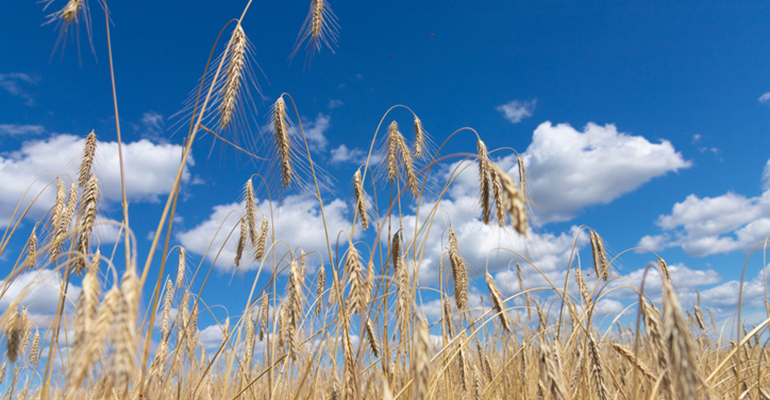
John Innes Centre researchers will lead a project titled Leveraging genetic innovations for accelerated climate resilient and nutritious crop breeding. They will facilitate connections between CGIAR and forge new partnerships. “The project will enable us to fund essential research in a major crop such as wheat, which provides over 20% of the calories and proteins we consume daily,” Professor Cristobal Uauy, project leader at John Innes Centre, told Ingredients Network.
Professor Uauy is the UK lead for the project, working closely with the CGIAR leads, Dr Michael Baum and Dr Anna Backhaus. “This means that I will be responsible for delivering the work and ensuring we are driven towards our mission of delivering impact in the Global South,” Uauy adds. As the project lead, Professor Uauy will coordinate among partners and lead research on specific aspects of the project.
 © iStock/Iryna Kushniarova
“The purpose of this project is to deliver genetically improved varieties to farmers in the Global South,” said Uauy. The project aims to accelerate the breeding process and deliver higher genetic gain by adopting new genome editing breeding approaches, exploiting novel genetic variation and developing data-driven strategies for breeding.
The project will address three key research questions to understand more about the role of genome editing and genomics data in producing crops resilient to climate change. Firstly, the project will explore whether genome editing can help provide a durable source of resistance to major wheat pathogens and accelerate the integration of desirable traits into farmer-preferred varieties.
It will also examine if genome editing significantly increases iron levels in wheat flour and improves iron intake of vulnerable groups in society, including women and children. The research will also ask whether genomics data can effectively accelerate the deployment of novel traits in crop breeding programmes.
The project’s work is expected to create the most significant effects on the food security environment for partner countries in Africa and Asia. “The major impact will be in Global South partner countries of Kenya, Egypt and Pakistan,” said Uauy.
Advancing efforts to overcome slower-than-expected zero hunger goal
“The challenge is that progress towards the UN goal of Zero Hunger is behind schedule for various reasons,” Uauy added. As many of the John Innes Centre’s partner countries are significant importers of wheat, they are therefore vulnerable to changes in market or political factors, as have been seen in Ukraine, Uauy said.
Improving staple crops, such as wheat, through breeding offers a pathway to increase agricultural productivity and food security in the UK’s partner countries. “However, traditional breeding methods are relatively slow in the context of current global crises,” Uauy added. As a result, these slow breeding methods delay the delivery of improved crops to farmers and society.
In the project, the John Innes Centre will use new approaches to accelerate the process and work closely with local partners to ensure genetic improvements are made in local and farmer-preferred types of wheat.

Get more of our news on Google
Set Ingredients Network as a 'Preferred Source' to get quicker access to the news you value.
Related news

Do the US dietary guidelines put UPFs under pressure?
10 Sep 2026
Will the US dietary guidelines change the way Americans eat, swapping ultra-processed foods for whole foods? We asked Dr Barry Popkin, renowned nutrition and obesity researcher.
Read more
Food fraud costs UK economy £2bn each year
9 Sep 2026
Food fraud is costing the UK economy up to £2 billion (€2.3 billion) every year although the food sector is more “resilient” than others, according to a recent study.
Read more
Kellogg accelerates work to remove artificial colours from all US cereals
3 Sep 2026
WK Kellogg has announced an accelerated timeline to eliminate all artificial colours and the chemical preservative, BHT, across its full US portfolio of cereals and cereal packaging.
Read more
Skimpflation: An ‘unfair’ and risky approach to keeping prices low
2 Sep 2026
Consumers see skimpflation – reducing the quality of ingredients due to rising costs – as more unfair than shrinkflation, making it a risky strategy according to recent research.
Read more
‘Urgent gaps’ in achieving 2030 food system goals
27 Aug 2026
Global food systems are failing to meet 2030 targets across indicators including health, environment, and resilience, according to a report co-authored by the Food and Agriculture Organisation (FAO).
Read more
Seven-Eleven uses microbial testing tech to extend katsudon shelf life
26 Aug 2026
Japanese retail company Seven-Eleven has improved its factory’s microbial environment to keep comfort-food staple, katsudon, fresher for longer.
Read more
Chimac’s fusion sauces bring Korean flavours to Europe
25 Aug 2026
Irish sauce brand Chimac is tapping into Korea’s culinary traditions, bringing its flavours and products to European consumers who want a taste of K-food.
Read more
Global demand for instant noodles continues to rise
24 Aug 2026
Global demand for instant noodles reached 124.21 billion servings last year, representing a 0.7% year-on-year increase – or 900 million extra servings.
Read more
China beverages: Is herbal innovation the future?
20 Aug 2026
Herbal and botanical innovation in China's drinks market continues to grow, with ingredients like astragalus root, ginger, and ginseng in the spotlight – and focus shifting far beyond refreshment.
Read more
Popular barbecue staples experience sharp price increases
19 Aug 2026
The typical cost of US shoppers’ barbecue baskets has risen by 12% over the past year – the fastest annual rise in a decade, figures from The Economist show.
Read more