
Ingredients Categories
Finished Products
Finished Food Categories
- Bakery
- Beverages / Juices
- Cereal and grain products
- Confectionery
- Cooking Fats & Oils
- Dairy
- Egg products
- Fruits & Vegetables
- Infant & Baby food
- Meat, Poultry & Fish
- Nuts & Seeds products
- Other Finished Food Categories
- Pet Food
- Plant-based foods
- Prepared foods
- Sauces & Seasonings
- Sweet & Savoury Spreads
Specialised Finished Products
- Bee products
- Biotic products
- Dietary supplements
- Energy drinks
- Functional beverages
- Functional confectionery
- Functional food
- Functional powders
- Meal replacement products
- Nutricosmetics
- Other Specialised Finished Products
- Pet Dietary Supplements
- Pharma and OTC products
- Protein products
- Sugar replacers / Sweeteners
Health & Wellness Areas
Delivery Formats
Operations & Services
- 3D printing
- Analysis/ Testing
- Auditing & certifications
- Blending & mixing
- Bottling
- Certification
- Clinical trials
- Co-packing
- Coating
- Consulting
- Contract manufacturing
- Drying
- Electrospinning
- Encapsulating
- Enzymatic processing
- Extracting
- Extrusion
- Fat structuring
- Fermentation
- Filling
- Flavour development
- Freeze drying
- Granulating/ grinding/ milling / mixing
- High-pressure processing
- Labelling
- Other Operations & Services
- Packaging
- Packet filling
- Pasturising
- Quality assurance
- Saccharification
- Shear cell processing
- Spray drying
- Sterilisation
- Storage & Logistics
- Tabletting
- Toasting / roasting
- Ultra-high temperature processing
News
US artificial dye phase-out plan drives growth for natural alternatives
Natasha Spencer-Jolliffe, Freelance Journalist 13 May 2025With the US phasing out artificial dyes, brands are exploring aquatic environments, fruits, and food waste to replicate colour in formulations.
After the US Food and Drug Administration (FDA) announced it would be banning synthetic dyes over the next two years, manufacturers are pursuing production plans for natural colours in their food and beverage (F&B) formulations.
For both brands based in the US and those exporting to its $875.78 billion (€773 bn) food market, exploring and experimenting with natural ingredients is now an even bigger consideration.
But this could open up opportunities for brands like foodtech company FUL Foods, which has developed a natural food colour solution using spirulina, a blue-green algae known for its numerous health benefits, including being rich in protein, antioxidants, and vitamins and minerals.
 © FUL
© FUL
Natural ingredient brands ramp up alternative production
Developing a blue dye to replace Blue No. 1 and FD&C Blue No. 2 synthetic colourings, the Netherlands-based company aims to respond to the accelerating shift in the global food colour market, which is estimated to surpass $5 billion (€4.4 bn) by 2032.
“What we’re most excited about is that this couldn’t come at a better time for us: we’ve built the supply chain, we’ve scaled our production, and we’re well positioned to help brands make this transition quickly and confidently,” Julia Streuli, CEO and co-founder, told Ingredients Network.
FUL Foods said its R&D process was “truly global and deeply collaborative”. The brand worked closely with its food science team in the Netherlands and partnered with the University of Wageningen, a leading food innovation hub, to develop its new natural dye.
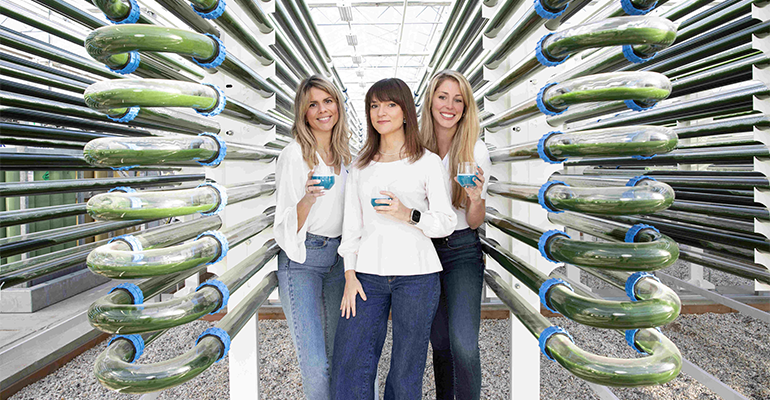
Working with the photobioreactor company, FUL Foods developed proprietary extraction technology, which is protected by four patents.
“Our focus was on unlocking spirulina’s full potential, making it both functional and stable enough to meet the rigorous demands of modern food and beverage applications,” said Strueli.
Manufacturing with microalgae
FUL Foods opted to use spirulina because it holds colour vibrancy within its various formulations.
Since its early days, the company has worked with spirulina, recognising it as a nutrient-dense ingredient with sustainability credentials that appeal to climate-conscious consumers, brands, and investors alike.
“Spirulina has one of the highest yields and lowest resource footprints of any natural crop,” said Strueli.
The brand also chose spirulina because it utilises limited freshwater, does not require arable land, grows quickly, and can capture carbon dioxide (CO2) more efficiently than trees.
“Unlike artificial dyes, which are petroleum-based, offer no nutritional value, and have been linked to negative health outcomes, spirulina is packed with functional benefits,” said Strueli.
Blue spirulina contains phycocyanin, a powerful antioxidant with anti-inflammatory properties – so while artificial dyes bring only colour, FUL Foods found spirulina delivers vibrant, stable blue and real nutritional value.
“It’s a no-brainer for brands looking to make cleaner, healthier products without sacrificing performance,” Strueli added.
Replicating the hardest colour in food manufacturing
Historically, the ingredient’s main challenge has been its instability.
“Blue is rare in nature for a reason. But we’ve cracked the code,” Strueli said.
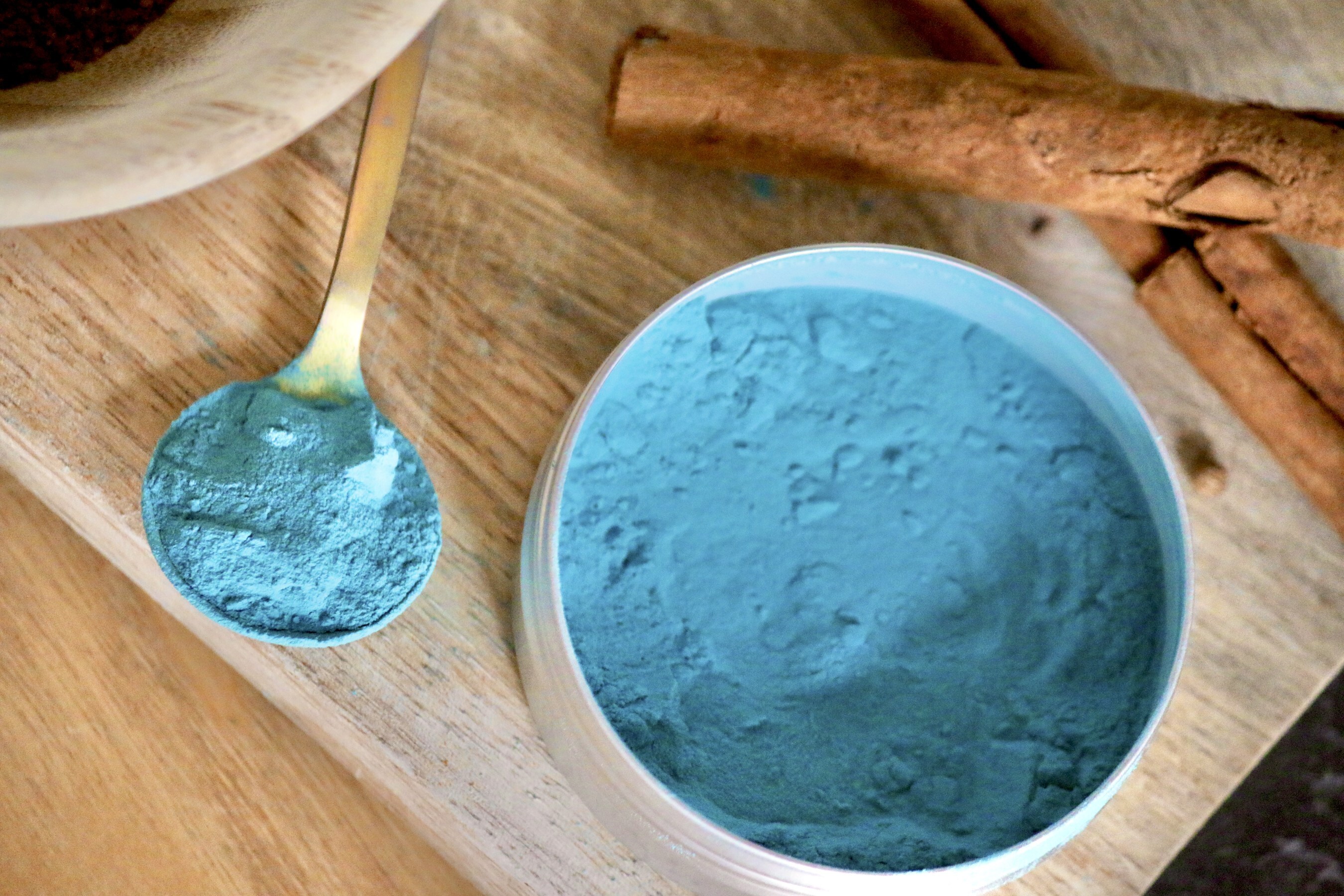
Blue food colouring is known in the food industry as the most challenging colour to mimic naturally across various food categories, including candy and beverages. Using its proprietary technology, FUL Foods can produce blue spirulina-based syrups and powders.
The company’s patented process makes spirulina pH- and heat-stable, unlocking new applications across F&B.
“There are other natural blues out there, but they simply don’t deliver on colour, functionality, and sustainability the way spirulina does,” added Strueli.
Box out: Natural dye alternatives
● Bio-solutions provider Fermentalg uses aquatic microorganisms to produce its natural blue food dye. Its natural alternative to synthetic dyes, derived from a unique strain of microalgae known as Galdieria sulphuraria, is currently awaiting approval from the FDA.
● Research from the Ohio State University College of Food, Agricultural, and Environmental Sciences (CFAES) has explored water-soluble pigments like anthocyanins to replace synthetic dyes. These natural colours create vibrant shades in fruits like blackberries, red cabbage, and grapes.
● Minimising food waste is a key trend, along with using natural rather than synthetic ingredients. Research from a 2025 study indicates a growing interest in using pigments derived from food waste to enhance the environmentally conscious nature of food dyes.

Get more of our news on Google
Set Ingredients Network as a 'Preferred Source' to get quicker access to the news you value.
Related news

M&S launches own-brand pet food range
11 Sep 2026
UK retailer Marks & Spencer has launched its own-brand pet food line Paws & Pals – a well-timed and strategic move that will appeal to loyal shoppers, says a marketing expert.
Read more
Do the US dietary guidelines put UPFs under pressure?
10 Sep 2026
Will the US dietary guidelines change the way Americans eat, swapping ultra-processed foods for whole foods? We asked Dr Barry Popkin, renowned nutrition and obesity researcher.
Read more
Food fraud costs UK economy £2bn each year
9 Sep 2026
Food fraud is costing the UK economy up to £2 billion (€2.3 billion) every year although the food sector is more “resilient” than others, according to a recent study.
Read more
Health and wellness engagement matures across Middle East and Africa
4 Sep 2026
Many consumers in the Middle East and Africa are now proactively engaged in health and wellness, looking to integrate better habits and products into their daily lives, say experts.
Read more
Kellogg accelerates work to remove artificial colours from all US cereals
3 Sep 2026
WK Kellogg has announced an accelerated timeline to eliminate all artificial colours and the chemical preservative, BHT, across its full US portfolio of cereals and cereal packaging.
Read more
Skimpflation: An ‘unfair’ and risky approach to keeping prices low
2 Sep 2026
Consumers see skimpflation – reducing the quality of ingredients due to rising costs – as more unfair than shrinkflation, making it a risky strategy according to recent research.
Read more
Royal Canin launches ‘freshly-cooked’ therapeutic dog food
1 Sep 2026
Mars-owned Royal Canin has moved into the therapeutic diet sector with the launch of its Fresh Veterinary Diets range for dogs with health conditions. We asked a veterinary nutritionist for her opinion.
Read more
NielsenIQ’s EU barometer shows Britain leading in grocery inflation
31 Aug 2026
Britain was the only country to record grocery inflation above 2%, according to NielsenIQ data that compared Europe’s five biggest grocery markets from February to May 2026.
Read more
‘Urgent gaps’ in achieving 2030 food system goals
27 Aug 2026
Global food systems are failing to meet 2030 targets across indicators including health, environment, and resilience, according to a report co-authored by the Food and Agriculture Organisation (FAO).
Read more
Seven-Eleven uses microbial testing tech to extend katsudon shelf life
26 Aug 2026
Japanese retail company Seven-Eleven has improved its factory’s microbial environment to keep comfort-food staple, katsudon, fresher for longer.
Read more