
Ingredients Categories
Finished Products
Finished Food Categories
- Bakery
- Beverages / Juices
- Cereal and grain products
- Confectionery
- Cooking Fats & Oils
- Dairy
- Egg products
- Fruits & Vegetables
- Infant & Baby food
- Meat, Poultry & Fish
- Nuts & Seeds products
- Other Finished Food Categories
- Pet Food
- Plant-based foods
- Prepared foods
- Sauces & Seasonings
- Sweet & Savoury Spreads
Specialised Finished Products
- Bee products
- Biotic products
- Dietary supplements
- Energy drinks
- Functional beverages
- Functional confectionery
- Functional food
- Functional powders
- Meal replacement products
- Nutricosmetics
- Other Specialised Finished Products
- Pet Dietary Supplements
- Pharma and OTC products
- Protein products
- Sugar replacers / Sweeteners
Health & Wellness Areas
Delivery Formats
Operations & Services
- 3D printing
- Analysis/ Testing
- Auditing & certifications
- Blending & mixing
- Bottling
- Certification
- Clinical trials
- Co-packing
- Coating
- Consulting
- Contract manufacturing
- Drying
- Electrospinning
- Encapsulating
- Enzymatic processing
- Extracting
- Extrusion
- Fat structuring
- Fermentation
- Filling
- Flavour development
- Freeze drying
- Granulating/ grinding/ milling / mixing
- High-pressure processing
- Labelling
- Other Operations & Services
- Packaging
- Packet filling
- Pasturising
- Quality assurance
- Saccharification
- Shear cell processing
- Spray drying
- Sterilisation
- Storage & Logistics
- Tabletting
- Toasting / roasting
- Ultra-high temperature processing
News
Why is freeze-dried candy taking off in 2025?
Tessa Wiles, Content Editor - Food 14 Apr 2025Freeze-dried candy, with its novel texture and intense flavour, is captivating candy lovers across the globe. Brands are listening, launching freeze-dried twists of classic products, and even the more bizarre, like ice-cream sandwiches.
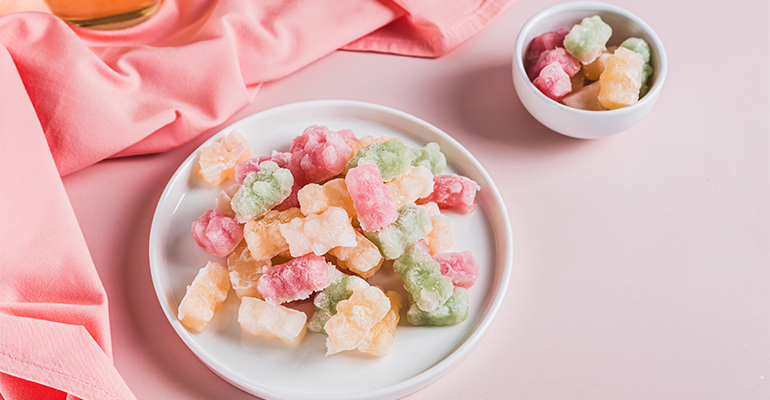
Thanks, in part, to social media, freeze-dried candy has captured the attention of consumers and brands alike. The global market, estimated at $1.36 billion in 2023, is expected to reach $2.4 billion in 2030, according to Grand View Research, while the hashtag #freezedriedcandy on TikTok has received over 4.7 billion views and counting.
Novel texture and intense flavours
There are various reasons why freeze-dried candies have surged in popularity in 2025, one of them being novelty.
The process of freeze-drying removes moisture from a product. Freeze-dried industrial food has been around for decades, becoming popular in the 1950s. NASA, in the 1960s, had a role to play in the rising popularity too. After identifying the need for long-lasting, shelf-stable, light, and easy-to-prepare food options NASA began experimenting with freeze-dried foods for astronauts.
While freeze-dried foods were initially developed as a method of preservation, the process has since evolved into a way to create a novel eating experience for consumers. Candies are typically chewy or hard, but the freeze-drying process offers a novel sensory experience for consumers. The absence of moisture results in a texture that’s both light and crunchy, and an intense and concentrated flavour.
Major brands and retailers are jumping on board
Major brands and retailers are embracing the trend, launching their own freeze-dried candy products.
US-based Sow Good, a candy and treat brand, has taken freeze-dried treats to extremes with its innovative line of candies and ice-cream sandwiches. Sow Good’s ice-cream sandwiches have a two-year shelf life, which the brand says is “freeze dried into a delightfully crunchy-then-creamy treat that melts in the mouth and not on the hands”. In August 2024, the company launched a line of freeze-dried candy, which includes sweet squares and spheres, sour bites, rainbow bites, peach perfect, crunchy bears, and sweet worms.
In October 2024, Skittles decided to get in on the action, debuting its Skittles Pop’d, a freeze-dried range of the brand's classic candy. The line comes in two flavours, classic and sour.
In February 2025 Australian supermarket retailer Coles also came aboard the freeze-dried bandwagon, launching its home-brand Coles Freeze Dried Sour Rainbow Crunch, retailing at A$5 (€2.89) per 114 gram pouch. The candy comes in strawberry, lemon, blueberry, and apple flavour.
In March 2025 Jolly Ranchers, a confectionary brand owned by The Hershey Company, launched its freeze-dried candy. The candy comes in Jolly Rancher's signature flavours, including blue raspberry, watermelon, and green apple. According to the press release, internal research highlighted an unmet demand for unique texture experiences and flavours.
Also in March, but over in the UK, United Food Brands unveiled its brand Tasty Vibes. The brand’s product line, which will be available in 2000 stores across the UK in April/May, will include both sweet and sour varieties.
Opportunities for brands: Functional freeze-dried snacking
While freeze-drying has made its mark in the candy aisle, its potential extends beyond this category.
Mintel identified rule rebellion as a top food and drink trend for 2025. Freeze-dried candy, with its novel texture, intense flavour, and unconventional food experience exemplifies this trend.
Another Mintel top trend, fundamentally nutritious, creates opportunities for brands to take their freeze-dried innovations a step further, by tapping into consumers’ desire for better-for-you options. As more brands launch freeze-dried candies, incorporating functional ingredients may be an avenue to stand out against the rest.

Get more of our news on Google
Set Ingredients Network as a 'Preferred Source' to get quicker access to the news you value.
Related news

Do the US dietary guidelines put UPFs under pressure?
10 Sep 2026
Will the US dietary guidelines change the way Americans eat, swapping ultra-processed foods for whole foods? We asked Dr Barry Popkin, renowned nutrition and obesity researcher.
Read more
Food fraud costs UK economy £2bn each year
9 Sep 2026
Food fraud is costing the UK economy up to £2 billion (€2.3 billion) every year although the food sector is more “resilient” than others, according to a recent study.
Read more
Kellogg accelerates work to remove artificial colours from all US cereals
3 Sep 2026
WK Kellogg has announced an accelerated timeline to eliminate all artificial colours and the chemical preservative, BHT, across its full US portfolio of cereals and cereal packaging.
Read more
Skimpflation: An ‘unfair’ and risky approach to keeping prices low
2 Sep 2026
Consumers see skimpflation – reducing the quality of ingredients due to rising costs – as more unfair than shrinkflation, making it a risky strategy according to recent research.
Read more
NielsenIQ’s EU barometer shows Britain leading in grocery inflation
31 Aug 2026
Britain was the only country to record grocery inflation above 2%, according to NielsenIQ data that compared Europe’s five biggest grocery markets from February to May 2026.
Read more
‘Urgent gaps’ in achieving 2030 food system goals
27 Aug 2026
Global food systems are failing to meet 2030 targets across indicators including health, environment, and resilience, according to a report co-authored by the Food and Agriculture Organisation (FAO).
Read more
Chimac’s fusion sauces bring Korean flavours to Europe
25 Aug 2026
Irish sauce brand Chimac is tapping into Korea’s culinary traditions, bringing its flavours and products to European consumers who want a taste of K-food.
Read more
Global demand for instant noodles continues to rise
24 Aug 2026
Global demand for instant noodles reached 124.21 billion servings last year, representing a 0.7% year-on-year increase – or 900 million extra servings.
Read more
Popular barbecue staples experience sharp price increases
19 Aug 2026
The typical cost of US shoppers’ barbecue baskets has risen by 12% over the past year – the fastest annual rise in a decade, figures from The Economist show.
Read more
Hot NPD: Nissin launches first cold-water Cup Noodles
18 Aug 2026
Nissin is taking one of Japan’s most iconic instant meals in a completely new direction with the launch of the first cold water-only Cup Noodles in the brand’s 55-year history.
Read more