
Ingredients Categories
Finished Products
Finished Food Categories
- Bakery
- Beverages / Juices
- Cereal and grain products
- Confectionery
- Cooking Fats & Oils
- Dairy
- Egg products
- Fruits & Vegetables
- Infant & Baby food
- Meat, Poultry & Fish
- Nuts & Seeds products
- Other Finished Food Categories
- Pet Food
- Plant-based foods
- Prepared foods
- Sauces & Seasonings
- Sweet & Savoury Spreads
Specialised Finished Products
- Bee products
- Biotic products
- Dietary supplements
- Energy drinks
- Functional beverages
- Functional confectionery
- Functional food
- Functional powders
- Meal replacement products
- Nutricosmetics
- Other Specialised Finished Products
- Pet Dietary Supplements
- Pharma and OTC products
- Protein products
- Sugar replacers / Sweeteners
Health & Wellness Areas
Delivery Formats
Operations & Services
- 3D printing
- Analysis/ Testing
- Auditing & certifications
- Blending & mixing
- Bottling
- Certification
- Clinical trials
- Co-packing
- Coating
- Consulting
- Contract manufacturing
- Drying
- Electrospinning
- Encapsulating
- Enzymatic processing
- Extracting
- Extrusion
- Fat structuring
- Fermentation
- Filling
- Flavour development
- Freeze drying
- Granulating/ grinding/ milling / mixing
- High-pressure processing
- Labelling
- Other Operations & Services
- Packaging
- Packet filling
- Pasturising
- Quality assurance
- Saccharification
- Shear cell processing
- Spray drying
- Sterilisation
- Storage & Logistics
- Tabletting
- Toasting / roasting
- Ultra-high temperature processing
News
Beyond 'nice to have': A spotlight on US functional beverages
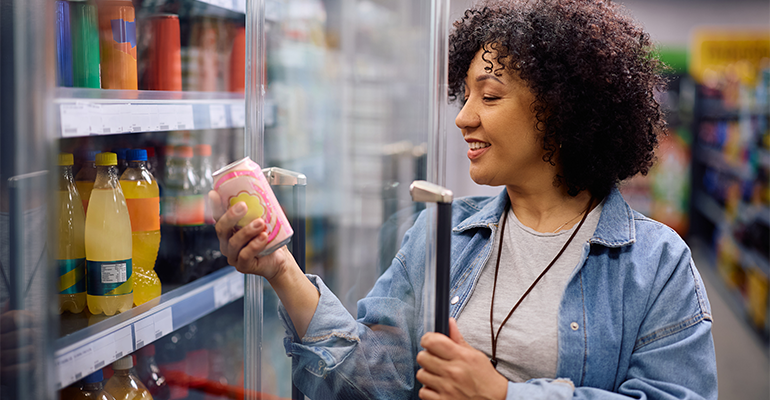
Kacey Culliney, Freelance Journalist 12 Aug 2026Functional beverage interest in the US is gaining important ground as consumers now expect function rather than see it as "nice to have", and there are clear market gaps for growth, according to Spate.
US trend tracking specialist Spate works with a proprietary popularity index, combining data from Google, TikTok, and Instagram to show how popular a category or trend is.
At a glance:
- Functional beverages are growing in popularity in the US.
- Ingredient-led formats are rising fast, with growing demand for creatine and chlorophyll.
- Innovation gaps remain and success is not just about legacy, says trend tracker Spate.
Its results show that functional beverages amongst US consumers are accelerating in popularity. Online interest related to functional beverages was up 28.5% on TikTok; up 16.8% on Google; and up 6.6% on Instagram, representing an overall rise in popularity of 23.3% between June 2025 to May 2026 vs June 2024 to May 2025, according to Spate.
"Functional beverage" as a term across these three platforms was also up 491.8% for the same time period, a signal that consumers are adopting the category's own vocabulary at scale, the company said.
“Functional beverages have moved from a nice-to-have to an expectation,” said Alyssa Williams Atkinson, food and beverage category insights manager at Spate. “Consumers want their drinks to do something, whether that's hydration, energy, or a sugar-free swap, and our data shows that shift accelerating,” Atkinson told Ingredients Network.
US consumers today, she said, are choosing drinks based on what they deliver, not just what they taste like, and the brands winning attention are those anchoring on function first – especially trending functions.
“In a category this crowded, being first doesn't matter nearly as much as noticing where attention is shifting before your competitors do," she said. "The right ingredient story, format, and platform strategy all start with reading those signals early.”
So, what exactly are the signals? And what type of functional beverages are gaining in popularity?
Ingredient focus: THC, chlorophyll, protein horchata, and creatine
Overall, Spate data shows that energy drinks and coconut waters hold strongest in popularity terms across Google, TikTok, and Instagram in the US functional beverages category, with the total popularity index up 129.7 million (+40.3%) for energy drinks and up 20.9 million (+30.4%) for coconut water.
More specific ingredient-led beverages are trending too, with more significant year-over-year increases, albeit in lower volumes. Popularity of THC drinks, for example, is up 69.7% (3.2 million) on the previous year; chlorophyll water is up 115.8% (8.1 million); protein horchata up 1,200% (3.8 million); and creatine coffee up 216.6% (863,000).
Rising popularity is clearly not concentrated on one or two products, said Atkinson.
“Fast risers like creatine and chlorophyll are pulling in new audiences, while staples like coconut water and electrolyte drinks keep expanding from an already massive base,” she explained.
Importantly, “supplement-grade ingredients” like creatine and chlorophyll are finally going mainstream, she said. Marketing such products, therefore, now needs to focus on flavour and accessibility, not just efficacy.
Spate data shows, for example, that brands treating creatine as a lifestyle ingredient rather than a supplement are the ones pulling views. Similarly, most content on chlorophyll focuses on the simplicity of the product – adding just a few drops to water for a multitude of benefits, including skin health and energy.
Innovation focus: Legacy vs challenger brands
Looking ahead, Atkinson said there is real opportunity for growth in the US functional beverages market, largely because of the current brand landscape.
While brands like Ryze, Bloom, Red Bull, Liquid I.V., and LMNT hold strong in popularity across Google, TikTok, and Instagram, she said “no single brand owns the full functional beverage conversation”.
According to Spate, legacy names and social-first challengers are growing side by side – proof that category heritage is no longer a moat and that consumers are rewarding “whoever shows up with a clear function and a strong platform presence”.
“That white space is real,” Atkinson said, “and it's sitting in the unbranded, emerging benefit searches that the category leaders haven't claimed yet.”
For brands looking to tap into opportune areas, it will be key to act on trends that are still in the early stage – those that have strong predicted growth but a popularity that is yet to break out.
“That's the closest match to a full runway. If a trend has already entered the growth stage, where popularity is visibly rising alongside strong predicted growth, teams are working with a shorter window and need to move fast. By the time a trend hits mainstream, the opportunity for a truly differentiated launch has largely passed,” she said.

Get more of our news on Google
Set Ingredients Network as a 'Preferred Source' to get quicker access to the news you value.
Related news
Do the US dietary guidelines put UPFs under pressure?
10 Sep 2026
Will the US dietary guidelines change the way Americans eat, swapping ultra-processed foods for whole foods? We asked Dr Barry Popkin, renowned nutrition and obesity researcher.
Read more
Food fraud costs UK economy £2bn each year
9 Sep 2026
Food fraud is costing the UK economy up to £2 billion (€2.3 billion) every year although the food sector is more “resilient” than others, according to a recent study.
Read more
Skimpflation: An ‘unfair’ and risky approach to keeping prices low
2 Sep 2026
Consumers see skimpflation – reducing the quality of ingredients due to rising costs – as more unfair than shrinkflation, making it a risky strategy according to recent research.
Read more
NielsenIQ’s EU barometer shows Britain leading in grocery inflation
31 Aug 2026
Britain was the only country to record grocery inflation above 2%, according to NielsenIQ data that compared Europe’s five biggest grocery markets from February to May 2026.
Read more
‘Urgent gaps’ in achieving 2030 food system goals
27 Aug 2026
Global food systems are failing to meet 2030 targets across indicators including health, environment, and resilience, according to a report co-authored by the Food and Agriculture Organisation (FAO).
Read more
China beverages: Is herbal innovation the future?
20 Aug 2026
Herbal and botanical innovation in China's drinks market continues to grow, with ingredients like astragalus root, ginger, and ginseng in the spotlight – and focus shifting far beyond refreshment.
Read more
Popular barbecue staples experience sharp price increases
19 Aug 2026
The typical cost of US shoppers’ barbecue baskets has risen by 12% over the past year – the fastest annual rise in a decade, figures from The Economist show.
Read more
Manam Chocolate aims to bring premium Indian cacao to 'the world stage'
11 Aug 2026
Craft chocolate brand Manam Chocolate is investing in local expansion and supply chain innovation throughout India as it works to build out the premium reputation of its locally produced cacao products.
Read more
Digital twin technology gains ground in food manufacturing
6 Aug 2026
Food and beverage companies are increasingly turning to digital twins to optimise and automate manufacturing processes, but opportunities stretch far beyond this, say experts.
Read more
How Secon Taste is putting upcycled snacks on shelves
4 Aug 2026
Hungarian zero-waste startup Secon Taste is turning surplus food into upcycled snacks such as fibre-packed granola, instant porridge, and a circular coffee-tasting box.
Read more