
Ingredients Categories
Finished Products
Finished Food Categories
- Bakery
- Beverages / Juices
- Cereal and grain products
- Confectionery
- Cooking Fats & Oils
- Dairy
- Egg products
- Fruits & Vegetables
- Infant & Baby food
- Meat, Poultry & Fish
- Nuts & Seeds products
- Other Finished Food Categories
- Pet Food
- Plant-based foods
- Prepared foods
- Sauces & Seasonings
- Sweet & Savoury Spreads
Specialised Finished Products
- Bee products
- Biotic products
- Dietary supplements
- Energy drinks
- Functional beverages
- Functional confectionery
- Functional food
- Functional powders
- Meal replacement products
- Nutricosmetics
- Other Specialised Finished Products
- Pet Dietary Supplements
- Pharma and OTC products
- Protein products
- Sugar replacers / Sweeteners
Health & Wellness Areas
Delivery Formats
Operations & Services
- 3D printing
- Analysis/ Testing
- Auditing & certifications
- Blending & mixing
- Bottling
- Certification
- Clinical trials
- Co-packing
- Coating
- Consulting
- Contract manufacturing
- Drying
- Electrospinning
- Encapsulating
- Enzymatic processing
- Extracting
- Extrusion
- Fat structuring
- Fermentation
- Filling
- Flavour development
- Freeze drying
- Granulating/ grinding/ milling / mixing
- High-pressure processing
- Labelling
- Other Operations & Services
- Packaging
- Packet filling
- Pasturising
- Quality assurance
- Saccharification
- Shear cell processing
- Spray drying
- Sterilisation
- Storage & Logistics
- Tabletting
- Toasting / roasting
- Ultra-high temperature processing
News
Brazilian manufacturers must comply with warning label regulation, says court
Niamh Michail, Head of Publishing 7 Mar 2024The Federal Court of São Paulo has ruled that Brazilian manufacturers must comply with front-of-pack labelling regulation that requires unhealthy products to feature warning labels, scrapping a last-minute one-year extension.
The February court injunction went in favour of the Brazilian Institute of Consumer Protection (IDEC), which had brought legal proceedings against the regulatory agency, ANVISA, for extending the October 2023 deadline by one year.
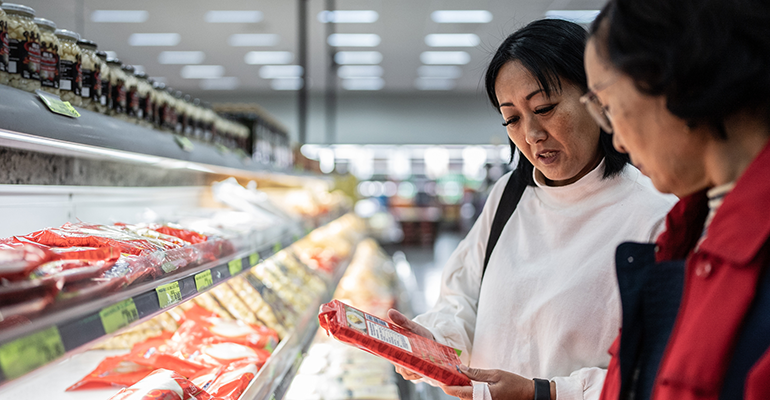
Front-of-pack warning label extension scrapped
In 2020, Brazilian policymakers approved the regulation RDC nº 429/2020, which introduced front-of-pack warning labels on products that exceed certain nutrient thresholds. The mandatory nutrition warning label features a magnifying glass that alerts consumers to products high in sodium, added sugar, and saturated fat.
Manufacturers had a grace period of three years to ensure their product packaging complied with the regulation, which also introduced a nutrition fact table presenting nutrient information per 100 ml or 100 g of product. Only small producers and non-alcoholic drinks in returnable packaging were granted more time to comply, meaning a general deadline for compliance of October 2023.
However, in October last year, ANVISA issued a new regulation, RDC nº 819/2023, pushing back the deadline to October 2024. In response, IDEC filed a public civil action against ANVISA seeking to restore the original deadline.
Extension based on interference from the food industry, says IDEC
Last month, a São Paolo court decided in favour of IDEC, issuing an injunction that suspended the effects of RDC nº 819/2023. In its public civil action, IDEC argued that ANVISA’s decision was based on biased information from the food industry and was devoid of any independent scientific evidence.
According to ANVISA, the October 2024 extension was necessary so that manufacturers could exhaust their existing labels and packaging stock. However, IDEC pointed out that the regulation already allowed manufacturers to use existing stock by simply adding an updated sticker to the packaging, thus minimising food waste while ensuring consumers had access to easy-to-understand nutritional information.
IDEC criticised the consumer packaged goods (CPG) industry for “fail(ing) to organise itself within the 1,000 days they had to adapt to the new nutritional labelling rules to the detriment of the public interest”.
According to the injunction, cited on IDEC’s website, the judge questioned ANVISA’s action, asking: “How can we explain that 57 isolated requests led to the alteration – in a few days – of a public policy destined to cover thousands, perhaps millions, of food manufacturers under RDC nº 429/2020?”
IDEC: Injunction is ‘a very positive response’
Leonardo Pillon, senior lawyer at IDEC's healthy and sustainable food programme, said the judge’s preliminary decision was “a very positive response”. He criticised ANVISA for bowing to the interests of industry, adding that it was extremely damaging to the agency’s reputation.
“There is a double loss of the agency's credibility: internally, by having disregarded the positions of its own technical [remit], and externally by having suppressed social participation,” he said in a statement translated from Portuguese.
According to the IDEC lawyer, the court’s decision consolidated the right of Brazilian consumers to make more informed choices about the potential harmful effects on health of ultra-processed and processed products. Brazil, the largest country in South America, has growing rates of obesity, overweight, and other non-communicable diseases linked to an unhealthy diet.
Asked if it had a response to the court injunction, a spokesperson for ANVISA told Ingredients Network it would present its position in a legal proceeding.

Get more of our news on Google
Set Ingredients Network as a 'Preferred Source' to get quicker access to the news you value.
Related news

Do the US dietary guidelines put UPFs under pressure?
10 Sep 2026
Will the US dietary guidelines change the way Americans eat, swapping ultra-processed foods for whole foods? We asked Dr Barry Popkin, renowned nutrition and obesity researcher.
Read more
Food fraud costs UK economy £2bn each year
9 Sep 2026
Food fraud is costing the UK economy up to £2 billion (€2.3 billion) every year although the food sector is more “resilient” than others, according to a recent study.
Read more
Kellogg accelerates work to remove artificial colours from all US cereals
3 Sep 2026
WK Kellogg has announced an accelerated timeline to eliminate all artificial colours and the chemical preservative, BHT, across its full US portfolio of cereals and cereal packaging.
Read more
Skimpflation: An ‘unfair’ and risky approach to keeping prices low
2 Sep 2026
Consumers see skimpflation – reducing the quality of ingredients due to rising costs – as more unfair than shrinkflation, making it a risky strategy according to recent research.
Read more
NielsenIQ’s EU barometer shows Britain leading in grocery inflation
31 Aug 2026
Britain was the only country to record grocery inflation above 2%, according to NielsenIQ data that compared Europe’s five biggest grocery markets from February to May 2026.
Read more
‘Urgent gaps’ in achieving 2030 food system goals
27 Aug 2026
Global food systems are failing to meet 2030 targets across indicators including health, environment, and resilience, according to a report co-authored by the Food and Agriculture Organisation (FAO).
Read more
Chimac’s fusion sauces bring Korean flavours to Europe
25 Aug 2026
Irish sauce brand Chimac is tapping into Korea’s culinary traditions, bringing its flavours and products to European consumers who want a taste of K-food.
Read more
Global demand for instant noodles continues to rise
24 Aug 2026
Global demand for instant noodles reached 124.21 billion servings last year, representing a 0.7% year-on-year increase – or 900 million extra servings.
Read more
Popular barbecue staples experience sharp price increases
19 Aug 2026
The typical cost of US shoppers’ barbecue baskets has risen by 12% over the past year – the fastest annual rise in a decade, figures from The Economist show.
Read more
Hot NPD: Nissin launches first cold-water Cup Noodles
18 Aug 2026
Nissin is taking one of Japan’s most iconic instant meals in a completely new direction with the launch of the first cold water-only Cup Noodles in the brand’s 55-year history.
Read more