
Ingredients Categories
Finished Products
Finished Food Categories
- Bakery
- Beverages / Juices
- Cereal and grain products
- Confectionery
- Cooking Fats & Oils
- Dairy
- Egg products
- Fruits & Vegetables
- Infant & Baby food
- Meat, Poultry & Fish
- Nuts & Seeds products
- Other Finished Food Categories
- Pet Food
- Plant-based foods
- Prepared foods
- Sauces & Seasonings
- Sweet & Savoury Spreads
Specialised Finished Products
- Bee products
- Biotic products
- Dietary supplements
- Energy drinks
- Functional beverages
- Functional confectionery
- Functional food
- Functional powders
- Meal replacement products
- Nutricosmetics
- Other Specialised Finished Products
- Pet Dietary Supplements
- Pharma and OTC products
- Protein products
- Sugar replacers / Sweeteners
Health & Wellness Areas
Delivery Formats
Operations & Services
- 3D printing
- Analysis/ Testing
- Auditing & certifications
- Blending & mixing
- Bottling
- Certification
- Clinical trials
- Co-packing
- Coating
- Consulting
- Contract manufacturing
- Drying
- Electrospinning
- Encapsulating
- Enzymatic processing
- Extracting
- Extrusion
- Fat structuring
- Fermentation
- Filling
- Flavour development
- Freeze drying
- Granulating/ grinding/ milling / mixing
- High-pressure processing
- Labelling
- Other Operations & Services
- Packaging
- Packet filling
- Pasturising
- Quality assurance
- Saccharification
- Shear cell processing
- Spray drying
- Sterilisation
- Storage & Logistics
- Tabletting
- Toasting / roasting
- Ultra-high temperature processing
News
Danish upcycling startup to expand high-protein, high-fibre flours
Niamh Michail, Head of Publishing 11 Oct 2023
Danish startup Circular Food Technology produces high-fibre, high-protein flours from upcycled brewer’s spent grain and is gearing up to supply the bakery and bread market.
During the beer-brewing process, the sugar and starch is removed from the barley, leaving the spent grain – malted barley – as a by-product. Circular Food Technology, which was founded around five years ago, uses this spent brewer’s grain (BSG) to make a range of flours and snack products sold under its consumer-facing Agrain brand.
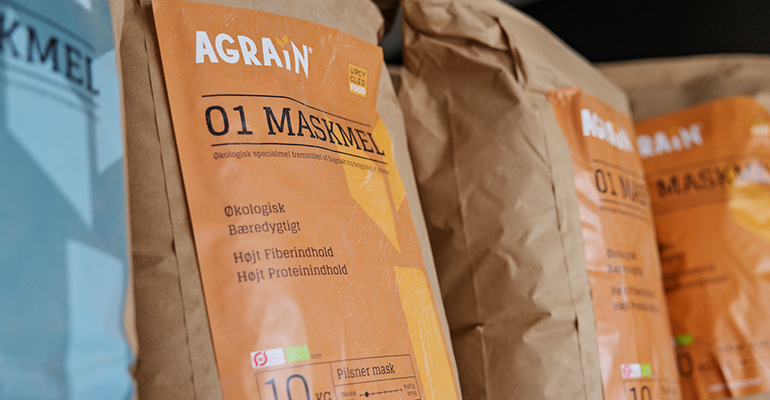
Ingredients Network spoke to account manager Selcuk Yildirim from the Copenhagen-based startup at Future Food Tech in London to find out more about the product, process, and its ambitions to focus principally on the B2B market.
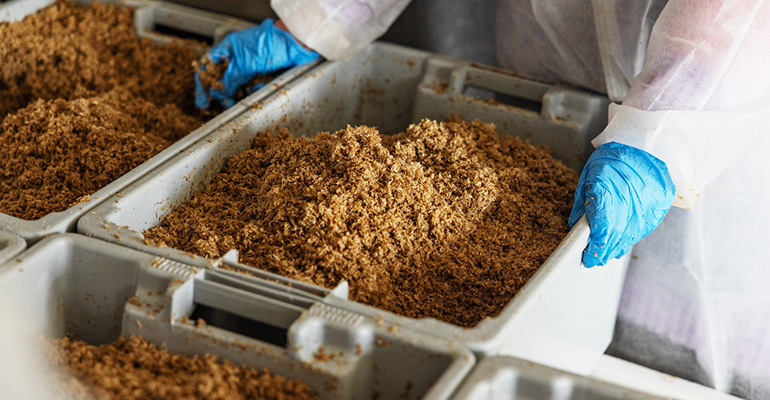
"After [the brewing process], you have leftover barley and we upcycle that barley that we get from the brewers in our production facility in Denmark,” he said. “We press the water out, dry it, and mill it into a flour. Of course, sustainability is very clear: we are circular. We don't use any farmland or any fresh water to produce it and our CO2 emissions are also lower than other flour brands."
The nutritious flour contains 50% dietary fibre and 20% protein and Agrain’s range includes spent grain flours made from pilsner, stout, and IPA. It also makes crackers and crisps.
One advantage of using BSG as a raw material is that the supply chain is stable and robust – around 40 million tons of spent grain are produced as a by-product each year – and it does not require highly specialised machinery to turn it into a usable ingredient.
"The supply is pretty high,” Yildirim said. “Beer is, I think, the fourth biggest beverage drunk in the world so there is a lot of spent grain. [Regarding] the machinery, we have three mechanical processes: a machine that presses, a machine that dries, and a machine that mills, and then packing afterwards."
 © Ulrik Jantzen, Büro Jantzen Aps
Switching focus from B2C to B2B for a bigger impact
Currently, its range of products - flour, crisps, and crackers - are only available to buy online via Agrain's website. Many of its sales are in Denmark but it also sells to consumers throughout Europe and the US.
However, rather than focusing on securing retail listings in supermarkets for its Agrain brand, Circular Food Technology recently made the strategic decision to focus its efforts on B2B supplies, Yildirim said.
"We want to disrupt the food industry and system that we have now, which is only focused on using more land to feed more and more people. There is not room for that and so we need to look into new systems such as upcycling.”
 © Ulrik Jantzen, Büro Jantzen Aps
By supplying the bread and bakery industry with a B2B ingredient, it can have a bigger impact than through its own consumer-facing brand, he added.
Helping brands develop products ‘at every step’
The experience it has gained by producing its B2C line of crisps and crackers means it can help manufacturers interested in using its flour with the product development process.
"Of course, if we meet a manufacturer that wants to make crisps, we can help them with that as we have experience there,” said Yildirim.
“We do end-to-end applications. We have cooks and bakers working in the company. Often when we present an idea, we have an application ready for [manufacturers] so it is easy for them to implement. We can help at every step."
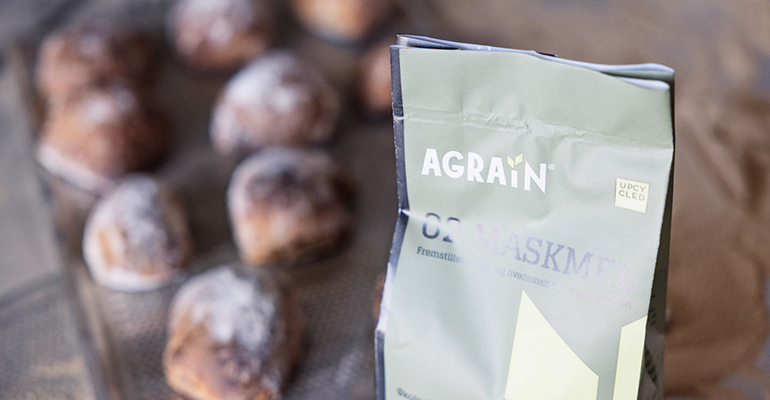
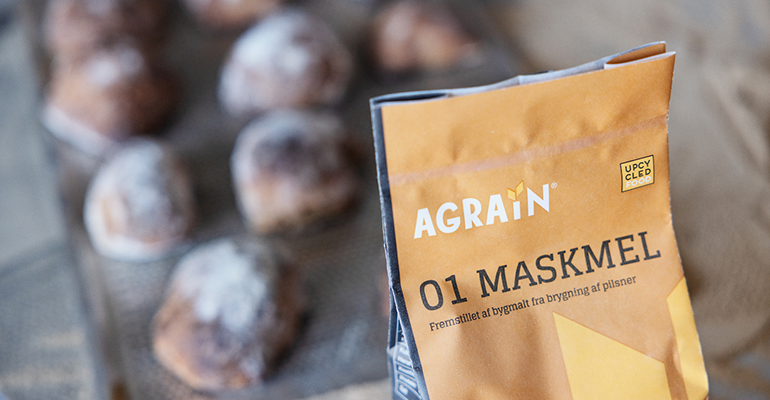
Its pilsner flour has cereal notes and has golden colour once baked, making it ideal for bread and buns while the IPA flour has a delicate aroma of caramel and nuts, and is ideal for sourdough and savoury baking. The stout spent grain flour, meanwhile, has deep notes of coffee and chocolate and yields a dark colour, meaning it pairs well with rye-based products.
 © Ulrik Jantzen, Büro Jantzen Aps
Circular Food Technology’s current manufacturing capacity is 30 tons a month and by the end of the year, this will increase to 40 tons. By summer 2024, it will be adding a new line to increase its capacity to 80 tons a month.
Proudly upcycled
The startup is a member of Upcycled Food Association (UFA) and it adds the UFA logo to the front of Agrain product packaging. However, Yildirim said the concept of upcycling did not resonate much with consumers - yet anyway.
"I think end users have a hard time figuring out the sustainability and knowing what upcycling is, so that is also one of the journeys we are on: to educate end users. When we grow, we can also be one of the pioneers to have brought upcycling to consumers because that's one of the difficulties we see: people don't understand upcycling the way we do and the way industry does."

Get more of our news on Google
Set Ingredients Network as a 'Preferred Source' to get quicker access to the news you value.
Related news

Do the US dietary guidelines put UPFs under pressure?
10 Sep 2026
Will the US dietary guidelines change the way Americans eat, swapping ultra-processed foods for whole foods? We asked Dr Barry Popkin, renowned nutrition and obesity researcher.
Read more
Food fraud costs UK economy £2bn each year
9 Sep 2026
Food fraud is costing the UK economy up to £2 billion (€2.3 billion) every year although the food sector is more “resilient” than others, according to a recent study.
Read more
Kellogg accelerates work to remove artificial colours from all US cereals
3 Sep 2026
WK Kellogg has announced an accelerated timeline to eliminate all artificial colours and the chemical preservative, BHT, across its full US portfolio of cereals and cereal packaging.
Read more
Skimpflation: An ‘unfair’ and risky approach to keeping prices low
2 Sep 2026
Consumers see skimpflation – reducing the quality of ingredients due to rising costs – as more unfair than shrinkflation, making it a risky strategy according to recent research.
Read more
‘Urgent gaps’ in achieving 2030 food system goals
27 Aug 2026
Global food systems are failing to meet 2030 targets across indicators including health, environment, and resilience, according to a report co-authored by the Food and Agriculture Organisation (FAO).
Read more
Seven-Eleven uses microbial testing tech to extend katsudon shelf life
26 Aug 2026
Japanese retail company Seven-Eleven has improved its factory’s microbial environment to keep comfort-food staple, katsudon, fresher for longer.
Read more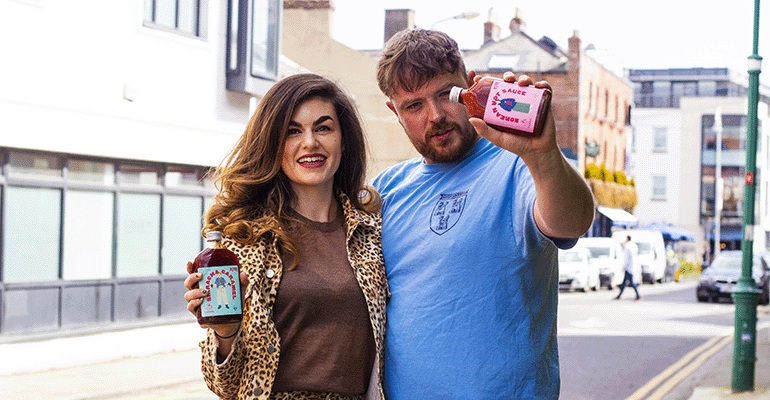
Chimac’s fusion sauces bring Korean flavours to Europe
25 Aug 2026
Irish sauce brand Chimac is tapping into Korea’s culinary traditions, bringing its flavours and products to European consumers who want a taste of K-food.
Read more
Global demand for instant noodles continues to rise
24 Aug 2026
Global demand for instant noodles reached 124.21 billion servings last year, representing a 0.7% year-on-year increase – or 900 million extra servings.
Read more
China beverages: Is herbal innovation the future?
20 Aug 2026
Herbal and botanical innovation in China's drinks market continues to grow, with ingredients like astragalus root, ginger, and ginseng in the spotlight – and focus shifting far beyond refreshment.
Read more
Popular barbecue staples experience sharp price increases
19 Aug 2026
The typical cost of US shoppers’ barbecue baskets has risen by 12% over the past year – the fastest annual rise in a decade, figures from The Economist show.
Read more