
Ingredients Categories
Finished Products
Finished Food Categories
- Bakery
- Beverages / Juices
- Cereal and grain products
- Confectionery
- Cooking Fats & Oils
- Dairy
- Egg products
- Fruits & Vegetables
- Infant & Baby food
- Meat, Poultry & Fish
- Nuts & Seeds products
- Other Finished Food Categories
- Pet Food
- Plant-based foods
- Prepared foods
- Sauces & Seasonings
- Sweet & Savoury Spreads
Specialised Finished Products
- Bee products
- Biotic products
- Dietary supplements
- Energy drinks
- Functional beverages
- Functional confectionery
- Functional food
- Functional powders
- Meal replacement products
- Nutricosmetics
- Other Specialised Finished Products
- Pet Dietary Supplements
- Pharma and OTC products
- Protein products
- Sugar replacers / Sweeteners
Health & Wellness Areas
Delivery Formats
Operations & Services
- 3D printing
- Analysis/ Testing
- Auditing & certifications
- Blending & mixing
- Bottling
- Certification
- Clinical trials
- Co-packing
- Coating
- Consulting
- Contract manufacturing
- Drying
- Electrospinning
- Encapsulating
- Enzymatic processing
- Extracting
- Extrusion
- Fat structuring
- Fermentation
- Filling
- Flavour development
- Freeze drying
- Granulating/ grinding/ milling / mixing
- High-pressure processing
- Labelling
- Other Operations & Services
- Packaging
- Packet filling
- Pasturising
- Quality assurance
- Saccharification
- Shear cell processing
- Spray drying
- Sterilisation
- Storage & Logistics
- Tabletting
- Toasting / roasting
- Ultra-high temperature processing
News
Major UK supermarkets join forces to close food gap
Kacey Culliney, Freelance Journalist 24 Apr 2026M&S, Morrisons, Sainsbury's, Tesco, and Waitrose are spearheading a joint fundraising campaign this month to support distribution of repurposed food waste to those in need.
The campaign is being organised through the Alliance Food Sourcing (AFS) coalition, and aims to help charities overcome the ongoing challenge of securing enough food to keep up with demand.
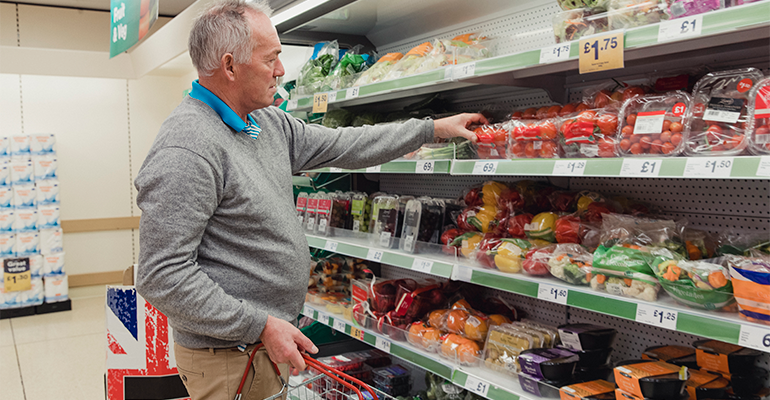
According to AFS, 4.6 million tonnes of food goes to waste across the UK's food supply chain every year, due to things like defective packaging or when companies switch over production runs.
Often, however, surplus food is in large or unpackaged formats which are not easily usable by charities. The businesses involved in AFS, therefore, are working to change this.
The food industry’s push to ‘rescue’ edible food
Work is also focused on identifying, rescuing, and repurposing edible food waste throughout the supply chain. Companies are repacking bulk quantities of food waste and bringing together raw ingredients to make meals. M&S and 2 Sisters Food Group, for example, have partnered to make pizzas and ready meals using surplus line capacity and Tesco and Sainsbury's are working with partners to produce cottage pies and ready meals.
There is also ongoing work to salvage by-product during production. UK supplier Barfoot, for example, is recovering sweet potato and squash 'rubble' produced during the dicing process, Premier Foods is recovering and rescuing dried noodle waste, Waitrose is working with its pasta supplier Daybreak to rescue pasta off-cuts, Charlie Bighams is capturing surplus sauces for catering charities, and Morrisons and Myton Food Group have made small changes to their grading process, redirecting 150 tonnes of fresh fruit and vegetables each year to charities.
Importantly, efforts to rescue surplus food from the supply chain versus shelves means it can be distributed much more effectively and consistently, said Paul Baines, supply manager at The Felix Project and FareShare.
“The AFS programme gives us the rare opportunity to plan, as we know what volumes we'll be receiving. We don't usually get that level of visibility, and it has a much longer shelf-life than the surplus food we primarily work with.”
Ambitious targets for 2028
Wheeler said AFS has “ambitious targets” for the next two years, as efforts continue across food and retail supply chains.
Beyond April's major fundraising campaign, and others like it, the AFS wants to rescue the equivalent of 30 million meals a year from the manufacturing sector by 2028, he said. As of 2026, the coalition has already secured more than 14 million meals worth of food thanks to widespread and ongoing support, but help is still needed. “We need food companies, suppliers, and retailers on board to help us,” Wheeler said.
Nicky Robinson, director of AFS, said that whilst it is great to see so many leading food businesses already coming together, more involvement can scale impact. “The opportunity to do good is vast,” Robinson said. “By partnering up, thousands of tonnes of good, surplus food are already being rescued from the food supply chain, reducing waste and providing meals for the most vulnerable in our society–often by making relatively simple changes.”
Food waste and hunger: ‘Let's make a meal of it’
The “Let's make a meal of it” campaign will see the five retail majors passing the campaign baton to one another for the month of April, encouraging in-store and online customers to donate to help fight hunger across the UK.
Every £1 (€1.14) raised will provide five meals for people in need, with money used via UK charities The Felix Project and FareShare that work with 8,000 smaller, frontline charities and community groups.
Money will be spent on sourcing and redistributing meals from surplus food, including to children at youth clubs or during school holidays and people experiencing loneliness who can meet others over a shared meal. In the UK today, 11 million people go hungry; three million of whom are children, according to charity data.
Speaking about the campaign, Joshua Wheeler, senior programme manager at The Felix Project and FareShare, said: “It's fantastic that there is this level of collaboration across the food industry. Companies of all shapes and sizes are built to compete but when they collectively collaborate on issues like this, then together they can make such a huge impact,” he told Ingredients Network.
Simon Roberts, CEO of Sainsbury's and president of the Institute of Grocery Distribution (IGD), said: “We believe that good food should be for everyone and are proud of our continued involvement in this campaign. It shows how working together as an industry can help drive meaningful change and tackle food poverty.”
Wheeler added: “Millions of people are really struggling to afford enough food, and at the same time tonnes of edible food is being wasted in the food manufacturing sector. Alliance Food Sourcing is trying to do something about this.”

Get more of our news on Google
Set Ingredients Network as a 'Preferred Source' to get quicker access to the news you value.
Related news

Do the US dietary guidelines put UPFs under pressure?
10 Sep 2026
Will the US dietary guidelines change the way Americans eat, swapping ultra-processed foods for whole foods? We asked Dr Barry Popkin, renowned nutrition and obesity researcher.
Read more
Food fraud costs UK economy £2bn each year
9 Sep 2026
Food fraud is costing the UK economy up to £2 billion (€2.3 billion) every year although the food sector is more “resilient” than others, according to a recent study.
Read more
Kellogg accelerates work to remove artificial colours from all US cereals
3 Sep 2026
WK Kellogg has announced an accelerated timeline to eliminate all artificial colours and the chemical preservative, BHT, across its full US portfolio of cereals and cereal packaging.
Read more
Skimpflation: An ‘unfair’ and risky approach to keeping prices low
2 Sep 2026
Consumers see skimpflation – reducing the quality of ingredients due to rising costs – as more unfair than shrinkflation, making it a risky strategy according to recent research.
Read more
NielsenIQ’s EU barometer shows Britain leading in grocery inflation
31 Aug 2026
Britain was the only country to record grocery inflation above 2%, according to NielsenIQ data that compared Europe’s five biggest grocery markets from February to May 2026.
Read more
‘Urgent gaps’ in achieving 2030 food system goals
27 Aug 2026
Global food systems are failing to meet 2030 targets across indicators including health, environment, and resilience, according to a report co-authored by the Food and Agriculture Organisation (FAO).
Read more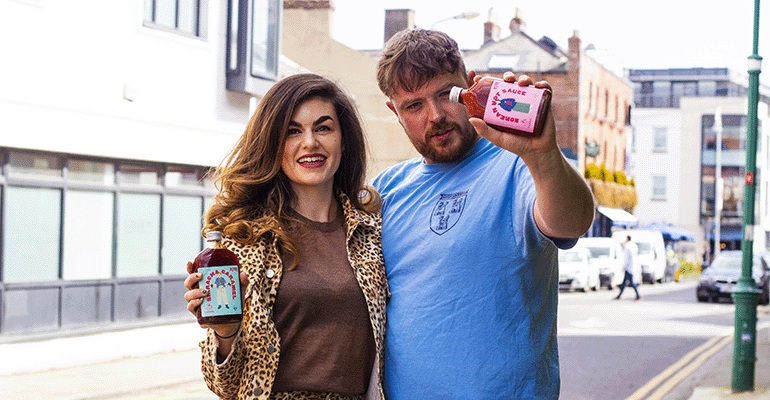
Chimac’s fusion sauces bring Korean flavours to Europe
25 Aug 2026
Irish sauce brand Chimac is tapping into Korea’s culinary traditions, bringing its flavours and products to European consumers who want a taste of K-food.
Read more
Global demand for instant noodles continues to rise
24 Aug 2026
Global demand for instant noodles reached 124.21 billion servings last year, representing a 0.7% year-on-year increase – or 900 million extra servings.
Read more
Popular barbecue staples experience sharp price increases
19 Aug 2026
The typical cost of US shoppers’ barbecue baskets has risen by 12% over the past year – the fastest annual rise in a decade, figures from The Economist show.
Read more
Hot NPD: Nissin launches first cold-water Cup Noodles
18 Aug 2026
Nissin is taking one of Japan’s most iconic instant meals in a completely new direction with the launch of the first cold water-only Cup Noodles in the brand’s 55-year history.
Read more