
Ingredients Categories
Finished Products
Finished Food Categories
- Bakery
- Beverages / Juices
- Cereal and grain products
- Confectionery
- Cooking Fats & Oils
- Dairy
- Egg products
- Fruits & Vegetables
- Infant & Baby food
- Meat, Poultry & Fish
- Nuts & Seeds products
- Other Finished Food Categories
- Pet Food
- Plant-based foods
- Prepared foods
- Sauces & Seasonings
- Sweet & Savoury Spreads
Specialised Finished Products
- Bee products
- Biotic products
- Dietary supplements
- Energy drinks
- Functional beverages
- Functional confectionery
- Functional food
- Functional powders
- Meal replacement products
- Nutricosmetics
- Other Specialised Finished Products
- Pet Dietary Supplements
- Pharma and OTC products
- Protein products
- Sugar replacers / Sweeteners
Health & Wellness Areas
Delivery Formats
Operations & Services
- 3D printing
- Analysis/ Testing
- Auditing & certifications
- Blending & mixing
- Bottling
- Certification
- Clinical trials
- Co-packing
- Coating
- Consulting
- Contract manufacturing
- Drying
- Electrospinning
- Encapsulating
- Enzymatic processing
- Extracting
- Extrusion
- Fat structuring
- Fermentation
- Filling
- Flavour development
- Freeze drying
- Granulating/ grinding/ milling / mixing
- High-pressure processing
- Labelling
- Other Operations & Services
- Packaging
- Packet filling
- Pasturising
- Quality assurance
- Saccharification
- Shear cell processing
- Spray drying
- Sterilisation
- Storage & Logistics
- Tabletting
- Toasting / roasting
- Ultra-high temperature processing
News
Nordic countries need tougher food waste reporting, new research finds
Natasha Spencer-Jolliffe, Freelance Journalist 26 Nov 2024The Nordic Council of Ministers has released a report recommending how the region can tackle its food waste problem to achieve reduction targets.
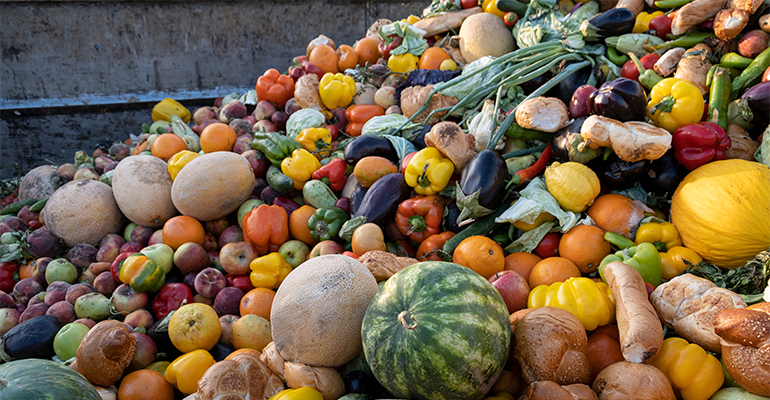
Following findings from Karlstad University, the new report by the official body for intergovernmental cooperation in the Nordic Region, the Nordic Council of Ministers, says the region needs to take more action to achieve its food waste reduction targets.
The report comes after the United Nations (UN) published its food waste reporting index in March 2024. The index states that to achieve food waste reduction and the UN’s Sustainable Development Goals (SDG) 12.3, it is vital to understand the level of food waste and, therefore, adopt accurate measures to enable the globe to reach its 2030 target. “Today, it is far too easy to waste food,” Helén Williams, associate professor of environmental and energy systems at Karlstad University, one of the lead researchers behind the report, told Ingredients Network.
With the goal to halve global food waste by 2030, the Nordic region fails to decrease waste at the rate needed to reach this target. Relying on voluntary efforts is no longer enough, the researchers behind the report state, prompting them to make several recommendations on how the region can tackle its food waste problem.
The report’s recommendations centre on restricting the focus on promotions in retail and instead highlighting packaging and its role in lowering food waste. The researchers also advise exploring current labelling regulations and practices as well as encouraging consumers to measure their food waste.
Additional policy measures to reduce food waste revolve around increasing Nordic cooperation and setting up a Nordic collaborative body to decrease food waste, grow systemic measurements and follow-ups, and create more precise requirements for data-sharing and reporting on food waste.
Food waste reduction in the Nordic region
The landscape of food wate is diverse, and some counties have done more in certain areas than others, the research finds. “The responsible government agencies are doing what they are authorised to do, but the political leadership and demands of the responsible governments lack precision and resources,” said Williams.
There are many initiatives for reducing food waste among different actors, such as restaurants and public meals. “But they are not evaluated well enough for efficiency and effects over time,” Williams added.
Efficiency is lacking, resulting in limited information on how the change in food waste is achieved per resource invested. Change can be measured in several ways, such as by the amount of reduced food loss waste (FLW), changed attitudes, reduced environmental impact and social effects, or by evaluating a specific goal attached to the measure. Invested resources can be economic investments in time, technical equipment and the environmental impact of such investments.
Likewise, effects over time, which have also received insufficient attention, relate to how a measure can be limited. For example, informing students about the environmental consequences of FLW can lead to reduced waste. With time, the effects fade, and new students who have yet to receive the information start school. Similarly, staff training efforts can decrease over time and with a high staff turnover, this can limit the reach of education and guidance.
Several drivers are behind the current state of the FLW landscape. A high belief in voluntary agreements is a notable example. “But as long as the supply chain earns money when users such as restaurants and households waste food, the voluntary agreements are not enough,” said Williams. “Many people do not understand the value of food, which means the value of the resources and emissions used in production,” added Williams.
Significant shifts ahead
Karlstad University, which wrote the Nordic Council of Ministers’ report, has suggested several recommendations for making an active difference in FLW and pushing the needle to create a more sustainable food sector.
“The report focuses on activities late in the supply chain because the accumulated environmental impact is higher there,” Williams said. “Today, almost 10% of the global warming emissions come from the food we waste,” Williams added. Therefore, the first four recommendations are directed toward food waste in retail and households.
Firstly, the report advises limiting promotions in retail stores. “Retailers are experts at getting us consumers to buy more than we intended, and once we get home with an excess of food, it is easy for some of it to go to waste,” Williams said.
Next, reviewing labelling regulations and practices is crucial to lower FLW. “Best before” is perceived by many as an indicator that the food cannot be eaten after this date. “A perception reinforced by the fact that retailers do not sell products after the “best before” date has passed,” Williams said. The researchers suggest that retailers significantly reduce the price of products when the “best before” date has passed instead of throwing them away, preferably in combination with information about what “best before” actually means.
Leaders need to also highlight the role of packaging in reducing food waste. “Packaging has ended up in the ‘green shame corner’ due to its environmental impact, but the function of packaging—to reduce food waste—is often forgotten or taken for granted,” said Williams.
A common reason for food to be thrown away is that the consumer uses part of the contents of the packaging, places it back in the fridge, and later finds that the contents have gone bad. When the package is opened, the ingenious protections built into it often disappear and the food deteriorates quickly.
Lastly, the researchers advocate engaging citizens in measuring their food waste on International Food Waste Day to draw attention to their FLW habits.
A pathway to reducing food waste
The researchers’ message to leaders, manufacturers and retailers on reducing their food waste and meeting targets emphasises the impending 2030 goal and the actions required to get there.
“We now have five years to increase efforts for reduced food waste,” said Williams. “We have proposed economic and legal policies that we believe will be necessary to provide stakeholders with sufficient incentives to implement measures to the extent required,” added Willaims.
There is also a need for more long-term resources to lead the work at the national level, particularly regarding coordination efforts between various actors. “Either we improve the political leadership, change policies and practices, or we will fail with goal 12.3 of halving the food waste in Agenda 2030,” Williams added.

Get more of our news on Google
Set Ingredients Network as a 'Preferred Source' to get quicker access to the news you value.
Related news

Do the US dietary guidelines put UPFs under pressure?
10 Sep 2026
Will the US dietary guidelines change the way Americans eat, swapping ultra-processed foods for whole foods? We asked Dr Barry Popkin, renowned nutrition and obesity researcher.
Read more
Health and wellness engagement matures across Middle East and Africa
4 Sep 2026
Many consumers in the Middle East and Africa are now proactively engaged in health and wellness, looking to integrate better habits and products into their daily lives, say experts.
Read more
Skimpflation: An ‘unfair’ and risky approach to keeping prices low
2 Sep 2026
Consumers see skimpflation – reducing the quality of ingredients due to rising costs – as more unfair than shrinkflation, making it a risky strategy according to recent research.
Read more
‘Urgent gaps’ in achieving 2030 food system goals
27 Aug 2026
Global food systems are failing to meet 2030 targets across indicators including health, environment, and resilience, according to a report co-authored by the Food and Agriculture Organisation (FAO).
Read more
Seven-Eleven uses microbial testing tech to extend katsudon shelf life
26 Aug 2026
Japanese retail company Seven-Eleven has improved its factory’s microbial environment to keep comfort-food staple, katsudon, fresher for longer.
Read more
Chimac’s fusion sauces bring Korean flavours to Europe
25 Aug 2026
Irish sauce brand Chimac is tapping into Korea’s culinary traditions, bringing its flavours and products to European consumers who want a taste of K-food.
Read more
Global demand for instant noodles continues to rise
24 Aug 2026
Global demand for instant noodles reached 124.21 billion servings last year, representing a 0.7% year-on-year increase – or 900 million extra servings.
Read more
Popular barbecue staples experience sharp price increases
19 Aug 2026
The typical cost of US shoppers’ barbecue baskets has risen by 12% over the past year – the fastest annual rise in a decade, figures from The Economist show.
Read more
Hot NPD: Nissin launches first cold-water Cup Noodles
18 Aug 2026
Nissin is taking one of Japan’s most iconic instant meals in a completely new direction with the launch of the first cold water-only Cup Noodles in the brand’s 55-year history.
Read more
Manam Chocolate aims to bring premium Indian cacao to 'the world stage'
11 Aug 2026
Craft chocolate brand Manam Chocolate is investing in local expansion and supply chain innovation throughout India as it works to build out the premium reputation of its locally produced cacao products.
Read more