
Ingredients Categories
Finished Products
Finished Food Categories
- Bakery
- Beverages / Juices
- Cereal and grain products
- Confectionery
- Cooking Fats & Oils
- Dairy
- Egg products
- Fruits & Vegetables
- Infant & Baby food
- Meat, Poultry & Fish
- Nuts & Seeds products
- Other Finished Food Categories
- Pet Food
- Plant-based foods
- Prepared foods
- Sauces & Seasonings
- Sweet & Savoury Spreads
Specialised Finished Products
- Bee products
- Biotic products
- Dietary supplements
- Energy drinks
- Functional beverages
- Functional confectionery
- Functional food
- Functional powders
- Meal replacement products
- Nutricosmetics
- Other Specialised Finished Products
- Pet Dietary Supplements
- Pharma and OTC products
- Protein products
- Sugar replacers / Sweeteners
Health & Wellness Areas
Delivery Formats
Operations & Services
- 3D printing
- Analysis/ Testing
- Auditing & certifications
- Blending & mixing
- Bottling
- Certification
- Clinical trials
- Co-packing
- Coating
- Consulting
- Contract manufacturing
- Drying
- Electrospinning
- Encapsulating
- Enzymatic processing
- Extracting
- Extrusion
- Fat structuring
- Fermentation
- Filling
- Flavour development
- Freeze drying
- Granulating/ grinding/ milling / mixing
- High-pressure processing
- Labelling
- Other Operations & Services
- Packaging
- Packet filling
- Pasturising
- Quality assurance
- Saccharification
- Shear cell processing
- Spray drying
- Sterilisation
- Storage & Logistics
- Tabletting
- Toasting / roasting
- Ultra-high temperature processing
News
Position snacks as affordable staples, says Euromonitor
13 Mar 2023
With snack sales impacted by the Covid-19 pandemic, war, and inflation, 2023 could see a slowdown in growth with a consumer focus on value, says Euromonitor. Where are the opportunities for food and beverage brands?
The market analysts set out five key snack trends for the coming year that they believe offer product manufacturers paths for strategy and goal development.
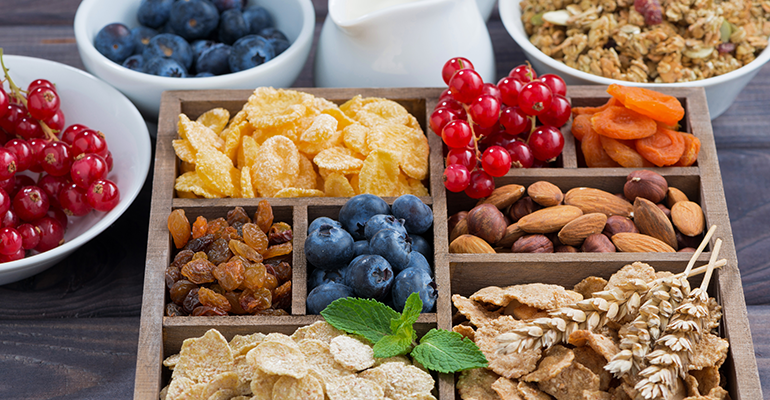
One trend views snacks as an affordable treat and, therefore, as a staple food, encouraged by healthier and organic product choice, working from home and a desire for "on-the-go indulgence".

“In 2023, consumers are expected to further integrate snacks into their eating patterns with the industry’s support through expanded occasions, functions, and access to snacks,” says Carl Quash, Euromonitor International’s head of snacks and nutrition research.
“Snacking for a treat, to replace a meal, or out of boredom/distraction are core to why consumers snack. Manufacturers must continue to optimise snack innovations, but also remain true to why people snack in the first place.”
Global snack innovation emphasises clean and healthy
Such innovations designed to address these needs include Singapore start-up Zenko Superfoods’ water lily pops that were recently launched in Australia and South East Asia.
The water lily-seed based products contain remarkably few ingredients, for example original flavour only contains water lily seeds and olive oil.
China-based Wingoo Anime Foods produce a biscuit that contains nine vegetables, which include white sesame, carrot pieces, broccoli, spinach, cabbage, pak choy, lettuce, green pepper and tomato.
The shift in the region’s snacking habits has not gone unnoticed by the big corporations with Kraft Heinz rolling out an Oreo-lookalike biscuit with fillings such as matcha tea and chilli.
The Euromonitor article also identifies a trend in which consumers are purchasing snacks from a multitude of channels that include brick-and-mortar stores and direct online sales.
Research by Euromonitor Internationals believes e-commerce, a difficult channel for impulse, captured more than two percentage points in channel share gain from 2019 to 2022, reaching nearly 6% of all snacks sales globally.
Discounters and warehouse clubs muscling in on snacking supply
“The growth of snack sales through budget-friendly retail channels, such as discounters and warehouse clubs, has seen share growth over the past few years,” comments Quash.
 © AdobeStock/cook_inspire
“Consumers are facing a number of trade-offs in their purchases and the industry must consider how to best serve shoppers throughout their paths to purchase amongst various channels.”
Other trends set to take off in 2023 include a focus on brands developing their core snacking categories, as a ‘safe’ way to meet growth expectations in the face of a difficult economic climate.
Euromonitor cites a number of such decisions by major brands that seek to build on core competencies whilst expanding on strategic partnerships, and mergers and acquisitions, and brand leverage.
PepsiCo plans to shift its snacks portfolio towards ‘healthier options’ in Europe by increasing sales of snacks rated A or B by the Nutri-Score nutrition labelling system by ‘more than 10 times’ by 2025.
If this is realised, it would make healthier snacks the company’s fastest growing food category over the next four years, with an ambition to expand this to a $1 billion (€936 million) portfolio by 2030.
Mondelēz ditches gum and embraces snacking interests
Mondelēz International announced in December 2022 the sale of its gum business in the US, Canada and Europe to European gum maker Perfetti Van Melle Group in a deal worth $1.35 billion (€1.25 billion).
In its Investor Day in May, Mondelēz outlined its strategy in which it would focus on growth and reinvestment in its core chocolate, biscuit and baked snacks categories.
Euromonitor’s article also identifies the impact of new regulations that snack brands will have to contend with and how they incorporate that into snack innovation and development .
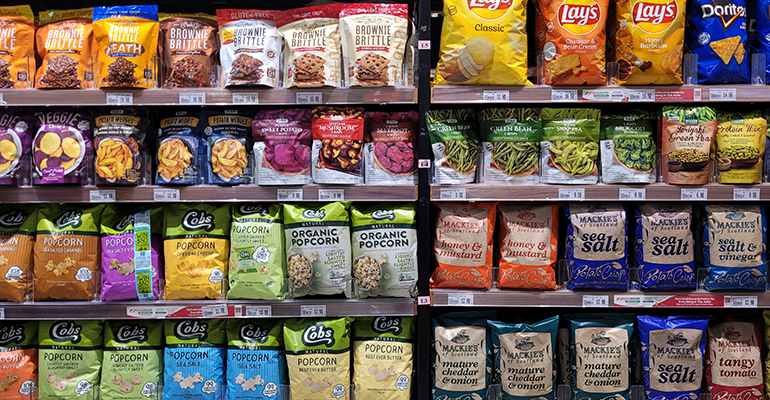
Regulations are fuelling healthy snack NPD
These regulations include the high in fat, salt or sugar restrictions (HFSS) in the UK, Berkely, California’s junk food access restrictions in the US, and the United Arab Emirates’ National Nutrition Strategy 2022-2030 (to reduce salt intake and eliminate all trans fats).
 © AdobeStock/ltyuan
“As healthy snacking develops amidst new regulations and concern from consumers, fortified, free from and fibre-filled varieties are continuing priorities, among others,” Quash notes.
“[The regulations] are set to support consumer demands, but also raise the standards on how the industry is expected to produce more nutritious foods.”
The article also factors in the pull of nostalgia and the need for distraction by consumers that is expected to increase the value of snacks and the snacking process.
According to Quash, the leverage of holiday and celebratory occasions for snacking will also be crucial in maintaining positive momentum in the industry for the year ahead.
“Snack formulators can expect unexpected textures, attractive formats, and indulgence forward features to play a large part in how some consumers cope with rising prices and stressful times ahead,” he adds.

Get more of our news on Google
Set Ingredients Network as a 'Preferred Source' to get quicker access to the news you value.
Related news
Kellogg accelerates work to remove artificial colours from all US cereals
3 Sep 2026
WK Kellogg has announced an accelerated timeline to eliminate all artificial colours and the chemical preservative, BHT, across its full US portfolio of cereals and cereal packaging.
Read more
Skimpflation: An ‘unfair’ and risky approach to keeping prices low
2 Sep 2026
Consumers see skimpflation – reducing the quality of ingredients due to rising costs – as more unfair than shrinkflation, making it a risky strategy according to recent research.
Read more
NielsenIQ’s EU barometer shows Britain leading in grocery inflation
31 Aug 2026
Britain was the only country to record grocery inflation above 2%, according to NielsenIQ data that compared Europe’s five biggest grocery markets from February to May 2026.
Read more
‘Urgent gaps’ in achieving 2030 food system goals
27 Aug 2026
Global food systems are failing to meet 2030 targets across indicators including health, environment, and resilience, according to a report co-authored by the Food and Agriculture Organisation (FAO).
Read more
Chimac’s fusion sauces bring Korean flavours to Europe
25 Aug 2026
Irish sauce brand Chimac is tapping into Korea’s culinary traditions, bringing its flavours and products to European consumers who want a taste of K-food.
Read more
Global demand for instant noodles continues to rise
24 Aug 2026
Global demand for instant noodles reached 124.21 billion servings last year, representing a 0.7% year-on-year increase – or 900 million extra servings.
Read more
Popular barbecue staples experience sharp price increases
19 Aug 2026
The typical cost of US shoppers’ barbecue baskets has risen by 12% over the past year – the fastest annual rise in a decade, figures from The Economist show.
Read more
Hot NPD: Nissin launches first cold-water Cup Noodles
18 Aug 2026
Nissin is taking one of Japan’s most iconic instant meals in a completely new direction with the launch of the first cold water-only Cup Noodles in the brand’s 55-year history.
Read more
Savoury protein snacks shake up the on-the-go market
10 Aug 2026
Sweet flavours have dominated the high-protein snack category but savoury snacks, such as cheese bars and meat sticks, can appeal to health-conscious consumers.
Read more
Digital twin technology gains ground in food manufacturing
6 Aug 2026
Food and beverage companies are increasingly turning to digital twins to optimise and automate manufacturing processes, but opportunities stretch far beyond this, say experts.
Read more