
Ingredients Categories
Finished Products
Finished Food Categories
- Bakery
- Beverages / Juices
- Cereal and grain products
- Confectionery
- Cooking Fats & Oils
- Dairy
- Egg products
- Fruits & Vegetables
- Infant & Baby food
- Meat, Poultry & Fish
- Nuts & Seeds products
- Other Finished Food Categories
- Pet Food
- Plant-based foods
- Prepared foods
- Sauces & Seasonings
- Sweet & Savoury Spreads
Specialised Finished Products
- Bee products
- Biotic products
- Dietary supplements
- Energy drinks
- Functional beverages
- Functional confectionery
- Functional food
- Functional powders
- Meal replacement products
- Nutricosmetics
- Other Specialised Finished Products
- Pet Dietary Supplements
- Pharma and OTC products
- Protein products
- Sugar replacers / Sweeteners
Health & Wellness Areas
Delivery Formats
Operations & Services
- 3D printing
- Analysis/ Testing
- Auditing & certifications
- Blending & mixing
- Bottling
- Certification
- Clinical trials
- Co-packing
- Coating
- Consulting
- Contract manufacturing
- Drying
- Electrospinning
- Encapsulating
- Enzymatic processing
- Extracting
- Extrusion
- Fat structuring
- Fermentation
- Filling
- Flavour development
- Freeze drying
- Granulating/ grinding/ milling / mixing
- High-pressure processing
- Labelling
- Other Operations & Services
- Packaging
- Packet filling
- Pasturising
- Quality assurance
- Saccharification
- Shear cell processing
- Spray drying
- Sterilisation
- Storage & Logistics
- Tabletting
- Toasting / roasting
- Ultra-high temperature processing
News
Singapore introduces Food Safety and Security Bill
Natasha Spencer-Jolliffe, Freelance Journalist 3 Feb 2025Amid growing food safety concerns and supply chain disruptions, the Singapore Food Agency passes its Food Safety and Security Bill (FSSB) to provide greater clarity, assurance, and credibility.
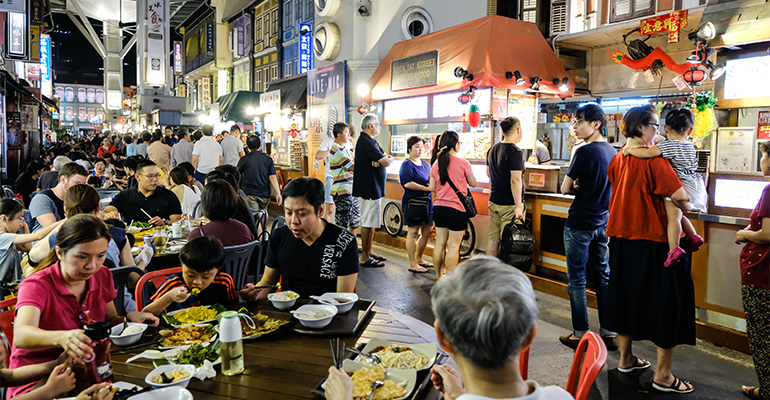
On 8th January 2025, the Singaporean government’s statutory arm, the Singapore Food Agency (SFA), passed its Food Safety and Security Bill (FSSB) to respond to current challenges and prepare for the ever-evolving food and beverage landscape.
Global diversification and growing demand
As the global food space experiences ongoing insecurity and volatility in the face of safety and supply chain risks, the Ministry of Sustainability and the Environment’s SFA gives the green light to detailed legislation to tackle uncertainties and gaps in food law.
In 2025, revenue in Singapore’s food market will amount to $13.09 billion, with data projecting it will grow at a compound annual growth rate (CAGR) of 4.48% between 2025 and 2029.
In recent years, Singapore has increased the diversification of its food sources and highlighted the importance of securing food safety for all consumers. In 2023, the SFA approved Spain as a new market source of mutton, Turkey and Indonesia as providers of eggs, and Indonesia as a source of live chickens.
The SFA also confirmed that while the number of food recalls in 2023 had reduced by 14.3% to 24, the number of food establishments suspended due to point demerit systems had increased by 40.5% to 52. Singapore introduced the point demerit system to promote food safety and spur food businesses to improve their food safety standards.
The Food Safety and Security Bill’s aims
The FSSB aims to consolidate and rationalise existing food legislation in Singapore, strengthen its food systems’ resilience and update its food safety environment to better protect consumers, foster industry development and prepare for growing trends. The new law sets out key provisions for consumers, traders, food businesses, farms, animal feed producers, agricultural pesticide users, rice stockpilers and agri-food supply chain stakeholders.
Singapore discussed and considered introducing the now-passed FSSB Bill on 12th November 2024, undertaking a First Reading in Parliament. With its focus on consolidating, enhancing and introducing new provisions, the SFA published its key features. Parliament then debated the Bill in a second reading in January 2025, which saw it gain approval from the SFA, with the body agreeing it will soon come into force.
Protecting consumers and public health by strengthening Singapore’s food safety regime attracts most new legal provisions under the FSSB. The SFA gave the green light to extend the coverage of food safety law beyond the sale of food to the “supply” of food. Under this expansion, the law now also covers food donations and free distribution.
The FSSB also requires key food distributors to maintain and keep records for traceability and recall purposes. The requirement strives to ensure the swift removal of unsafe food, food contact materials or animal feed to minimise their impact on consumer health.
Under the new law, the SFA will increase the maximum penalties and strengthen the food safety regulatory framework to implement more robust deterrence and tackle non-compliance. The SFA is introducing a new provision concerning food business licence approvals as part of these efforts. Stricter measures will apply to those who have their licences revoked, as well as associates of those operators, which will be considered when granting licence applications.
Safeguarding food security at the farm level is another prominent area of focus under the FSSB. In a new legal provision, the FSSB sets out measures to require local farms to develop and implement a farm management plan to address risks to food safety, disease spread, and water quality to protect consumer health while fostering a safe environment for sustainable and scalable food production.

Get more of our news on Google
Set Ingredients Network as a 'Preferred Source' to get quicker access to the news you value.
Related news

Do the US dietary guidelines put UPFs under pressure?
10 Sep 2026
Will the US dietary guidelines change the way Americans eat, swapping ultra-processed foods for whole foods? We asked Dr Barry Popkin, renowned nutrition and obesity researcher.
Read more
Skimpflation: An ‘unfair’ and risky approach to keeping prices low
2 Sep 2026
Consumers see skimpflation – reducing the quality of ingredients due to rising costs – as more unfair than shrinkflation, making it a risky strategy according to recent research.
Read more
‘Urgent gaps’ in achieving 2030 food system goals
27 Aug 2026
Global food systems are failing to meet 2030 targets across indicators including health, environment, and resilience, according to a report co-authored by the Food and Agriculture Organisation (FAO).
Read more
Seven-Eleven uses microbial testing tech to extend katsudon shelf life
26 Aug 2026
Japanese retail company Seven-Eleven has improved its factory’s microbial environment to keep comfort-food staple, katsudon, fresher for longer.
Read more
Chimac’s fusion sauces bring Korean flavours to Europe
25 Aug 2026
Irish sauce brand Chimac is tapping into Korea’s culinary traditions, bringing its flavours and products to European consumers who want a taste of K-food.
Read more
Global demand for instant noodles continues to rise
24 Aug 2026
Global demand for instant noodles reached 124.21 billion servings last year, representing a 0.7% year-on-year increase – or 900 million extra servings.
Read more
China beverages: Is herbal innovation the future?
20 Aug 2026
Herbal and botanical innovation in China's drinks market continues to grow, with ingredients like astragalus root, ginger, and ginseng in the spotlight – and focus shifting far beyond refreshment.
Read more
Popular barbecue staples experience sharp price increases
19 Aug 2026
The typical cost of US shoppers’ barbecue baskets has risen by 12% over the past year – the fastest annual rise in a decade, figures from The Economist show.
Read more
Hot NPD: Nissin launches first cold-water Cup Noodles
18 Aug 2026
Nissin is taking one of Japan’s most iconic instant meals in a completely new direction with the launch of the first cold water-only Cup Noodles in the brand’s 55-year history.
Read more
Manam Chocolate aims to bring premium Indian cacao to 'the world stage'
11 Aug 2026
Craft chocolate brand Manam Chocolate is investing in local expansion and supply chain innovation throughout India as it works to build out the premium reputation of its locally produced cacao products.
Read more