
Ingredients Categories
Finished Products
Finished Food Categories
- Bakery
- Beverages / Juices
- Cereal and grain products
- Confectionery
- Cooking Fats & Oils
- Dairy
- Egg products
- Fruits & Vegetables
- Infant & Baby food
- Meat, Poultry & Fish
- Nuts & Seeds products
- Other Finished Food Categories
- Pet Food
- Plant-based foods
- Prepared foods
- Sauces & Seasonings
- Sweet & Savoury Spreads
Specialised Finished Products
- Bee products
- Biotic products
- Dietary supplements
- Energy drinks
- Functional beverages
- Functional confectionery
- Functional food
- Functional powders
- Meal replacement products
- Nutricosmetics
- Other Specialised Finished Products
- Pet Dietary Supplements
- Pharma and OTC products
- Protein products
- Sugar replacers / Sweeteners
Health & Wellness Areas
Delivery Formats
Operations & Services
- 3D printing
- Analysis/ Testing
- Auditing & certifications
- Blending & mixing
- Bottling
- Certification
- Clinical trials
- Co-packing
- Coating
- Consulting
- Contract manufacturing
- Drying
- Electrospinning
- Encapsulating
- Enzymatic processing
- Extracting
- Extrusion
- Fat structuring
- Fermentation
- Filling
- Flavour development
- Freeze drying
- Granulating/ grinding/ milling / mixing
- High-pressure processing
- Labelling
- Other Operations & Services
- Packaging
- Packet filling
- Pasturising
- Quality assurance
- Saccharification
- Shear cell processing
- Spray drying
- Sterilisation
- Storage & Logistics
- Tabletting
- Toasting / roasting
- Ultra-high temperature processing
News
The new geopolitics of food: How to create a resilient, self-reliant industry
Kacey Culliney, Freelance Journalist 2 Jul 2026Today's global food system is fragile and volatile and governments must respond by building “resilient self-reliance”, says the think tank, IPES-Food.
The global thinktank, International Panel of Experts on Sustainable Food Systems, published a special report entitled “The New Geopolitics of Food”, delving into the impact geopolitical shifts are having on the global food system.
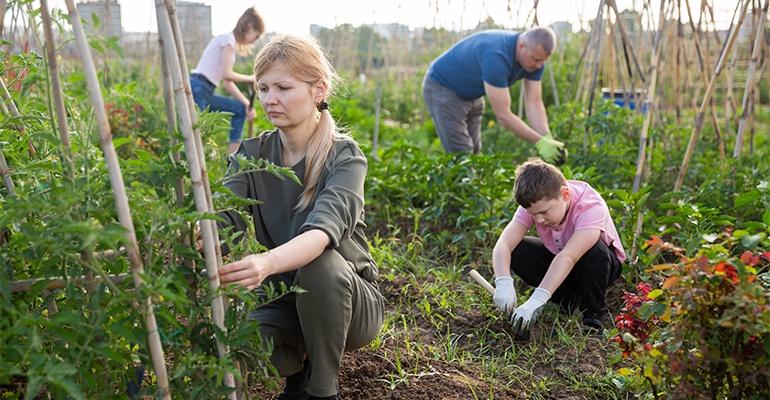
“Food systems are caught in the crossfire of a new geopolitical era,” the authors wrote. “...Conflicts, trade wars, climate shocks, aid cuts, and the breakdown of international institutions are destabilising global food markets. This is exposing the fragility of a food system built on just-in-time supply chains and dependence on global markets – and driving food price volatility, corporate profiteering, debt, and rising hunger.”
What does a resilient self-reliance strategy look like?
IPES-Food called on governments to respond by building “resilient self-reliance”. This concept, it said, centres on strengthening domestic food systems, reducing excessive reliance on imports, and reclaiming policy tools that stabilise markets and protect food access. “This means prioritising food systems that ensure fair livelihoods for farmers and stable access to food for consumers even in times of disruption.”
Working with more diverse and locally rooted agroecological food systems, as well as smaller-scale producers, for example, will be key to achieving this, supporting both existing and new infrastuctures. And whilst international trade should not be cut off entirely, it must be reshaped around fair, cooperative, and diversified partnerships, the thinktank said.
Beyond government action, IPES-Food said civil society and social movement actors were “vital agents” in mobilising pressure, opening debate, building consensus, and generating support for new food systems.
“At its core, resilient self-reliance must be grounded in principles of solidarity, equity, diversity, and agency,” it said. “This is a historic moment to rethink how food systems are governed – and to strengthen local food systems against geopolitical shocks.”
Market management tools crucial to weathering global shocks
According to the report, market management tools will prove crucial for governments looking to address food system concerns and “reduce exposure to global shocks”.
Tools such as public food reserves, supply management systems, marketing boards, and production quotas should all be carefully considered and successful case studies investigated, it said.
India, West Africa, Canada, and Norway, for example, have used public food stockholding and supply management to stabilise prices and buffer the impact from supply disruptions, all the while supporting farmers.
“Governments worldwide can learn from these experiences,” IPES-Food wrote in its report.
Together, these tools can bolster both the protective and adaptive capacity of national food supply whilst reducing reliance on highly concentrated global supply chains, it said.
“Crucially, these tools highlight the need to move beyond a narrow focus on economic efficiency as the primary objective of food policy. When designed with equity, sustainability, and democratic participation in mind, market management tools can contribute to the stability and resilience of food systems – forming part of a broader shift towards building resilient self-reliance.”
With the right policy choices, including market management, public procurement, and fairer trade arrangements, IPES-Food said governments can seize the opportunity to rebuild food systems that are “more resilient, more equitable, and better able to ensure food access in an increasingly unstable world”.
Exploring ‘new and different’ forms of cooperation
In concluding remarks, IPES-Food said “the way ahead” for governments and industries worldwide required stronger competition policies to curb corporate concentration; financial market regulation to tackle speculation; and fundamental reform of trade agreements to expand policy space and uphold food sovereignty principles.
At the same time, it said current geopolitical instability also offers space for “new and different forms of international cooperation”, including coordinated food stockholding and other mechanisms to foster cooperative self-reliance.
The thinktank suggested taking a “sequenced approach to policy reform” to help countries reduce immediate vulnerabilities whilst addressing deeper structural drivers of uncertainty. Any reform process, however, must prioritise the needs of a country's poorest and most vulnerable people, it said, whilst preventing new groups from falling into poverty.
“Many open questions remain about how the path forward might unfold. The geopolitics of food are complex and constantly shifting, yet are also held in place by deeply entrenched interests, actors, and rules. The real and urgent need to reshape food systems is clear–reshaping them in ways that uphold food sovereignty will be critical to build resilient self-reliance.”

Get more of our news on Google
Set Ingredients Network as a 'Preferred Source' to get quicker access to the news you value.
Related news

Do the US dietary guidelines put UPFs under pressure?
10 Sep 2026
Will the US dietary guidelines change the way Americans eat, swapping ultra-processed foods for whole foods? We asked Dr Barry Popkin, renowned nutrition and obesity researcher.
Read more
Health and wellness engagement matures across Middle East and Africa
4 Sep 2026
Many consumers in the Middle East and Africa are now proactively engaged in health and wellness, looking to integrate better habits and products into their daily lives, say experts.
Read more
Skimpflation: An ‘unfair’ and risky approach to keeping prices low
2 Sep 2026
Consumers see skimpflation – reducing the quality of ingredients due to rising costs – as more unfair than shrinkflation, making it a risky strategy according to recent research.
Read more
‘Urgent gaps’ in achieving 2030 food system goals
27 Aug 2026
Global food systems are failing to meet 2030 targets across indicators including health, environment, and resilience, according to a report co-authored by the Food and Agriculture Organisation (FAO).
Read more
Seven-Eleven uses microbial testing tech to extend katsudon shelf life
26 Aug 2026
Japanese retail company Seven-Eleven has improved its factory’s microbial environment to keep comfort-food staple, katsudon, fresher for longer.
Read more
Chimac’s fusion sauces bring Korean flavours to Europe
25 Aug 2026
Irish sauce brand Chimac is tapping into Korea’s culinary traditions, bringing its flavours and products to European consumers who want a taste of K-food.
Read more
Global demand for instant noodles continues to rise
24 Aug 2026
Global demand for instant noodles reached 124.21 billion servings last year, representing a 0.7% year-on-year increase – or 900 million extra servings.
Read more
Popular barbecue staples experience sharp price increases
19 Aug 2026
The typical cost of US shoppers’ barbecue baskets has risen by 12% over the past year – the fastest annual rise in a decade, figures from The Economist show.
Read more
Hot NPD: Nissin launches first cold-water Cup Noodles
18 Aug 2026
Nissin is taking one of Japan’s most iconic instant meals in a completely new direction with the launch of the first cold water-only Cup Noodles in the brand’s 55-year history.
Read more
Manam Chocolate aims to bring premium Indian cacao to 'the world stage'
11 Aug 2026
Craft chocolate brand Manam Chocolate is investing in local expansion and supply chain innovation throughout India as it works to build out the premium reputation of its locally produced cacao products.
Read more