
Ingredients Categories
Finished Products
Finished Food Categories
- Bakery
- Beverages / Juices
- Cereal and grain products
- Confectionery
- Cooking Fats & Oils
- Dairy
- Egg products
- Fruits & Vegetables
- Infant & Baby food
- Meat, Poultry & Fish
- Nuts & Seeds products
- Other Finished Food Categories
- Pet Food
- Plant-based foods
- Prepared foods
- Sauces & Seasonings
- Sweet & Savoury Spreads
Specialised Finished Products
- Bee products
- Biotic products
- Dietary supplements
- Energy drinks
- Functional beverages
- Functional confectionery
- Functional food
- Functional powders
- Meal replacement products
- Nutricosmetics
- Other Specialised Finished Products
- Pet Dietary Supplements
- Pharma and OTC products
- Protein products
- Sugar replacers / Sweeteners
Health & Wellness Areas
Delivery Formats
Operations & Services
- 3D printing
- Analysis/ Testing
- Auditing & certifications
- Blending & mixing
- Bottling
- Certification
- Clinical trials
- Co-packing
- Coating
- Consulting
- Contract manufacturing
- Drying
- Electrospinning
- Encapsulating
- Enzymatic processing
- Extracting
- Extrusion
- Fat structuring
- Fermentation
- Filling
- Flavour development
- Freeze drying
- Granulating/ grinding/ milling / mixing
- High-pressure processing
- Labelling
- Other Operations & Services
- Packaging
- Packet filling
- Pasturising
- Quality assurance
- Saccharification
- Shear cell processing
- Spray drying
- Sterilisation
- Storage & Logistics
- Tabletting
- Toasting / roasting
- Ultra-high temperature processing
News
US industry panel recommends new UPF policy definition
Natasha Spencer-Jolliffe, Freelance Journalist 11 Jun 2026US-based Healthy Eating Research has proposed an ingredient-based approach to defining ultra-processed foods (UPFs) to make them easier to identify for policy purposes.
The Healthy Eating Research (HER) team set up an expert panel to discuss the latest insights into ultra-processed foods (UPFs) with the aim of developing a clear, easy-to-use definition of UPFs for policy purposes.
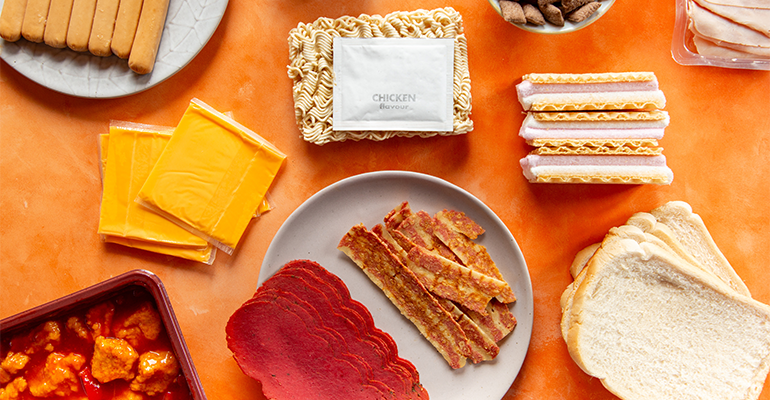
Its proposal – an ingredient-based approach – is designed to make it easier to identify UPFs in policy and programme settings while helping policymakers take action to reduce the availability and consumption of UPFs.
UPFs have no definition
Despite growing interest in UPFs among leading health groups, policymakers and the general public, there is still no consensus on how to define UPFs. These foods contain few or no whole-food ingredients and undergo intensive physical and chemical processing to achieve a long shelf life and high sensory appeal.
“Achieving agreement on a clear, evidence-informed UPF definition is especially important for designing effective policies to lower exposure to and consumption of UPFs, and ultimately improving health,” Megan Lott, deputy director of Healthy Eating Research, told Ingredients Network.
The US Secretary of Health and Human Services (HHS), Robert Kennedy, recently said that UPFs may be too complicated to define, following a request for information on UPFs issued in July 2025.
Current UPF-related policies use inconsistent definitions.
“Defining UPFs for policy is very nuanced,” said Lott. “Many of these are not grounded in science and require detailed analyses of all packaged foods and beverages that are impractical for widespread policy implementation.”
The NOVA classification system remains the only validated definition of UPFs, originally developed for research to categorise foods by degree of processing.
“However, this definition cannot be used directly for policy because packaged foods do not include information about processing on their labels,” Lott said.
Panel suggests an ingredient-based approach
Healthy Eating Research’s recommended definition uses ingredient markers to operationalise the NOVA definition, in lieu of details on the level of processing packaged foods and beverages undergo.
The panel’s recommended policy definition states that a food is ultra-processed if it contains cosmetic additives – such as flavours, sweeteners, and colours – or ingredients of non-culinary use, like high-fructose corn syrup, that are not typically found in home kitchens.
In addition, the panel recommends exempting UPF products from policy regulation if they meet a modified version of the Food and Drug Administration’s (FDA) definition of “healthy”.
The Administration’s “healthy” definition refers to foods that contain adequate amounts of recommended food groups, remain below nutrient thresholds for added sugar, sodium and saturated fat, and do not contain non-sugar sweeteners.
The exemption helps avoid capturing UPFs that are often recommended by health professionals or nutrition guidelines as healthy choices, such as some whole-grain breads, tofu, or yoghurt.
By adopting this definition and approach, the panel hopes it will reliably identify the foods it is intended to capture, such as UPFs, while excluding those outside its scope, such as less-processed foods like canned or frozen fruits and vegetables.
“This approach is also practical to implement, without requiring burdensome, product-by-product expert review and is transparent, relying on publicly documented and available data,” Lott said.
Shaping UPF policy in the US
The panel also recommended strategies to reduce the availability and consumption of UPFs. These policies aim to lower exposure to UPFs by influencing their affordability, acceptability and accessibility across different settings and populations.
While policies to reduce the availability and consumption of UPFs are an important strategy for improving the healthfulness of the food supply, the panel emphasised that whether a food or beverage is a UPF reflects one dimension of a food’s overall healthfulness.
“UPF policies are intended to complement, not replace, traditional nutrient- and food group-based approaches to nutrition policy,” Lott added.
Panellists identified how independent policies can work together to shape the overall food and drink sector.
An identity labelling policy, for example, would require all packaged UPFs in stores to bear a label stating, “This product is ultra-processed”.
“This policy is more inclusive and captures all UPFs, as the goal is to provide consumers with important product information,” said Lott.
Other policies could restrict the number of UPFs that consumers can purchase and the number that food operators provide in publicly funded settings, such as schools, childcare sites and government facilities. Governments could also impose excise taxes on selected UPFs, such as soda, which could increase the shelf price of taxed products, reduce sales and lower consumption.
Trading uncertainty for transparency
The panel hopes these recommendations will also encourage more transparency in product labelling and reformulation. New product development is extensive in the industry, with producers consistently creating new ingredients and manufacturers often substituting new cosmetic additives, such as natural flavours and colours.
“But these changes do not reduce the level of processing a product goes through,” said Lott.
Panellists encouraged all ingredients to be listed on food labels and that the US considers requiring the technical functions of ingredients to be listed on product packaging, like they are in the UK.
“As consumer demand for less-processed options increases, we hope the food industry will consider eliminating unnecessary ingredients,” said Lott.
Doing so in healthier products like wholegrain breads and yoghurts would, for example, prevent them from being classified as UPFs in the first place.

Get more of our news on Google
Set Ingredients Network as a 'Preferred Source' to get quicker access to the news you value.
Related news

Do the US dietary guidelines put UPFs under pressure?
10 Sep 2026
Will the US dietary guidelines change the way Americans eat, swapping ultra-processed foods for whole foods? We asked Dr Barry Popkin, renowned nutrition and obesity researcher.
Read more
Food fraud costs UK economy £2bn each year
9 Sep 2026
Food fraud is costing the UK economy up to £2 billion (€2.3 billion) every year although the food sector is more “resilient” than others, according to a recent study.
Read more
Kellogg accelerates work to remove artificial colours from all US cereals
3 Sep 2026
WK Kellogg has announced an accelerated timeline to eliminate all artificial colours and the chemical preservative, BHT, across its full US portfolio of cereals and cereal packaging.
Read more
Skimpflation: An ‘unfair’ and risky approach to keeping prices low
2 Sep 2026
Consumers see skimpflation – reducing the quality of ingredients due to rising costs – as more unfair than shrinkflation, making it a risky strategy according to recent research.
Read more
NielsenIQ’s EU barometer shows Britain leading in grocery inflation
31 Aug 2026
Britain was the only country to record grocery inflation above 2%, according to NielsenIQ data that compared Europe’s five biggest grocery markets from February to May 2026.
Read more
‘Urgent gaps’ in achieving 2030 food system goals
27 Aug 2026
Global food systems are failing to meet 2030 targets across indicators including health, environment, and resilience, according to a report co-authored by the Food and Agriculture Organisation (FAO).
Read more
Chimac’s fusion sauces bring Korean flavours to Europe
25 Aug 2026
Irish sauce brand Chimac is tapping into Korea’s culinary traditions, bringing its flavours and products to European consumers who want a taste of K-food.
Read more
Global demand for instant noodles continues to rise
24 Aug 2026
Global demand for instant noodles reached 124.21 billion servings last year, representing a 0.7% year-on-year increase – or 900 million extra servings.
Read more
Popular barbecue staples experience sharp price increases
19 Aug 2026
The typical cost of US shoppers’ barbecue baskets has risen by 12% over the past year – the fastest annual rise in a decade, figures from The Economist show.
Read more
Hot NPD: Nissin launches first cold-water Cup Noodles
18 Aug 2026
Nissin is taking one of Japan’s most iconic instant meals in a completely new direction with the launch of the first cold water-only Cup Noodles in the brand’s 55-year history.
Read more