
Ingredients Categories
Finished Products
Finished Food Categories
- Bakery
- Beverages / Juices
- Cereal and grain products
- Confectionery
- Cooking Fats & Oils
- Dairy
- Egg products
- Fruits & Vegetables
- Infant & Baby food
- Meat, Poultry & Fish
- Nuts & Seeds products
- Other Finished Food Categories
- Pet Food
- Plant-based foods
- Prepared foods
- Sauces & Seasonings
- Sweet & Savoury Spreads
Specialised Finished Products
- Bee products
- Biotic products
- Dietary supplements
- Energy drinks
- Functional beverages
- Functional confectionery
- Functional food
- Functional powders
- Meal replacement products
- Nutricosmetics
- Other Specialised Finished Products
- Pet Dietary Supplements
- Pharma and OTC products
- Protein products
- Sugar replacers / Sweeteners
Health & Wellness Areas
Delivery Formats
Operations & Services
- 3D printing
- Analysis/ Testing
- Auditing & certifications
- Blending & mixing
- Bottling
- Certification
- Clinical trials
- Co-packing
- Coating
- Consulting
- Contract manufacturing
- Drying
- Electrospinning
- Encapsulating
- Enzymatic processing
- Extracting
- Extrusion
- Fat structuring
- Fermentation
- Filling
- Flavour development
- Freeze drying
- Granulating/ grinding/ milling / mixing
- High-pressure processing
- Labelling
- Other Operations & Services
- Packaging
- Packet filling
- Pasturising
- Quality assurance
- Saccharification
- Shear cell processing
- Spray drying
- Sterilisation
- Storage & Logistics
- Tabletting
- Toasting / roasting
- Ultra-high temperature processing
News
IFF prepares to sell food ingredients business to CVC
Natasha Spencer-Jolliffe, Freelance Journalist 16 Jun 2026With IFF set to sell its food ingredients division to CVC Capital Partners for €3.7 billion, we look at how mergers, acquisitions, and divestments are shaping the sector.
As part of the €3.7 billion transaction, IFF will retain an approximately 10% minority equity interest in the business, valued at €173 million, which will allow it to continue ongoing discussions and collaborations.

Through the sale of its food ingredients business to CVC, IFF aims to strengthen its focus on its innovation-driven businesses in the taste, scent, and health and bioscience segments. It hopes the sale will improve its cash flow, provide greater financial flexibility, and strengthen its position to achieve its growth and profitability objectives.
Reshaping IFF’s food portfolio
The billion-dollar deal will see the major player reshape its portfolio around higher-growth, higher-margin core businesses. It is a trend that has defined the food ingredients sector in recent years.
“IFF has been the most active, divesting a string of assets in the wake of its transformational merger with DuPont's Nutrition & Biosciences business in 2021 and its earlier acquisition of Frutarom in 2018,” Oliver North, director at Oghma Partners, a finance advisory firm specialising in the European food and beverage sector, told Ingredients Network.
IFF’s agreement with CVC is its latest big-money deal. Previous divestments have included IFF’s fruit preparation business to Frulact in 2021, its Savory Solutions Group (now NovaTaste) to PAI Partners in 2022, and its Flavour Speciality Ingredients business (now Natara) to Exponent in 2023. It also sold its soy protein concentrates, lecithin and crushes businesses to Bunge in 2025.
Flurry of activity in food ingredients
Despite fears about inflation and uncertain global supply chains, the current merger and acquisition (M&A) landscape in the food ingredients industry is lively, with numerous big-name deals taking place. “The food ingredients sector remains extremely active and has seen a flurry of significant high-profile M&A activity in recent months,” said North
Ingredion has tabled a €3.1billion takeover proposal for Tate & Lyle, with a firm offer deadline of 11th June 2026. If it goes ahead, the deal would create a major global platform in texture, mouthfeel, and sugar reduction.
Döhler moved to take full ownership of natural extracts house Treatt in April 2026 in a €212 million deal at a 47% premium. The agreement came after the company’s steady accumulation of a stake since late 2025, following Natara's failed takeover attempt.
Nexture, the Investindustrial-backed ingredients group, acquired Portuguese fruit-ingredients specialist Frulact, bringing its combined platform to €1.1 billion in revenue across 24 factories globally.
“Beyond the headline transactions, activity at the smaller end of the market remains equally elevated,” said North.
Shaking up food activities
Divestments are also common, with several leading food-ingredient companies transforming their organisational structures in this way. Similar to how IFF is with CVC, Symrise pruned its non-core assets, divesting its natural colours business to EQT's Oterra in 2021, carving out 51% of its UK fruit ingredients trading business to Th. Geyer in a joint venture in 2024.
Kerry Group has undergone a significant structural transformation, pivoting toward a pure-play taste and nutrition business by exiting consumer foods, meats and dairy. Within ingredients, it is increasingly focusing on bioactives, enzymes, and biopreservation, as illustrated by the €502m sale of its sweet ingredients portfolio to IRCA, backed by Advent International in 2023.
DSM-Firmenich, formed from the merger of Royal DSM and Firmenich in 2023, has followed a similar path, divesting its yeast extract business to Lesaffre and its marine lipids business to KD Pharma Group in 2024. Then, in February 2026, the company completed the €2.2bn sale of its Animal Nutrition & Health division to CVC, to focus on nutrition, health and beauty.
“In this context, the CVC/IFF Food Ingredients deal is a continuation of a well-established pattern rather than a departure from it,” said North.
The agreement illustrates the growing role of private equity as the natural acquirer of these carved-out platforms, often substantial, cash-generative businesses that no longer fit within larger strategic portfolios.
“CVC in particular has been active in this space,” said North. The company also acquired DSM-Firmenich's Animal Nutrition & Health division earlier in 2026, suggesting that private equity is not merely a passive recipient of these assets but actively seeks them out.
Private equity is a defining feature in food M&As
However, the sector remains highly fragmented.
“This structural characteristic continues to drive deal activity as both trade buyers and private equity-backed platforms seek to consolidate capabilities, geographies, and customer relationships,” said North.
Furthermore, private equity has become an increasingly prominent force in the sector, engaging in activities beyond buying carved-out corporate assets. Private equity-backed platforms are driving buy-and-build strategies at scale, with Nexture (Investindustrial) and Nactarome (TA Associates) among these.
“The sector is appealing to private equity as speciality ingredients businesses typically combine sticky, long-term customer relationships, underpinned by deep formulation integration and high switching costs, with strong margins and cash-generative operating models,” North added.
Private equity activity looks set to remain a defining feature of the ingredients M&A landscape in 2026 and beyond.

Get more of our news on Google
Set Ingredients Network as a 'Preferred Source' to get quicker access to the news you value.
Related news

Do the US dietary guidelines put UPFs under pressure?
10 Sep 2026
Will the US dietary guidelines change the way Americans eat, swapping ultra-processed foods for whole foods? We asked Dr Barry Popkin, renowned nutrition and obesity researcher.
Read more
Health and wellness engagement matures across Middle East and Africa
4 Sep 2026
Many consumers in the Middle East and Africa are now proactively engaged in health and wellness, looking to integrate better habits and products into their daily lives, say experts.
Read more
Skimpflation: An ‘unfair’ and risky approach to keeping prices low
2 Sep 2026
Consumers see skimpflation – reducing the quality of ingredients due to rising costs – as more unfair than shrinkflation, making it a risky strategy according to recent research.
Read more
‘Urgent gaps’ in achieving 2030 food system goals
27 Aug 2026
Global food systems are failing to meet 2030 targets across indicators including health, environment, and resilience, according to a report co-authored by the Food and Agriculture Organisation (FAO).
Read more
Seven-Eleven uses microbial testing tech to extend katsudon shelf life
26 Aug 2026
Japanese retail company Seven-Eleven has improved its factory’s microbial environment to keep comfort-food staple, katsudon, fresher for longer.
Read more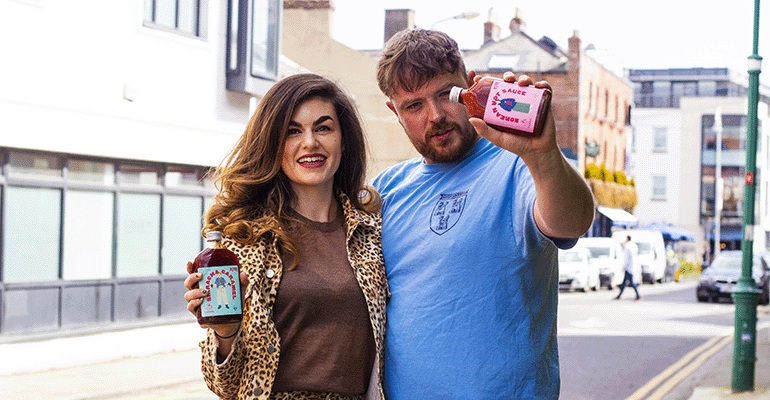
Chimac’s fusion sauces bring Korean flavours to Europe
25 Aug 2026
Irish sauce brand Chimac is tapping into Korea’s culinary traditions, bringing its flavours and products to European consumers who want a taste of K-food.
Read more
Global demand for instant noodles continues to rise
24 Aug 2026
Global demand for instant noodles reached 124.21 billion servings last year, representing a 0.7% year-on-year increase – or 900 million extra servings.
Read more
Popular barbecue staples experience sharp price increases
19 Aug 2026
The typical cost of US shoppers’ barbecue baskets has risen by 12% over the past year – the fastest annual rise in a decade, figures from The Economist show.
Read more
Hot NPD: Nissin launches first cold-water Cup Noodles
18 Aug 2026
Nissin is taking one of Japan’s most iconic instant meals in a completely new direction with the launch of the first cold water-only Cup Noodles in the brand’s 55-year history.
Read more
Manam Chocolate aims to bring premium Indian cacao to 'the world stage'
11 Aug 2026
Craft chocolate brand Manam Chocolate is investing in local expansion and supply chain innovation throughout India as it works to build out the premium reputation of its locally produced cacao products.
Read more