
Ingredients Categories
Finished Products
Finished Food Categories
- Bakery
- Beverages / Juices
- Cereal and grain products
- Confectionery
- Cooking Fats & Oils
- Dairy
- Egg products
- Fruits & Vegetables
- Infant & Baby food
- Meat, Poultry & Fish
- Nuts & Seeds products
- Other Finished Food Categories
- Pet Food
- Plant-based foods
- Prepared foods
- Sauces & Seasonings
- Sweet & Savoury Spreads
Specialised Finished Products
- Bee products
- Biotic products
- Dietary supplements
- Energy drinks
- Functional beverages
- Functional confectionery
- Functional food
- Functional powders
- Meal replacement products
- Nutricosmetics
- Other Specialised Finished Products
- Pet Dietary Supplements
- Pharma and OTC products
- Protein products
- Sugar replacers / Sweeteners
Health & Wellness Areas
Delivery Formats
Operations & Services
- 3D printing
- Analysis/ Testing
- Auditing & certifications
- Blending & mixing
- Bottling
- Certification
- Clinical trials
- Co-packing
- Coating
- Consulting
- Contract manufacturing
- Drying
- Electrospinning
- Encapsulating
- Enzymatic processing
- Extracting
- Extrusion
- Fat structuring
- Fermentation
- Filling
- Flavour development
- Freeze drying
- Granulating/ grinding/ milling / mixing
- High-pressure processing
- Labelling
- Other Operations & Services
- Packaging
- Packet filling
- Pasturising
- Quality assurance
- Saccharification
- Shear cell processing
- Spray drying
- Sterilisation
- Storage & Logistics
- Tabletting
- Toasting / roasting
- Ultra-high temperature processing
News
Supergrain fonio expands its reach in US market
Beth Newhart, Freelance Journalist 11 Jan 2024
More US consumers will find nutritious, climate-smart grain fonio in supermarkets thanks to a new distribution structure for the import’s most prominent commercial brand, Yolélé.
Brooklyn, New York-based African food company Yolélé pioneered the sale of the fonio grain in American consumer packaged goods with its launch in 2017. Fonio is a cereal grain that is primarily grown in west African countries like Guinea, Nigeria and Senegal.
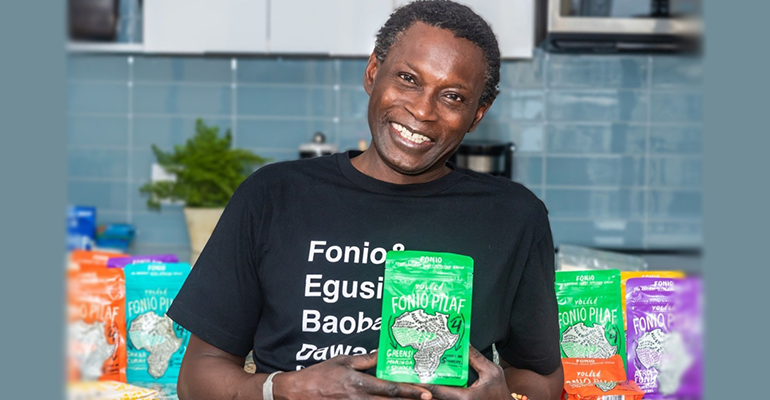
Yolélé was the first brand to bring fonio to the United States, and its mission is “to share Africa’s ingredients and flavors with the world.”
The company also said it aims to create economic opportunity for smallholder farming communities in Africa, and to support their biodiverse, regenerative, and climate-resilient farming systems.
Supporting distribution in house and smallholder farms
Yolélé currently sells bagged fonio, advertising that it is “like couscous” on the packaging, as well as three varieties of fonio chips and five varieties of fonio pilaf. The products can be found in specialty local grocers across the US, as well as larger chains like Whole Foods Market and The Fresh Market.
In its recent distribution announcement, the brand said it will transition out of a license arrangement with Woodland Foods, which governed sales of its products. Yolélé will now directly operate a distribution channel for all its product lines. This move will allow the brand to reduce the price of its fonio from $6.99 to $5.99.
Yolélé said it hopes that as the vendor of record, it will be able to further support “programmes that increase visibility and awareness for the brand and the products”.
A nutritious, climate-smart crop
Fonio is a tough, drought-resistant crop that can be used like any other grain. It is naturally low in cholesterol, sodium and fat, and is a good source of B vitamins, iron and zinc. Fonio has traditionally been known as an inexpensive, versatile crop found in Africa alone, before the effort to expand it to western markets in the late 2010s.
“Most people in West Africa rely on farming to survive, but they don’t have access to markets,” Yolélé said.
“At Yolélé, we’re connecting smallholder farmers – mainly women – with local and global markets so they can support themselves from agriculture while increasing food sovereignty in the region.”
Resilience in farming and funding
On its website, Yolélé explains that even when West African farmers are able to get fonio to market, they struggle with low agricultural productivity and a lack of processing capacity, both of which prevent them from making money consistently.
To combat this problem, Yolélé said it is building processing facilities in West Africa that can turn plants into food to be sold locally and globally. It also prioritises collaborating with governments, intergovernmental agencies and NGOs to train and equip smallholders on conservation farming to increase productivity.
 © iStock/Michelle Lee Photography
“We are creating a market for traditional crops grown under these resilient farming systems in order to foster a more biodiverse, drought-tolerant landscape across West Africa. Devoting more land to this kind of farming has the potential to regenerate and regreen the Sahel,” Yolélé said.
The brand is accomplishing this with the help of nearly $2 million in funding that it raised in early 2022. In October, Yolélé also announced a partnership with Brooklyn Brewery to release a fonio-brewed craft beer. The Fonio Rising Double Pilsner can be purchased in Whole Foods Market.
“Fonio is easy to brew with and gives beautiful flavours to beer. This is very exciting stuff, and I can easily envision a future where fonio is widely used as an everyday brewing ingredient, bringing vast benefits to brewers, beer drinkers, farmers and the planet,” said Garrett Oliver, brewmaster at Brooklyn Brewery.

Get more of our news on Google
Set Ingredients Network as a 'Preferred Source' to get quicker access to the news you value.
Related news

Do the US dietary guidelines put UPFs under pressure?
10 Sep 2026
Will the US dietary guidelines change the way Americans eat, swapping ultra-processed foods for whole foods? We asked Dr Barry Popkin, renowned nutrition and obesity researcher.
Read more
Food fraud costs UK economy £2bn each year
9 Sep 2026
Food fraud is costing the UK economy up to £2 billion (€2.3 billion) every year although the food sector is more “resilient” than others, according to a recent study.
Read more
Health and wellness engagement matures across Middle East and Africa
4 Sep 2026
Many consumers in the Middle East and Africa are now proactively engaged in health and wellness, looking to integrate better habits and products into their daily lives, say experts.
Read more
Kellogg accelerates work to remove artificial colours from all US cereals
3 Sep 2026
WK Kellogg has announced an accelerated timeline to eliminate all artificial colours and the chemical preservative, BHT, across its full US portfolio of cereals and cereal packaging.
Read more
Skimpflation: An ‘unfair’ and risky approach to keeping prices low
2 Sep 2026
Consumers see skimpflation – reducing the quality of ingredients due to rising costs – as more unfair than shrinkflation, making it a risky strategy according to recent research.
Read more
‘Urgent gaps’ in achieving 2030 food system goals
27 Aug 2026
Global food systems are failing to meet 2030 targets across indicators including health, environment, and resilience, according to a report co-authored by the Food and Agriculture Organisation (FAO).
Read more
Global demand for instant noodles continues to rise
24 Aug 2026
Global demand for instant noodles reached 124.21 billion servings last year, representing a 0.7% year-on-year increase – or 900 million extra servings.
Read more
Savoury protein snacks shake up the on-the-go market
10 Aug 2026
Sweet flavours have dominated the high-protein snack category but savoury snacks, such as cheese bars and meat sticks, can appeal to health-conscious consumers.
Read more
How Secon Taste is putting upcycled snacks on shelves
4 Aug 2026
Hungarian zero-waste startup Secon Taste is turning surplus food into upcycled snacks such as fibre-packed granola, instant porridge, and a circular coffee-tasting box.
Read more
EU sets maximum MOAH levels to protect human health
28 Jul 2026
The EU will adopt maximum levels for mineral oil aromatic hydrocarbons (MOAH) in food to protect human health. What do manufacturers need to know?
Read more