
Ingredients Categories
Finished Products
Finished Food Categories
- Bakery
- Beverages / Juices
- Cereal and grain products
- Confectionery
- Cooking Fats & Oils
- Dairy
- Egg products
- Fruits & Vegetables
- Infant & Baby food
- Meat, Poultry & Fish
- Nuts & Seeds products
- Other Finished Food Categories
- Pet Food
- Plant-based foods
- Prepared foods
- Sauces & Seasonings
- Sweet & Savoury Spreads
Specialised Finished Products
- Bee products
- Biotic products
- Dietary supplements
- Energy drinks
- Functional beverages
- Functional confectionery
- Functional food
- Functional powders
- Meal replacement products
- Nutricosmetics
- Other Specialised Finished Products
- Pet Dietary Supplements
- Pharma and OTC products
- Protein products
- Sugar replacers / Sweeteners
Health & Wellness Areas
Delivery Formats
Operations & Services
- 3D printing
- Analysis/ Testing
- Auditing & certifications
- Blending & mixing
- Bottling
- Certification
- Clinical trials
- Co-packing
- Coating
- Consulting
- Contract manufacturing
- Drying
- Electrospinning
- Encapsulating
- Enzymatic processing
- Extracting
- Extrusion
- Fat structuring
- Fermentation
- Filling
- Flavour development
- Freeze drying
- Granulating/ grinding/ milling / mixing
- High-pressure processing
- Labelling
- Other Operations & Services
- Packaging
- Packet filling
- Pasturising
- Quality assurance
- Saccharification
- Shear cell processing
- Spray drying
- Sterilisation
- Storage & Logistics
- Tabletting
- Toasting / roasting
- Ultra-high temperature processing
News
Sweden updates front-of-pack Keyhole labelling rules
Simon Pitman, Freelance Journalist 11 Jul 2024The Swedish Food Agency has announced updates to the voluntary Keyhole logo, used in four Nordic countries, following recommendations to improve nutrition labelling.
The agency says the new rules, set to be implemented by 2026, are being updated to reflect the latest research in the field of nutrition, with the aim of making it easier for consumers to find healthier food and beverage choices on store shelves in the Nordic countries that form the Keyhole alliance.
The agency established its Keyhole nutritional and labelling recommendations for Sweden in 1989 and the label is now available in three other Nordic nations: Denmark, Iceland and Norway. Keyhole has been consistently updated over the years, to stay ahead of the latest expert recommendations, witnessing a major overhaul in 2021. The latest update takes into account evolving nutrition patterns and health recommendations.
Keyhole labelling updates to reflect latest expert nutritional advice
The new regulations will build on a global reputation that the Nordic countries already have as being among the healthiest in the world. Assessments regularly rate Sweden, Iceland, Denmark and Norway in the top percentile of healthiest countries in the world, including a 2024 evaluation by the World Population Review, which is based on statistics from the World Health Organization (WHO).
"The Keyhole rules are updated as new research is published, so even though the Keyhole has been around for 30 years, it is not the same requirement as it was then. For example, the requirements have become tougher in terms of less sugar and salt, more whole grains and in addition, more food groups can now be labelled with the Keyhole," said Irene Blom, project manager for the Keyhole at the Swedish National Food Agency.
With the agreement of the four participating Nordic nations, the work has now begun to update the criteria that will be in line with the Nordic Nutrition Recommendations (NNR), which were established in 2023 following a five-year project involving researchers and experts to establish the best criteria for both health and the environment across the region.
Timetable agreed for the implementation of the new criteria
The proposed changes are currently under a consultation process with food and beverage companies in the four countries and those companies are invited to submit input through a new survey that will be available shortly from the Swedish Food Agency.
"All the Nordic countries that use the Keyhole have now agreed on a timetable and it is exciting that we can now start this work. We are now looking forward to wise input from the food industry that will help us prioritise which parts we need to work on in the coming years," said Blom.
Keyhole criteria are based on what individuals in the Nordic region need to eat in an effort to maintain or improve their health, based on the NNR. The Keyhole labelling focuses on five main areas that include less salt and sugar, more fibre, more wholegrains and an emphasis on healthier fats.
Support for food brands wanting to adopt the Keyhole label
Any food and beverage product that meets the Keyhole criteria can use the label, while the agency also provides support for brands to help them make changes to their recipes that allow them to fulfill the criteria. That support includes a platform designed to help brand owners understand how the label works.
Keyhole covers 11 main food groups, that include plant-based products; vegetables fruits, berries and nuts; milk, fermented products and plant-based alternatives; as well as flour rice and grains. Those 11 main groups also include 32 subcategories.
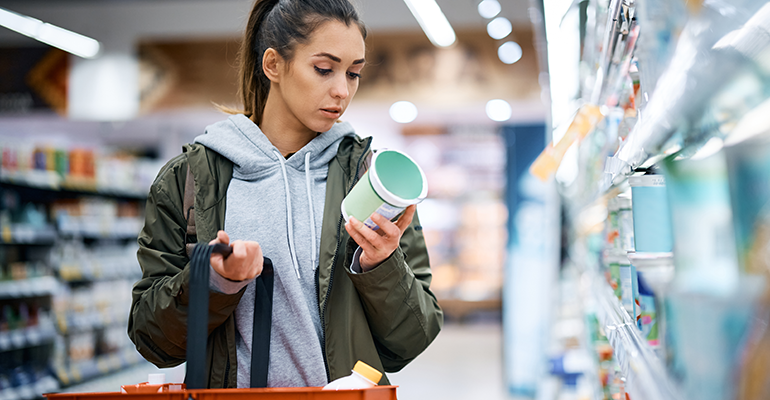
The Keyhole brand is represented by a simple keyhole shaped green, black or while logo, and its inclusion on any food product serves to guide consumers to make healthier choices when they are out grocery shopping. The front of pack logo appears on food products in a position where it is clearly visible, while it can also be placed on boxes or baskets for products that do not require any packaging, such as loose fruit and vegetables.

Get more of our news on Google
Set Ingredients Network as a 'Preferred Source' to get quicker access to the news you value.
Related news

Do the US dietary guidelines put UPFs under pressure?
10 Sep 2026
Will the US dietary guidelines change the way Americans eat, swapping ultra-processed foods for whole foods? We asked Dr Barry Popkin, renowned nutrition and obesity researcher.
Read more
Food fraud costs UK economy £2bn each year
9 Sep 2026
Food fraud is costing the UK economy up to £2 billion (€2.3 billion) every year although the food sector is more “resilient” than others, according to a recent study.
Read more
Kellogg accelerates work to remove artificial colours from all US cereals
3 Sep 2026
WK Kellogg has announced an accelerated timeline to eliminate all artificial colours and the chemical preservative, BHT, across its full US portfolio of cereals and cereal packaging.
Read more
Skimpflation: An ‘unfair’ and risky approach to keeping prices low
2 Sep 2026
Consumers see skimpflation – reducing the quality of ingredients due to rising costs – as more unfair than shrinkflation, making it a risky strategy according to recent research.
Read more
NielsenIQ’s EU barometer shows Britain leading in grocery inflation
31 Aug 2026
Britain was the only country to record grocery inflation above 2%, according to NielsenIQ data that compared Europe’s five biggest grocery markets from February to May 2026.
Read more
‘Urgent gaps’ in achieving 2030 food system goals
27 Aug 2026
Global food systems are failing to meet 2030 targets across indicators including health, environment, and resilience, according to a report co-authored by the Food and Agriculture Organisation (FAO).
Read more
Chimac’s fusion sauces bring Korean flavours to Europe
25 Aug 2026
Irish sauce brand Chimac is tapping into Korea’s culinary traditions, bringing its flavours and products to European consumers who want a taste of K-food.
Read more
Global demand for instant noodles continues to rise
24 Aug 2026
Global demand for instant noodles reached 124.21 billion servings last year, representing a 0.7% year-on-year increase – or 900 million extra servings.
Read more
Popular barbecue staples experience sharp price increases
19 Aug 2026
The typical cost of US shoppers’ barbecue baskets has risen by 12% over the past year – the fastest annual rise in a decade, figures from The Economist show.
Read more
Hot NPD: Nissin launches first cold-water Cup Noodles
18 Aug 2026
Nissin is taking one of Japan’s most iconic instant meals in a completely new direction with the launch of the first cold water-only Cup Noodles in the brand’s 55-year history.
Read more