
Ingredients Categories
Finished Products
Finished Food Categories
- Bakery
- Beverages / Juices
- Cereal and grain products
- Confectionery
- Cooking Fats & Oils
- Dairy
- Egg products
- Fruits & Vegetables
- Infant & Baby food
- Meat, Poultry & Fish
- Nuts & Seeds products
- Other Finished Food Categories
- Pet Food
- Plant-based foods
- Prepared foods
- Sauces & Seasonings
- Sweet & Savoury Spreads
Specialised Finished Products
- Bee products
- Biotic products
- Dietary supplements
- Energy drinks
- Functional beverages
- Functional confectionery
- Functional food
- Functional powders
- Meal replacement products
- Nutricosmetics
- Other Specialised Finished Products
- Pet Dietary Supplements
- Pharma and OTC products
- Protein products
- Sugar replacers / Sweeteners
Health & Wellness Areas
Delivery Formats
Operations & Services
- 3D printing
- Analysis/ Testing
- Auditing & certifications
- Blending & mixing
- Bottling
- Certification
- Clinical trials
- Co-packing
- Coating
- Consulting
- Contract manufacturing
- Drying
- Electrospinning
- Encapsulating
- Enzymatic processing
- Extracting
- Extrusion
- Fat structuring
- Fermentation
- Filling
- Flavour development
- Freeze drying
- Granulating/ grinding/ milling / mixing
- High-pressure processing
- Labelling
- Other Operations & Services
- Packaging
- Packet filling
- Pasturising
- Quality assurance
- Saccharification
- Shear cell processing
- Spray drying
- Sterilisation
- Storage & Logistics
- Tabletting
- Toasting / roasting
- Ultra-high temperature processing
News
US beverage industry hails growth in packaging investment
David Burrows, Freelance Journalist 6 Oct 2025The US drinks industry is forecasting a period of investment in packaging machinery as companies expand, introduce new lines, and change materials to meet client demand.
Nine in 10 (90%) facilities plan to purchase some type of beverage packaging machinery in the next three years, with cost, speed, efficiency, and flexibility of machinery key assets, according to a survey conducted by PMMI, the Association for Packaging and Processing Technologies.
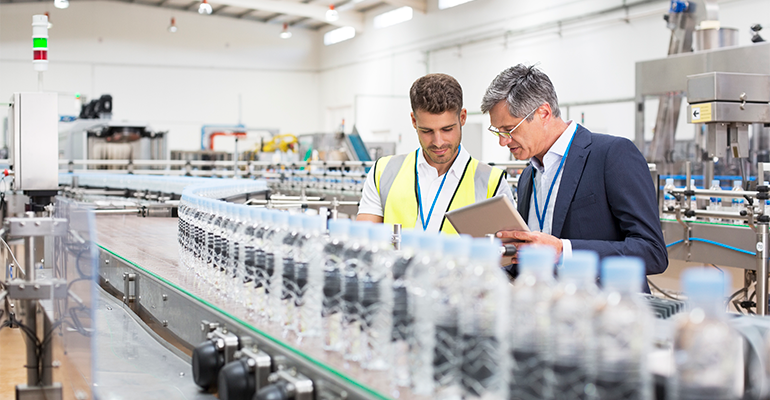
Expansion is the main driver for investment in lines for one in four (24%) US consumer packaged goods (CPG) companies and contract packagers, the poll, which was conducted in collaboration with Advantage Research, showed.
‘Tremendous growth’ despite recession threat
More than half (50%) of respondents said they expect to increase investment by 6 to 15% over the next three years, and nearly all of those interviewed in depth believe this trend will apply broadly across the sector, rather than to a few companies.
To put this into context, almost a quarter (24%) of those surveyed have invested $10 million or more in the past three years, with two-thirds (66%) investing up to $2.49 million, according to the Beverage Industry Packaging Trends report.
“I feel like the beverage industry is growing year over year, and there’s so much opportunity out there,” said one private label contractor.
A representative for a global drinks company added: “Everybody everywhere is buying equipment. If we go into a recession or if the tariffs come, that may change things, but right now there’s still tremendous growth.”
Upgrades and evolving formats drive machinery investment
Much of the investment going into machinery involves upgrades or updates based on the stock-keeping units (SKUs) they will be expected to run.
Formats will also shift and evolve, requiring flexibility. One director of robotic solutions and safety explained: “Just because you have a can line today that can produce a 12-ounce standard can, that does not mean that line can produce 12-ounce sleek cans, 16-ounce cans or mini cans.”
Customers are also seeking out products with less packaging. One drinks manufacturer interviewed for the report explained how cardboard trays had been removed from its packaging, in turn reducing cost, adding: “Our customers really like that.”
Paper chase drives investment in packaging machinery
There is also heightened consumer demand for “more sustainable and recyclable packaging”. Respondents predicted a surge in paper-based drinks packaging over the next two to three years.
“Consumers would like to see packaging move away from plastics,” the report read. “Rigid plastic is most commonly used today by survey respondents, but they anticipate a decrease in the next two to three years.”
This could fuel expansion of paper-based packaging across the drinks sector.
Currently, across the CPG companies and contract packagers surveyed, rigid plastic accounted for 32% of production, followed by flexible packaging (20%), metal (18%), and glass (15%). Paper-based made up 11%, with liquid cartons another 5%.
However, in the next couple of years they expect the use of glass and rigid plastic for beverages to fall by 8% and 7% respectively. There will be growth in liquid cartons (16%), metal (20%), flexible packaging (30%), and paper-based packaging (43%).
One manufacturer explained: “I think the wheel’s already turning insofar as recyclability and sustainability. I think that a lot of companies that manufacture the package material itself are on board for that, and so there should be a lot coming out to make improvements. Recyclable, compostable materials I see as a big area.”
Survey respondents were split in terms of the impact environmental demands will have on their operations: 39% believe it will be positive, while 27% think the impact will be negative.
Smart tech hoped to reduce staff headaches
Two-thirds of companies do not feel fully prepared for these environmental demands. Inflation, technology integration, and talent are also areas of concern, the report found.
The fluid workforce is a particular worry, so businesses will be looking for “smarter” technology to offer a helping hand.
“We have to assume that somebody new that doesn’t have much experience is going to be running the equipment every day or could come on because they’re replacing somebody who’s sick or they left,” one co-manufacturer explained.
“The equipment’s got to be smarter to run on itself and more intuitive to the operator and have built in tutorials.”

Get more of our news on Google
Set Ingredients Network as a 'Preferred Source' to get quicker access to the news you value.
Related news

Do the US dietary guidelines put UPFs under pressure?
10 Sep 2026
Will the US dietary guidelines change the way Americans eat, swapping ultra-processed foods for whole foods? We asked Dr Barry Popkin, renowned nutrition and obesity researcher.
Read more
Food fraud costs UK economy £2bn each year
9 Sep 2026
Food fraud is costing the UK economy up to £2 billion (€2.3 billion) every year although the food sector is more “resilient” than others, according to a recent study.
Read more
Skimpflation: An ‘unfair’ and risky approach to keeping prices low
2 Sep 2026
Consumers see skimpflation – reducing the quality of ingredients due to rising costs – as more unfair than shrinkflation, making it a risky strategy according to recent research.
Read more
NielsenIQ’s EU barometer shows Britain leading in grocery inflation
31 Aug 2026
Britain was the only country to record grocery inflation above 2%, according to NielsenIQ data that compared Europe’s five biggest grocery markets from February to May 2026.
Read more
‘Urgent gaps’ in achieving 2030 food system goals
27 Aug 2026
Global food systems are failing to meet 2030 targets across indicators including health, environment, and resilience, according to a report co-authored by the Food and Agriculture Organisation (FAO).
Read more
China beverages: Is herbal innovation the future?
20 Aug 2026
Herbal and botanical innovation in China's drinks market continues to grow, with ingredients like astragalus root, ginger, and ginseng in the spotlight – and focus shifting far beyond refreshment.
Read more
Popular barbecue staples experience sharp price increases
19 Aug 2026
The typical cost of US shoppers’ barbecue baskets has risen by 12% over the past year – the fastest annual rise in a decade, figures from The Economist show.
Read more
Beyond 'nice to have': A spotlight on US functional beverages
12 Aug 2026
Functional beverage interest in the US is gaining important ground as consumers now expect function rather than see it as "nice to have", and there are clear market gaps for growth, according to Spate.
Read more
Manam Chocolate aims to bring premium Indian cacao to 'the world stage'
11 Aug 2026
Craft chocolate brand Manam Chocolate is investing in local expansion and supply chain innovation throughout India as it works to build out the premium reputation of its locally produced cacao products.
Read more
Digital twin technology gains ground in food manufacturing
6 Aug 2026
Food and beverage companies are increasingly turning to digital twins to optimise and automate manufacturing processes, but opportunities stretch far beyond this, say experts.
Read more