
Ingredients Categories
Finished Products
Finished Food Categories
- Bakery
- Beverages / Juices
- Cereal and grain products
- Confectionery
- Cooking Fats & Oils
- Dairy
- Egg products
- Fruits & Vegetables
- Infant & Baby food
- Meat, Poultry & Fish
- Nuts & Seeds products
- Other Finished Food Categories
- Pet Food
- Plant-based foods
- Prepared foods
- Sauces & Seasonings
- Sweet & Savoury Spreads
Specialised Finished Products
- Bee products
- Biotic products
- Dietary supplements
- Energy drinks
- Functional beverages
- Functional confectionery
- Functional food
- Functional powders
- Meal replacement products
- Nutricosmetics
- Other Specialised Finished Products
- Pet Dietary Supplements
- Pharma and OTC products
- Protein products
- Sugar replacers / Sweeteners
Health & Wellness Areas
Delivery Formats
Operations & Services
- 3D printing
- Analysis/ Testing
- Auditing & certifications
- Blending & mixing
- Bottling
- Certification
- Clinical trials
- Co-packing
- Coating
- Consulting
- Contract manufacturing
- Drying
- Electrospinning
- Encapsulating
- Enzymatic processing
- Extracting
- Extrusion
- Fat structuring
- Fermentation
- Filling
- Flavour development
- Freeze drying
- Granulating/ grinding/ milling / mixing
- High-pressure processing
- Labelling
- Other Operations & Services
- Packaging
- Packet filling
- Pasturising
- Quality assurance
- Saccharification
- Shear cell processing
- Spray drying
- Sterilisation
- Storage & Logistics
- Tabletting
- Toasting / roasting
- Ultra-high temperature processing
News
US study links low income with a lack of food retail choice and unhealthier snack choices
Simon Pitman, Freelance Journalist 19 Jul 2024A new study shows that individuals living in lower-income neighbourhoods without local food stores are more likely to choose snacks and sweet products than people living in higher-income areas with more food retail choices.
The research, jointly conducted by the University of Michigan and the University of Alabama-Birmingham, looked into purchase decisions made for four food categories: bakery sweets; candy and desserts; savory snacks and crackers; and nutritional bars and low-fat snacks and sweets.
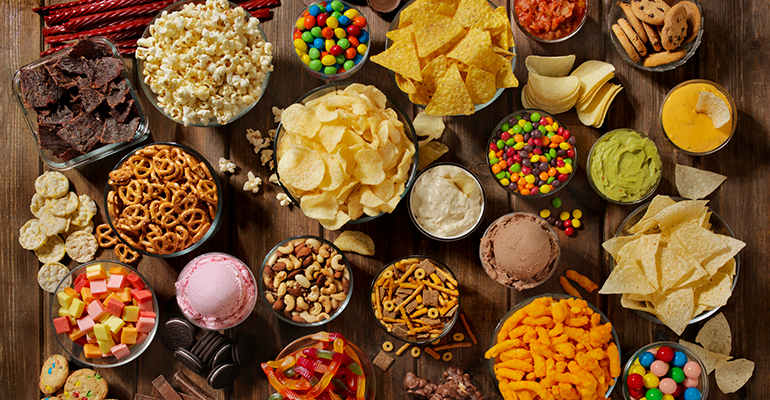
Published in the July edition of The Journal of Nutrition, the study was a national sample of more than 21,000 adults of middle and older ages that took into account both urban and rural environments together. This data was then contrasted with food store availability according to neighborhood socioeconomic status to determine what type of snacks and sweet products were consumed.
Lower-income neighborhoods meant higher snacking levels
The study found that those in lower-income neighborhoods, with fewer grocery retail choices, ate 9% more snacks and sweets overall, 10% more sweet bakery products, and 6% more sweets and desserts than people in neighbourhoods with food stores nearby.
The data also showed that people in higher-income areas ate 11% fewer snacks and sweets overall, 19% fewer bakery products, and 6% fewer savory and cracker snacks. The higher-income categories also ate more nutritional bars and low-fat snacks and sweets compared to lower-income households.
The results also showed that those living in US Department of Agriculture (USDA)-defined food deserts ate about the same amount of snacks as those who were not living in USDA-defined food deserts, regardless of income.
Lack of choice is a likely reason for lower-income snacking habits
“Our findings provide evidence of the connections between neighborhood socioeconomic status and snacks and sweets intake, as well as the geographic availability of food stores and snack and sweets intake,” said Ian Lang, research project manager for the environment and policy lab at the University of Michigan School of Kinesiology. “While other food environment studies have examined food offerings and selections in food stores in lower-income neighbourhoods, we did not have in-store food audit data available to us in this study and therefore could not characterise store offerings or selections.”
However, while Lang did add that the data the study used to analyse the patterns did not focus on the “why”, he did hypothesise that because of a lack of food stores, people living in low-income areas might buy more shelf-stable foods like snacks and sweets because they are shopping at non-traditional food outlets like dollar stores, where there are fewer healthier options available.
"In identifying potential settings for future programming and interventions that target snacks and sweets intake, it may be important to consider places devoid of primary food retailers rather than places only devoid of large traditional supermarkets," Lang said.
Study is important because of less research into snacking habits
Lang underlined that this study was significant because there is already a large body of research on the residential food environment that focuses on healthier categories, like fruit and vegetable intake, whereas there is far less data on snacking habits. Likewise, there is also limited data that takes into account food store availability of snacks and sweets in the US.
While the research team did not look at the health impact of sweets and snacks in the study, there is a large existing body of research pointing to the fact that the consumption of those products considered in the study did lead to a higher calorie intake, and ultimately an increased body weight in adults.
Lang explained that the next steps for the research will be to assess the health implications of these types of snacking habits, particularly taking into account the impact on chronic diseases like stroke.
“Because dietary intake is closely linked with the development of chronic diseases like stroke, our research group is also planning to use the REGARDS cohort to examine whether the geographic availability of food stores is associated with more distal health outcomes like stroke incidence,” said Lang.

Get more of our news on Google
Set Ingredients Network as a 'Preferred Source' to get quicker access to the news you value.
Related news

Do the US dietary guidelines put UPFs under pressure?
10 Sep 2026
Will the US dietary guidelines change the way Americans eat, swapping ultra-processed foods for whole foods? We asked Dr Barry Popkin, renowned nutrition and obesity researcher.
Read more
Food fraud costs UK economy £2bn each year
9 Sep 2026
Food fraud is costing the UK economy up to £2 billion (€2.3 billion) every year although the food sector is more “resilient” than others, according to a recent study.
Read more
Kellogg accelerates work to remove artificial colours from all US cereals
3 Sep 2026
WK Kellogg has announced an accelerated timeline to eliminate all artificial colours and the chemical preservative, BHT, across its full US portfolio of cereals and cereal packaging.
Read more
Skimpflation: An ‘unfair’ and risky approach to keeping prices low
2 Sep 2026
Consumers see skimpflation – reducing the quality of ingredients due to rising costs – as more unfair than shrinkflation, making it a risky strategy according to recent research.
Read more
NielsenIQ’s EU barometer shows Britain leading in grocery inflation
31 Aug 2026
Britain was the only country to record grocery inflation above 2%, according to NielsenIQ data that compared Europe’s five biggest grocery markets from February to May 2026.
Read more
‘Urgent gaps’ in achieving 2030 food system goals
27 Aug 2026
Global food systems are failing to meet 2030 targets across indicators including health, environment, and resilience, according to a report co-authored by the Food and Agriculture Organisation (FAO).
Read more
Chimac’s fusion sauces bring Korean flavours to Europe
25 Aug 2026
Irish sauce brand Chimac is tapping into Korea’s culinary traditions, bringing its flavours and products to European consumers who want a taste of K-food.
Read more
Global demand for instant noodles continues to rise
24 Aug 2026
Global demand for instant noodles reached 124.21 billion servings last year, representing a 0.7% year-on-year increase – or 900 million extra servings.
Read more
Popular barbecue staples experience sharp price increases
19 Aug 2026
The typical cost of US shoppers’ barbecue baskets has risen by 12% over the past year – the fastest annual rise in a decade, figures from The Economist show.
Read more
Hot NPD: Nissin launches first cold-water Cup Noodles
18 Aug 2026
Nissin is taking one of Japan’s most iconic instant meals in a completely new direction with the launch of the first cold water-only Cup Noodles in the brand’s 55-year history.
Read more