
Ingredients Categories
Finished Products
Finished Food Categories
- Bakery
- Beverages / Juices
- Cereal and grain products
- Confectionery
- Cooking Fats & Oils
- Dairy
- Egg products
- Fruits & Vegetables
- Infant & Baby food
- Meat, Poultry & Fish
- Nuts & Seeds products
- Other Finished Food Categories
- Pet Food
- Plant-based foods
- Prepared foods
- Sauces & Seasonings
- Sweet & Savoury Spreads
Specialised Finished Products
- Bee products
- Biotic products
- Dietary supplements
- Energy drinks
- Functional beverages
- Functional confectionery
- Functional food
- Functional powders
- Meal replacement products
- Nutricosmetics
- Other Specialised Finished Products
- Pet Dietary Supplements
- Pharma and OTC products
- Protein products
- Sugar replacers / Sweeteners
Health & Wellness Areas
Delivery Formats
Operations & Services
- 3D printing
- Analysis/ Testing
- Auditing & certifications
- Blending & mixing
- Bottling
- Certification
- Clinical trials
- Co-packing
- Coating
- Consulting
- Contract manufacturing
- Drying
- Electrospinning
- Encapsulating
- Enzymatic processing
- Extracting
- Extrusion
- Fat structuring
- Fermentation
- Filling
- Flavour development
- Freeze drying
- Granulating/ grinding/ milling / mixing
- High-pressure processing
- Labelling
- Other Operations & Services
- Packaging
- Packet filling
- Pasturising
- Quality assurance
- Saccharification
- Shear cell processing
- Spray drying
- Sterilisation
- Storage & Logistics
- Tabletting
- Toasting / roasting
- Ultra-high temperature processing
News
What retail decision makers really think about better-for-you foods
Lynda Searby, Freelance Journalist 29 Jun 2026Retailers are looking for better-for-you brands that can deliver not just health positioning, but also credibility, value, proof, and strong execution, says Eat Well Global.
Whilst there is clear consumer demand for products that address health and nutrition, better-for-you is not an automatic win for brands, warned Eat Well Global, a US-based strategy and communication agency specialised in the food and beverage industry.
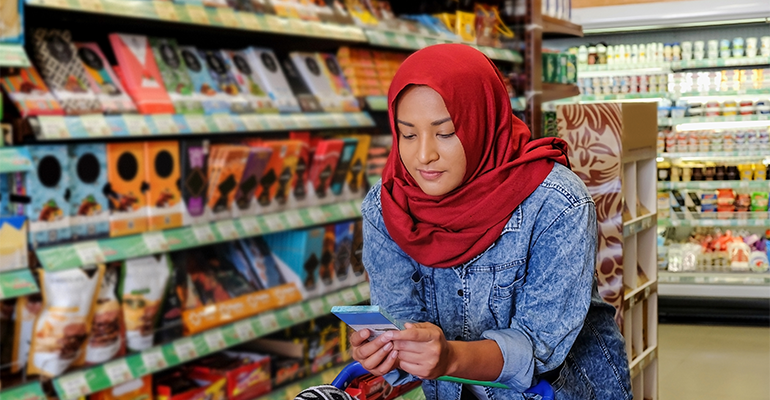
It surveyed 50 retail leaders across the US and combined these perspectives with quantitative data to understand what is driving the success of better-for-you brands at retail.
The key takeaway of the study was that health and nutrition is emerging as the clearest growth opportunity for retailers – but only when grounded in credibility.
“Credibility has become a core attribute retailers and consumers expect from better-for-you brands,” wrote the authors of the State of Better Food in Retail report, which was published in April.
This research revealed that even in a retail landscape constrained by margin pressure and shopper price sensitivity, demand for health and nutrition is a major opportunity; in the survey, 48% of retail leaders said they saw health-driven shoppers as a meaningful growth opportunity.
“Health is viewed by retail leaders as a sustained engine of innovation and a key driver of future growth,” wrote the report’s authors.
However, Eat Well Global warned that better-for-you is not an automatic win, as 40% of participants said it only drives growth when “executed well”.
What does a ‘well executed’ product mean?
When it comes to what retailers are looking for from better-for-you products, credibility stands out as a key consideration; in the study it ranked just below price / margin structure (62%), and alongside innovation / differentiation (52%) as one of the top three factors that influence whether a brand earns initial placement.
There was also evidence to suggest that retailers evaluate better-for-you products differently to “regular” products; 34% of participants said that better-for-you products need to outperform conventional brands in terms of credibility to secure a listing.
Additionally, 37% of those surveyed said credibility and transparency are critical attributes for better-for-you brands in 2026, ranking between pricing (45%) and differentiation (31%).
Eat Well Global said these expectations highlight a key tension it has been observing over the years: consumers expect credibility and transparency, but brands and retailers are not always meeting that bar.
The company said that the lack of consumer trust in nutrition claims in particular is a major barrier.
The study highlighted three key factors that have been identified by retail leaders as limiting trust in nutrition communications. These are: variations in definitions, such as ‘healthy’, ‘clean’, and ‘natural’; the complexity of regulations and claims standards; and inconsistent or unclear information from brands.
“The issue is that consumers are more sceptical and more likely to question brands and health claims. Retailers know this and are giving initial placement to better-for-you brands that can demonstrate credibility,” wrote the authors.
“Credibility has become more than a communication issue and now directly influences what gets on shelf,” they added.
Four ways of building credibility
Brands that win in this climate will be those that build credibility as a system, through insight-aligned strategy, compelling portfolios, and credible communications, said Eat Well Global.
It outlined four ways in which brands can do this, starting with choosing a “hero attribute”.
“Move beyond broad better-for-you positioning toward the specific benefit spaces retailers build around,” the agency advised.
“The report shows that retailer demand is concentrating around specific, functional spaces – high protein, lower sugar, fibre and digestive health, functional benefits, clean label, and portion or weight management – not broad wellness language. Brands need to choose the one benefit space that gives them the clearest role in the category,” it said.
Secondly, Eat Well Global emphasised the importance of a clear proof system. In other words strengthening claims, evidence, and portfolio logic so retailers have a clear rationale for why they should list a better-for-you product.
“This is about making the case stronger behind the scenes…It is about building a more convincing case: stronger claims discipline, sharper reason-to-believe, and clearer portfolio logic that helps retailers understand why the product deserves space,” wrote the market researchers.
In this respect, “good execution” equates to a cleaner claims hierarchy, fewer vague statements, and more proof points, as well as portfolio that feels “deliberate, not patched together”.
Thirdly, brands need to reduce ambiguity and make a product “instantly understandable”, according to Eat Well Global. They can do this by simplifying front-of-pack and digital shelf language so the lead benefit is easier to understand quickly; reducing competing messages, vague wellness descriptors, and unnecessary complexity; and ensuring that social content reinforces product truth.
Eat Well’s final recommendation is to build one health story that holds up across packaging, merchandising, digital channels, and retail selling.
“The report shows that better-for-you performance is shaped across the full retail journey – packaging, shopper education, merchandising, digital shelf, partnerships, and retailer-facing communication. This is an execution and alignment issue,” wrote the authors.

Get more of our news on Google
Set Ingredients Network as a 'Preferred Source' to get quicker access to the news you value.
Related news

M&S launches own-brand pet food range
11 Sep 2026
UK retailer Marks & Spencer has launched its own-brand pet food line Paws & Pals – a well-timed and strategic move that will appeal to loyal shoppers, says a marketing expert.
Read more
Do the US dietary guidelines put UPFs under pressure?
10 Sep 2026
Will the US dietary guidelines change the way Americans eat, swapping ultra-processed foods for whole foods? We asked Dr Barry Popkin, renowned nutrition and obesity researcher.
Read more
Food fraud costs UK economy £2bn each year
9 Sep 2026
Food fraud is costing the UK economy up to £2 billion (€2.3 billion) every year although the food sector is more “resilient” than others, according to a recent study.
Read more
Kellogg accelerates work to remove artificial colours from all US cereals
3 Sep 2026
WK Kellogg has announced an accelerated timeline to eliminate all artificial colours and the chemical preservative, BHT, across its full US portfolio of cereals and cereal packaging.
Read more
‘Urgent gaps’ in achieving 2030 food system goals
27 Aug 2026
Global food systems are failing to meet 2030 targets across indicators including health, environment, and resilience, according to a report co-authored by the Food and Agriculture Organisation (FAO).
Read more
Chimac’s fusion sauces bring Korean flavours to Europe
25 Aug 2026
Irish sauce brand Chimac is tapping into Korea’s culinary traditions, bringing its flavours and products to European consumers who want a taste of K-food.
Read more
Savoury protein snacks shake up the on-the-go market
10 Aug 2026
Sweet flavours have dominated the high-protein snack category but savoury snacks, such as cheese bars and meat sticks, can appeal to health-conscious consumers.
Read more
Nestlé invests in regeneratively farmed wheat for KitKat
5 Aug 2026
Nestlé will pay a premium for Wildfarmed’s regeneratively farmed wheat but the CPG remains reticent to promote the move on packs of its KitKat bars.
Read more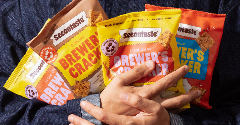
How Secon Taste is putting upcycled snacks on shelves
4 Aug 2026
Hungarian zero-waste startup Secon Taste is turning surplus food into upcycled snacks such as fibre-packed granola, instant porridge, and a circular coffee-tasting box.
Read more
Codex sets global thresholds for ‘may contain’ labels
3 Aug 2026
Codex Alimentarius has adopted its first global guidance on when to use “may contain” allergen warnings, setting thresholds intended to stop the label being used as blanket legal cover.
Read more