
Ingredients Categories
Finished Products
Finished Food Categories
- Bakery
- Beverages / Juices
- Cereal and grain products
- Confectionery
- Cooking Fats & Oils
- Dairy
- Egg products
- Fruits & Vegetables
- Infant & Baby food
- Meat, Poultry & Fish
- Nuts & Seeds products
- Other Finished Food Categories
- Pet Food
- Plant-based foods
- Prepared foods
- Sauces & Seasonings
- Sweet & Savoury Spreads
Specialised Finished Products
- Bee products
- Biotic products
- Dietary supplements
- Energy drinks
- Functional beverages
- Functional confectionery
- Functional food
- Functional powders
- Meal replacement products
- Nutricosmetics
- Other Specialised Finished Products
- Pet Dietary Supplements
- Pharma and OTC products
- Protein products
- Sugar replacers / Sweeteners
Health & Wellness Areas
Delivery Formats
Operations & Services
- 3D printing
- Analysis/ Testing
- Auditing & certifications
- Blending & mixing
- Bottling
- Certification
- Clinical trials
- Co-packing
- Coating
- Consulting
- Contract manufacturing
- Drying
- Electrospinning
- Encapsulating
- Enzymatic processing
- Extracting
- Extrusion
- Fat structuring
- Fermentation
- Filling
- Flavour development
- Freeze drying
- Granulating/ grinding/ milling / mixing
- High-pressure processing
- Labelling
- Other Operations & Services
- Packaging
- Packet filling
- Pasturising
- Quality assurance
- Saccharification
- Shear cell processing
- Spray drying
- Sterilisation
- Storage & Logistics
- Tabletting
- Toasting / roasting
- Ultra-high temperature processing
News
Food and drink giants call for postponements to EU packaging laws
David Burrows, Freelance Journalist 1 Jun 2026Some of Europe’s biggest companies, including Coca-Cola, Kraft Heinz, McCormick, and Mondelēz, have called for new EU rules on packaging to be delayed.
In a private letter, sent to European Commission president Ursula von der Leyen on April 29, and seen by Ingredients Network, the 100 companies wrote: “[...] we continue to support the EU’s ambition to advance packaging circularity and have engaged constructively to help make the Packaging and Packaging Waste Regulation (‘PPWR’ or the ‘Regulation’) workable and effective in practice.”
However, “given the limited timeframe and the level of legal uncertainty that persists, the PPWR risks not being implemented as intended without immediate clarification of key compliance requirements by the European Commission”.
Other food and drink signatories include Develey and Helios. Environmental NGOs said the companies are trying to create a “smokescreen” that will see the status quo – reliance on single-use packaging – persist.
“Rather than focusing on implementation and compliance, this appears to be a last-minute attempt to weaken and re-negotiate agreed measures designed to reduce packaging waste, improve recyclability, and accelerate Europe’s transition away from unnecessary single-use packaging,” said Zero Waste Europe (ZWE), in a statement.
PPWR you ready? No, say major food and drink companies
PPWR is billed as a significant shift in packaging sustainability requirements across all member states. Replacing the Packaging Directive (94/62/EC), it establishes stricter rules on recyclability, waste prevention, and reuse.
The industry letter outlines 12 areas of the regulations where businesses have major concerns, mostly relating to “legal uncertainty” or “European competitiveness”.
On laws relating to packaging minimisation, for example, the companies explained that “restrictive requirements will erode Europe’s leadership in packaging and product design, creativity and premium manufacturing in key sectors, from spirits to gourmet food, cosmetics and perfumery, for which it is key to brand differentiation. In addition, mandating standardised design specifications for the “most common
packaging types and formats” is neither workable nor future proof, they added.
Forever chemicals lack testing solutions today
Another major cause for concern are restrictions to PFAS levels in food packaging. The so-called ‘forever chemicals’ – which offer crucial oil-, grease- and water-resistance properties in coatings applied to disposable packaging – are subject to strict limits under PPWR that come into force at the end of the summer. Alternatives are available but they are more expensive currently.
However, it is the testing for PFAS that is creating a commercial headache. From August 2026, restrictions on PFAS content will apply to all food-contact packaging, including consumer health and nutraceutical packaging. All packaging materials – plastic, paper, metal, and others – are in scope. This will require checking materials, coatings, and barrier layers to make sure any food and drink packaging doesn’t exceed the limits as stipulated sin article 5 (5) of the regulations.
The food and drink companies wrote: “[...] unfortunately there remains no harmonised or legally binding EU level methodology for PFAS testing in practice at Union level to demonstrate conformity as required by the Regulation. In the absence of such harmonisation or a presumption of conformity, economic operators face a continued risk of divergent interpretation and enforcement across member states.”
They also raise questions relating to definitions used within the regulations and targets to meet levels of recycled content, some of which are the subject of the latest guidance published by the European Commission in March.
Food supplement packaging can’t be ‘designed for recycling’
There will also be issues meeting the ‘design for recycling’ rules when it comes to food supplements, which can come in blister packs and multi-layered pouches, which are hard-to-recycle.
The companies noted that food supplements “are health-related products containing ingredients that degrade over time and for that reason need high barrier protection”. These packaging formats ensure product stability, safety and quality, while more work is needed to ensure viable alternatives are functional and can be scaled.
They asked for leniency in such cases: “a pragmatic and proportionate implementation approach is needed to achieve compliance, including appropriate transitional measures or targeted derogations for such critical packaging applications. The recyclability objective is currently not achievable at industrial scale,” they added.
Larissa Copello from ZWE said the regulations are challenging, but are the result of a “rigorous co-decision process” involving extensive scrutiny, public consultation, and democratic debate too. To now seek a reopening of the legislation simply because the industry finds the timeline challenging sets “a dangerous precedent”, she said.
Copello also noted that the European Commission has already “heard” the industry’s concerns and has recently published the guidance documents and FAQs to help companies navigate the transition.
In the past few months some food and drink companies have shifted their sustainability targets in relation to packaging, dropping those relating to reuse for example. Others have been pushing for regulations to level the playing field, most notably in relating to use of recycled plastics.
A separate Circular Economy Act, scheduled for this year, may introduce additional packaging-related measures, including incentives for reuse systems. The CEA is also expected to further harmonise recycled content across packaging rules across the bloc.

Get more of our news on Google
Set Ingredients Network as a 'Preferred Source' to get quicker access to the news you value.
Related news

Do the US dietary guidelines put UPFs under pressure?
10 Sep 2026
Will the US dietary guidelines change the way Americans eat, swapping ultra-processed foods for whole foods? We asked Dr Barry Popkin, renowned nutrition and obesity researcher.
Read more
Food fraud costs UK economy £2bn each year
9 Sep 2026
Food fraud is costing the UK economy up to £2 billion (€2.3 billion) every year although the food sector is more “resilient” than others, according to a recent study.
Read more
Kellogg accelerates work to remove artificial colours from all US cereals
3 Sep 2026
WK Kellogg has announced an accelerated timeline to eliminate all artificial colours and the chemical preservative, BHT, across its full US portfolio of cereals and cereal packaging.
Read more
Skimpflation: An ‘unfair’ and risky approach to keeping prices low
2 Sep 2026
Consumers see skimpflation – reducing the quality of ingredients due to rising costs – as more unfair than shrinkflation, making it a risky strategy according to recent research.
Read more
NielsenIQ’s EU barometer shows Britain leading in grocery inflation
31 Aug 2026
Britain was the only country to record grocery inflation above 2%, according to NielsenIQ data that compared Europe’s five biggest grocery markets from February to May 2026.
Read more
‘Urgent gaps’ in achieving 2030 food system goals
27 Aug 2026
Global food systems are failing to meet 2030 targets across indicators including health, environment, and resilience, according to a report co-authored by the Food and Agriculture Organisation (FAO).
Read more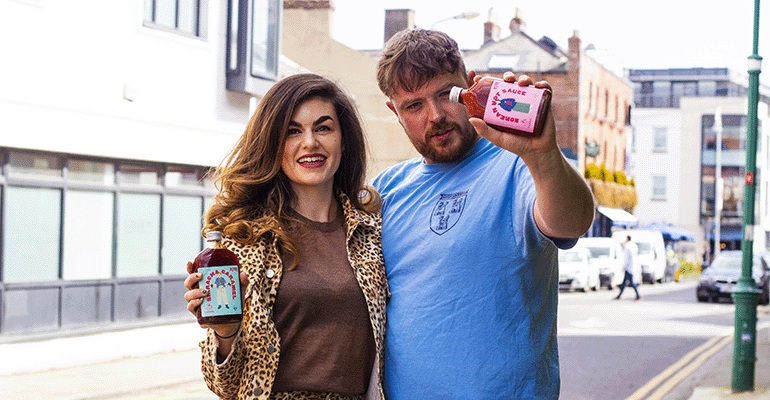
Chimac’s fusion sauces bring Korean flavours to Europe
25 Aug 2026
Irish sauce brand Chimac is tapping into Korea’s culinary traditions, bringing its flavours and products to European consumers who want a taste of K-food.
Read more
Global demand for instant noodles continues to rise
24 Aug 2026
Global demand for instant noodles reached 124.21 billion servings last year, representing a 0.7% year-on-year increase – or 900 million extra servings.
Read more
Popular barbecue staples experience sharp price increases
19 Aug 2026
The typical cost of US shoppers’ barbecue baskets has risen by 12% over the past year – the fastest annual rise in a decade, figures from The Economist show.
Read more
Hot NPD: Nissin launches first cold-water Cup Noodles
18 Aug 2026
Nissin is taking one of Japan’s most iconic instant meals in a completely new direction with the launch of the first cold water-only Cup Noodles in the brand’s 55-year history.
Read more