
Ingredients Categories
Finished Products
Finished Food Categories
- Bakery
- Beverages / Juices
- Cereal and grain products
- Confectionery
- Cooking Fats & Oils
- Dairy
- Egg products
- Fruits & Vegetables
- Infant & Baby food
- Meat, Poultry & Fish
- Nuts & Seeds products
- Other Finished Food Categories
- Pet Food
- Plant-based foods
- Prepared foods
- Sauces & Seasonings
- Sweet & Savoury Spreads
Specialised Finished Products
- Bee products
- Biotic products
- Dietary supplements
- Energy drinks
- Functional beverages
- Functional confectionery
- Functional food
- Functional powders
- Meal replacement products
- Nutricosmetics
- Other Specialised Finished Products
- Pet Dietary Supplements
- Pharma and OTC products
- Protein products
- Sugar replacers / Sweeteners
Health & Wellness Areas
Delivery Formats
Operations & Services
- 3D printing
- Analysis/ Testing
- Auditing & certifications
- Blending & mixing
- Bottling
- Certification
- Clinical trials
- Co-packing
- Coating
- Consulting
- Contract manufacturing
- Drying
- Electrospinning
- Encapsulating
- Enzymatic processing
- Extracting
- Extrusion
- Fat structuring
- Fermentation
- Filling
- Flavour development
- Freeze drying
- Granulating/ grinding/ milling / mixing
- High-pressure processing
- Labelling
- Other Operations & Services
- Packaging
- Packet filling
- Pasturising
- Quality assurance
- Saccharification
- Shear cell processing
- Spray drying
- Sterilisation
- Storage & Logistics
- Tabletting
- Toasting / roasting
- Ultra-high temperature processing
News
'AI is the new shelf' for food and drink discovery, Euromonitor says
Tessa Wiles, Content Editor - Food 20 Jul 2026AI apps are overtaking the retail shelf as the place where shoppers go to find new products. So, how can brands make their products algorithm-friendly and discoverable?
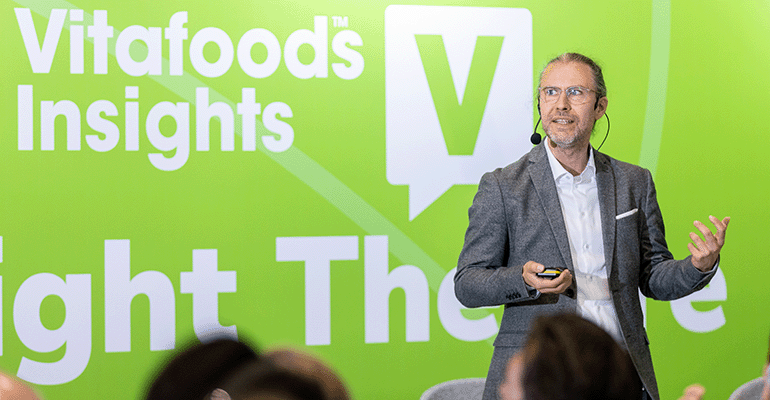
Artificial Intelligence (AI) models and apps like ChatGPT, Claude, and Gemini are quickly becoming the place where consumers go to discover food, drink, and supplements – and this is displacing the retail shelf as the point of product discovery, according to market research firm Euromonitor International.
At a glance:
- 22% of consumers now use AI to inform purchases, and around a third of queries are related to consumer health.
- Products need to be built for a dual audience, discoverable by AI algorithms and consumers.
- Consumers are experiencing “claim fatigue”, with 10% fewer shoppers closely reading on-pack claims than six years ago.
Manuel Leckel, a consultant at the firm, told the Vitafoods Europe audience that, in response to this, brands will need to develop products that can be found by algorithms as well as consumers.
Leckel explained that this shift comes at a time when product launches are falling, consumers are paying less attention to on-pack claims, and prices are overtaking every other purchase driver.
Consumers are relying on AI to pick their products
In a Euromonitor survey conducted earlier this year, every traditional information source, including friends, family, brand websites, and packaging itself, declined.
AI as an information source rose: 22% of those surveyed now use the tool to inform purchases.
“One out of five people are asking AI for their reference, and that's a game changer,” Leckel said, adding that of the consumer goods queries put to AI, around a third related to consumer health, behind only beauty and personal care.
The tools are not only helping inform purchases but are also pointing shoppers to the checkout. Traffic to US retail websites from AI sources rose by more than 690% over the 2025 holiday season (November to December) compared with a year earlier, and those AI referrals converted 31% more often than other traffic, according to Adobe.
In a deal announced in October 2025, PayPal partnered with OpenAI in the US to let shoppers buy and arrange delivery without leaving ChatGPT, Leckel said.
Designing products for a dual audience: Consumers and AI
AI has an impact on product discovery and purchasing, but there are steps brands can take to increase the likelihood that their products are shown in search results.
According to Leckel, search engine optimisation (SEO) has given way to generative AI optimisation (GEO), which, in a product discovery case, involves structuring product information so that large language models can read, understand, and recommend it.
Just because a brand ranks highly in e-commerce does not necessarily mean it will appear in AI recommendations. Leckel explained that this is creating a gap and an opportunity for challenger brands to overtake established names.
Leckel’s advice is to design for a “dual audience”: define clearly who a product is for and why and build a consistent, machine-readable digital profile.
“You really have to design a product for the consumer and for the AI,” he said.
Claims should be validated and tightened, as opposed to multiplied. He explained that substantiation is what makes a health claim both credible to shoppers and legible to the systems now curating the shelf.
“You really have to be careful which claims you pick,” he said. “AI is the new shelf, and you have to be ready for this shelf.”
Consumer claim fatigue makes ingredient choices count
Consumers are also paying less attention to what brands are putting on pack.
Over the past six years, 10% fewer consumers said they closely look at nutrition labels and how products are positioned, a “claim fatigue” that Leckel attributed to an excess of health messaging and eroding trust.
And yet health itself is still selling. Half (50%) of the products launched in the past year carried a health-related claim, and consumers are willing to pay more for nutritional benefits, he said.
“The last frontier where people are willing to invest is their health,” Leckel explained.
A product can boast multiple claims, but Leckel questioned whether that means it should and, with growing claim fatigue, he urged brands to be extremely purposeful in choosing the right claim.

Get more of our news on Google
Set Ingredients Network as a 'Preferred Source' to get quicker access to the news you value.
Related news

Do the US dietary guidelines put UPFs under pressure?
10 Sep 2026
Will the US dietary guidelines change the way Americans eat, swapping ultra-processed foods for whole foods? We asked Dr Barry Popkin, renowned nutrition and obesity researcher.
Read more
Food fraud costs UK economy £2bn each year
9 Sep 2026
Food fraud is costing the UK economy up to £2 billion (€2.3 billion) every year although the food sector is more “resilient” than others, according to a recent study.
Read more
Kellogg accelerates work to remove artificial colours from all US cereals
3 Sep 2026
WK Kellogg has announced an accelerated timeline to eliminate all artificial colours and the chemical preservative, BHT, across its full US portfolio of cereals and cereal packaging.
Read more
Skimpflation: An ‘unfair’ and risky approach to keeping prices low
2 Sep 2026
Consumers see skimpflation – reducing the quality of ingredients due to rising costs – as more unfair than shrinkflation, making it a risky strategy according to recent research.
Read more
NielsenIQ’s EU barometer shows Britain leading in grocery inflation
31 Aug 2026
Britain was the only country to record grocery inflation above 2%, according to NielsenIQ data that compared Europe’s five biggest grocery markets from February to May 2026.
Read more
‘Urgent gaps’ in achieving 2030 food system goals
27 Aug 2026
Global food systems are failing to meet 2030 targets across indicators including health, environment, and resilience, according to a report co-authored by the Food and Agriculture Organisation (FAO).
Read more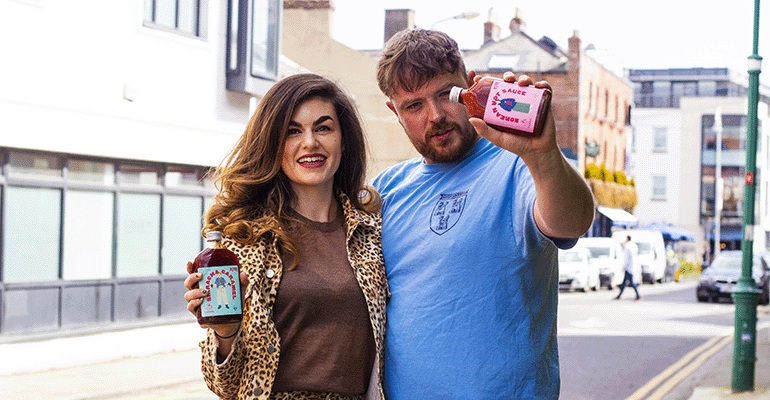
Chimac’s fusion sauces bring Korean flavours to Europe
25 Aug 2026
Irish sauce brand Chimac is tapping into Korea’s culinary traditions, bringing its flavours and products to European consumers who want a taste of K-food.
Read more
Global demand for instant noodles continues to rise
24 Aug 2026
Global demand for instant noodles reached 124.21 billion servings last year, representing a 0.7% year-on-year increase – or 900 million extra servings.
Read more
Popular barbecue staples experience sharp price increases
19 Aug 2026
The typical cost of US shoppers’ barbecue baskets has risen by 12% over the past year – the fastest annual rise in a decade, figures from The Economist show.
Read more
Hot NPD: Nissin launches first cold-water Cup Noodles
18 Aug 2026
Nissin is taking one of Japan’s most iconic instant meals in a completely new direction with the launch of the first cold water-only Cup Noodles in the brand’s 55-year history.
Read more