
Ingredients Categories
Finished Products
Finished Food Categories
- Bakery
- Beverages / Juices
- Cereal and grain products
- Confectionery
- Cooking Fats & Oils
- Dairy
- Egg products
- Fruits & Vegetables
- Infant & Baby food
- Meat, Poultry & Fish
- Nuts & Seeds products
- Other Finished Food Categories
- Pet Food
- Plant-based foods
- Prepared foods
- Sauces & Seasonings
- Sweet & Savoury Spreads
Specialised Finished Products
- Bee products
- Biotic products
- Dietary supplements
- Energy drinks
- Functional beverages
- Functional confectionery
- Functional food
- Functional powders
- Meal replacement products
- Nutricosmetics
- Other Specialised Finished Products
- Pet Dietary Supplements
- Pharma and OTC products
- Protein products
- Sugar replacers / Sweeteners
Health & Wellness Areas
Delivery Formats
Operations & Services
- 3D printing
- Analysis/ Testing
- Auditing & certifications
- Blending & mixing
- Bottling
- Certification
- Clinical trials
- Co-packing
- Coating
- Consulting
- Contract manufacturing
- Drying
- Electrospinning
- Encapsulating
- Enzymatic processing
- Extracting
- Extrusion
- Fat structuring
- Fermentation
- Filling
- Flavour development
- Freeze drying
- Granulating/ grinding/ milling / mixing
- High-pressure processing
- Labelling
- Other Operations & Services
- Packaging
- Packet filling
- Pasturising
- Quality assurance
- Saccharification
- Shear cell processing
- Spray drying
- Sterilisation
- Storage & Logistics
- Tabletting
- Toasting / roasting
- Ultra-high temperature processing
News
Beauty from within tipped to be top food trend in 2027
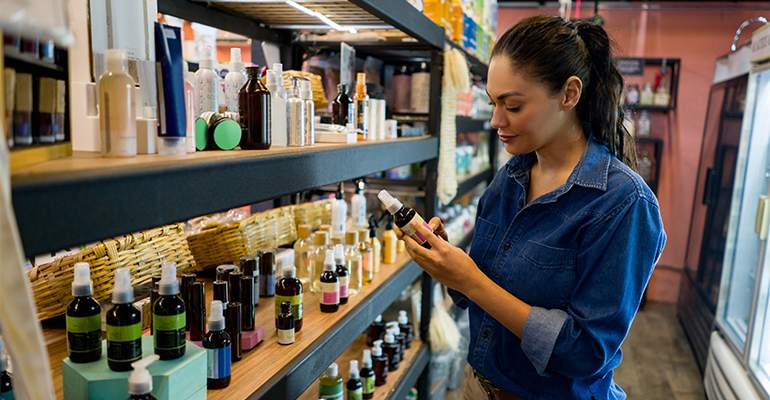
Paul Tucker 19 Nov 2026Beauty from within is tipped to be a major food trend in 2027, according to Mintel and Whole Foods, as the lines between beauty, wellness, and nutrition blur.
The beauty-from-within sector has been a quiet phenomenon in recent years, with interest increasing in beauty-boosting supplements and other edibles. In the first three months of 2026, 23% of adults in the US took beauty supplements, up from 17% in March 2022.
At a glance:
- Beauty from within or “beautrition” has been highlighted by Whole Foods Market and Mintel as a top food trend for 2027.
- Convenient, snackable formats like gummies and beverages are thriving.
- There is clear overlap between beauty from within and wellness-focused diets as a tool for health, longevity, and healthy ageing.
Now, the sector – known as nutricosmetics, beauty from within, and beautrition – is moving towards the mainstream, with Mintel and Amazon-owned Whole Foods Market naming it as a top beauty trend for 2027.
Enabling convenience in personal beauty ‘systems’
Part of the reason why beauty from within is thriving relates to convenience. Consumers have adopted beauty “systems” over the past 5-10 years, driving reliance on a sometimes complex mix of products, treatments, devices, and supplements – 33% of UK women use five or more products in their skincare regimes, according to a Mintel survey.
Yet high prices and complexity maybe putting a ceiling on growth for beauty systems.
“People are busy and overwhelmed with choice,” said Frederica Watson, director of e-commerce at B2C brand Revive Collagen. “Consumers are looking for new ways to improve and optimise.”
This is where beautrition offers an advantage for consumers: convenient, flavour-forward edible beauty products that can slot into routines without adding to the workload.
Electrolytes, creatine, and fibre for beauty from within
The market has been led the rise of collagen peptides as a mainstream beauty component – and a multibillion-dollar market, according to Future Market Insights – alongside other stalwarts such as omega-3. As the market grows, collagen will still be a major force, but it will need to share shelf space with novel additions.
“Collagen isn’t going anywhere,” said Watson. “But we’re also seeing the rise of electrolytes, creatine – particularly for women – and fibre.”
Formats are also diversifying. Whole Foods highlights collagen jelly sticks, fruit-flavoured sparkling collagen water, bone broth, skin-glaze gummies, olive oil shots, and drinkable sunscreen supplements as products to watch.
Convenience and user experience are key.
“Is it easy to use, and does it taste good? Busy consumers want products they can take on the go, such as ready-to-drink liquids and sachets,” Watson said. “There is also a sense of childhood whimsy to some new formats. It’s the millennial, mid-life sweet shop: jelly, tongue strips, gummies, even sherbet-style packs that fizz on the tongue.”
Watson pointed to the success of Grüns, which packages a laundry list of vitamins, nutrients, and greens into a gummy bear format. In April 2026, Unilever acquired the fledgling company for a reported $1.2bn.
Blurring boundaries between beauty and wellness
Innovative beauty from within offerings not only make beauty care more practical for on-the-go lives, they also blur the lines between beauty and wellness – which may broaden demographics.
“The heart of the category is still the existing beauty consumer moving some of their spend from topicals into ingestibles,” said Watson. “Where it genuinely broadens the market is in the entry points. Grocery puts beauty in front of shoppers who would never visit a beauty counter. People also come in through need-states rather than ‘skincare’, such as menopause, fitness, or GLP-1 side-effects. Men who would never adopt a serum will happily take a daily shot because it feels like wellness, not beauty.”
Indeed, many beauty from within components will already be familiar to those with even a passing awareness of nutrition trends.
Omega-3-rich tinned fish such as sardines are being touted for their skin health properties; vitamin C-rich citrus fruit and red peppers reportedly help with collagen synthesis; and berries provide polyphenols and antioxidants to combat oxidative stress. Even collagen itself is not simply a skin-revitalising substance – its benefits cover joint pain, bone strength, and muscle mass.
As with elsewhere in the wellness market, fortune will favour brands that can back up claims amid sometimes mixed evidence
“Consumers don’t want to take eight tablets,” said Watson. “They want multi-ingredient formulas that cover multiple bases, which fits our desire to make the most of every second of the day. The brands that will win are the ones that lead with the value and convenience of an X-in-one and back it up with proof of results.”

Get more of our news on Google
Set Ingredients Network as a 'Preferred Source' to get quicker access to the news you value.
Related news

Industry bodies demand stronger EU action on unfair trading practices
12 Nov 2026
Trade representatives FoodDrinkEurope and EFFAT have united to call for tougher rules on unfair trading practices across the EU’s food supply chain.
Read more
Supermarket cyber-attacks: How can retailers protect themselves?
11 Nov 2026
Cyber-attacks have hit supermarket refrigeration systems across Europe in recent weeks, highlighting the need for a coordinated response to cybercrime, says one expert.
Read more
China bets big on AI to ‘reshape’ the global agri-food system
10 Nov 2026
Leveraging AI is part of the Chinese government’s six-point consensus to deliver on its agri-food ambitions.
Read more
Could dropping several products make an entire food portfolio healthier and more sustainable?
5 Nov 2026
Researchers found that for some UK food manufacturers, swapping 10% or less of product lines could deliver more than 50% of potential nutritional quality or sustainability gains.
Read more
How manufacturers can reduce food loss in factory operations
4 Nov 2026
Small factory inefficiencies can send valuable ingredients down the drain, resulting in losses and prompting the sector to audit its waste-reduction methods. What solutions exist?
Read more
UK private label market ‘at its strongest yet’
2 Nov 2026
The UK's private label market is strong, but future success relies on smart own-label product design, innovative launches, and strong storytelling, says a marketing expert.
Read more
Organic for all: European retailers expand organic ranges and cut prices
29 Oct 2026
The organic category has “huge potential” in the UK, says premium retailer M&S, as Lidl also expands its range and reduces prices in Denmark.
Read more
Pressure grows on UK-EU SPS deal that promises price drops
27 Oct 2026
A new Sanitary and Phytosanitary (SPS) agreement could cut red tape and reduce costs, reviving agri-food trade between the UK and EU – but there are headaches on the horizon.
Read more
Manufacturers face volatility as food prices near four-year high
21 Oct 2026
Commodity pressures are mounting with the Food and Agriculture Organization’s (FAO) Food Price Index reaching its highest level since 2022.
Read more
In India, a protein boom with a difference
20 Oct 2026
In India, rising interest in protein is more focused on lower-cost protein and local specialties – think protein-fortified atta, paneer, tikis, and chaap – than fitness.
Read more