
Ingredients Categories
Finished Products
Finished Food Categories
- Bakery
- Beverages / Juices
- Cereal and grain products
- Confectionery
- Cooking Fats & Oils
- Dairy
- Egg products
- Fruits & Vegetables
- Infant & Baby food
- Meat, Poultry & Fish
- Nuts & Seeds products
- Other Finished Food Categories
- Pet Food
- Plant-based foods
- Prepared foods
- Sauces & Seasonings
- Sweet & Savoury Spreads
Specialised Finished Products
- Bee products
- Biotic products
- Dietary supplements
- Energy drinks
- Functional beverages
- Functional confectionery
- Functional food
- Functional powders
- Meal replacement products
- Nutricosmetics
- Other Specialised Finished Products
- Pet Dietary Supplements
- Pharma and OTC products
- Protein products
- Sugar replacers / Sweeteners
Health & Wellness Areas
Delivery Formats
Operations & Services
- 3D printing
- Analysis/ Testing
- Auditing & certifications
- Blending & mixing
- Bottling
- Certification
- Clinical trials
- Co-packing
- Coating
- Consulting
- Contract manufacturing
- Drying
- Electrospinning
- Encapsulating
- Enzymatic processing
- Extracting
- Extrusion
- Fat structuring
- Fermentation
- Filling
- Flavour development
- Freeze drying
- Granulating/ grinding/ milling / mixing
- High-pressure processing
- Labelling
- Other Operations & Services
- Packaging
- Packet filling
- Pasturising
- Quality assurance
- Saccharification
- Shear cell processing
- Spray drying
- Sterilisation
- Storage & Logistics
- Tabletting
- Toasting / roasting
- Ultra-high temperature processing
News
Supermarket cyber-attacks: How can retailers protect themselves?
Kacey Culliney, Freelance Journalist 11 Nov 2026Cyber-attacks have hit supermarket refrigeration systems across Europe in recent weeks, highlighting the need for a coordinated response to cybercrime, says one expert.
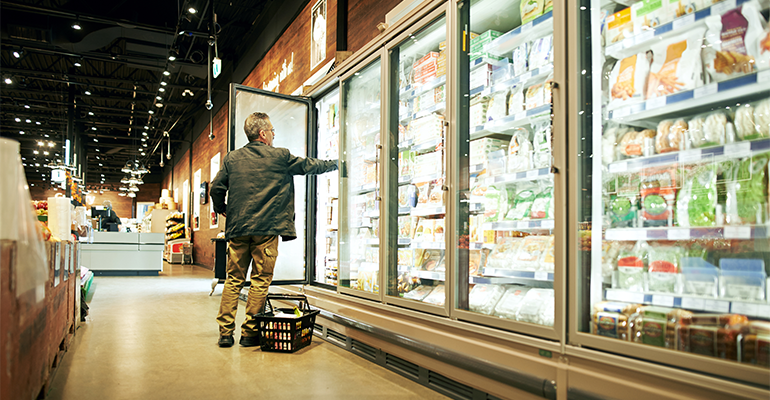
Last month, supermarkets across France were targeted in cyber-attacks that disrupted refrigeration systems throughout around 700 stores. The incident hit major retailers including Carrefour, E.Leclerc, Intermarché, Netto, Monoprix, and Coopérative U and led to product losses and even fires in some instances. The French government is currently investigating the incident.
At a glance:
- Hackers have disrupted refrigeration systems across thousands of stores in Europe, causing compromised food to be discarded.
- Cybercrime threats are becoming more commonplace in the food and beverage industry and are a growing concern.
- Industry must build resilience and timely responses to such attacks, working with all stakeholders in the supply chain.
Then, on 2 November, retailers in Belgium, Estonia, Finland, Ireland, Luxembourg, the Netherlands and Sweden reported problems with their refrigeration systems. Several supermarkets later confirmed they had been hacked.
So, is cybercrime becoming more of a concern for the food and beverage industry today? According to one supply chain expert, whilst the nature of the French attach was unique, cyber-attacks are certainly becoming more commonplace.
Speaking to Ingredients Network, Emily Field, food sector lead at the UK's National Standards Body the British Standards Institution Group (BSI), said that cyber-attacks have been identified as one of the acute risks facing the UK's food supply chain, for example, alongside extreme weather, energy disruption, and disease outbreaks.
“Food supply chains are becoming increasingly vulnerable to threats, whether that's cyber-attacks or geopolitical and climate instability,” Field said. “The French attack tangibly demonstrated the physical loss and the consequences of these attacks in real time, which is something you don't see often. It shows that resilience and risk preparedness connects many different functions of a business and should be treated as connected issues, rather than managing each one separately.”
Cyberattacks are “a growing concern” for the food industry
Field said that the food and beverage industry faces a number of increasing threats and vulnerabilities, which is “a real and growing concern”.
Particularly given how highly connected, even inter-connected, the sector is, with many different actors in the supply network increasing vulnerability. And all players are at risk, she said, from large retail stores and chains through to suppliers, logistic companies and smaller food and beverage businesses. Pre-empting and protecting against such attacks, therefore, requires consolidated action.
“Companies are operating in an environment where geopolitical, digital, environmental, and economic risks increasingly overlap, yet resilience is still often managed through separate initiatives rather than as an integrated, organisation-wide priority,” Field said.
Instead, companies should be taking an over-arching look to understand what is “genuinely critical to the operation” and take steps to identify expected threats and how best to manage those risks, she explained.
Here, business relationships become key, she said. “Supplier relationships are fundamental to protecting businesses against cybercrime and other vulnerabilities within supply chains. Working with partners that you trust, that you can have quick communication with and share information with can prevent a risk escalating and allow organisations to act quickly and take immediate action when responding to an incident.”
Field said that cyber resilience, for example, is not separate from wider business resilience and requires a “coordinated, joined up approach”.
BSI food defence guidance
According to BSI supply chain research, resilience depends on collaboration across functions and organisations, with risk, continuity, security, procurement and operations working from a “shared understanding of critical dependencies”.
The BSI's PAC 96:2026 Food Defence guidance outlines this and is designed to inform the global food industry on the protection and prevention of deliberate acts – across the entire supply chain, from primary producers and manufacturers through to retailers and SMEs.
Field said the guidance, updated this year following input from government, industry and academia, has guided the global food industry for almost two decades now, with the latest revision reflecting “the realities organisations now face”.
“With the food and drink sector facing growing pressure from geopolitical instability, sophisticated cyber threats and the impacts of climate change, the standard outlines how organisations can identify, assess and mitigate the risks of malicious contamination, ideologically motivated attacks and other intentional disruptions, helping to strengthen safety and resilience across the sector,” Field said.

Get more of our news on Google
Set Ingredients Network as a 'Preferred Source' to get quicker access to the news you value.
Related news

China bets big on AI to ‘reshape’ the global agri-food system
10 Nov 2026
Leveraging AI is part of the Chinese government’s six-point consensus to deliver on its agri-food ambitions.
Read more
How manufacturers can reduce food loss in factory operations
4 Nov 2026
Small factory inefficiencies can send valuable ingredients down the drain, resulting in losses and prompting the sector to audit its waste-reduction methods. What solutions exist?
Read more
Whey protein production struggles to keep pace with demand
22 Oct 2026
Despite high whey protein prices and strong demand, growing production pressures are prompting questions about pricing sustainability, processing capacity, and alternative dairy options.
Read more
Manufacturers face volatility as food prices near four-year high
21 Oct 2026
Commodity pressures are mounting with the Food and Agriculture Organization’s (FAO) Food Price Index reaching its highest level since 2022.
Read more
Brazil pushes forward on restricting ultra-processed foods
14 Oct 2026
The Brazilian government is pushing ahead with its proposal calling on the World Health Organization (WHO) to restrict the marketing of ultra-processed foods – a move causing a mixed response.
Read more
UK biscuit maker pladis targets Chinese snack market for growth
6 Oct 2026
Pladis, the maker of iconic British biscuit brand McVitie’s, aims to boost disappointing profits by targeting China with products tailored to Chinese preferences.
Read more
Reinventing soda: Zero sugar, functional benefits, and new indulgence
30 Sep 2026
Zero-sugar, functional, and indulgent sodas are redefining what a carbonated soft drink can offer in today’s evolving market.
Read more
Is creatine going mainstream in food and drink formulation?
24 Sep 2026
The functional ingredient creatine is gaining traction in the food and drink industry, as brands ramp up production investment and explore new applications.
Read more
Is the FAO’s industrial aquaculture push harming ecosystems?
21 Sep 2026
The Food and Agriculture Organization (FAO) is promoting industrial aquaculture but campaigners say it creates toxic pollution and threatens food sovereignty.
Read more
Immunity, wellness, and nutrition: Nutraceutical promise in the Middle East and Africa
17 Sep 2026
Nutraceuticals continue to gain ground across the Middle East and Africa with vitamins, probiotics, and functional drinks doing particularly well, says Euromonitor.
Read more