
Ingredients Categories
Finished Products
Finished Food Categories
- Bakery
- Beverages / Juices
- Cereal and grain products
- Confectionery
- Cooking Fats & Oils
- Dairy
- Egg products
- Fruits & Vegetables
- Infant & Baby food
- Meat, Poultry & Fish
- Nuts & Seeds products
- Other Finished Food Categories
- Pet Food
- Plant-based foods
- Prepared foods
- Sauces & Seasonings
- Sweet & Savoury Spreads
Specialised Finished Products
- Bee products
- Biotic products
- Dietary supplements
- Energy drinks
- Functional beverages
- Functional confectionery
- Functional food
- Functional powders
- Meal replacement products
- Nutricosmetics
- Other Specialised Finished Products
- Pet Dietary Supplements
- Pharma and OTC products
- Protein products
- Sugar replacers / Sweeteners
Health & Wellness Areas
Delivery Formats
Operations & Services
- 3D printing
- Analysis/ Testing
- Auditing & certifications
- Blending & mixing
- Bottling
- Certification
- Clinical trials
- Co-packing
- Coating
- Consulting
- Contract manufacturing
- Drying
- Electrospinning
- Encapsulating
- Enzymatic processing
- Extracting
- Extrusion
- Fat structuring
- Fermentation
- Filling
- Flavour development
- Freeze drying
- Granulating/ grinding/ milling / mixing
- High-pressure processing
- Labelling
- Other Operations & Services
- Packaging
- Packet filling
- Pasturising
- Quality assurance
- Saccharification
- Shear cell processing
- Spray drying
- Sterilisation
- Storage & Logistics
- Tabletting
- Toasting / roasting
- Ultra-high temperature processing
News
Coca-Cola waters down environmental targets on packaging, sustainable sourcing
David Burrows, Freelance Journalist 24 Dec 2024The Coca-Cola Company has changed its targets relating to water, packaging, climate, and agriculture, drawing fire from campaigners.
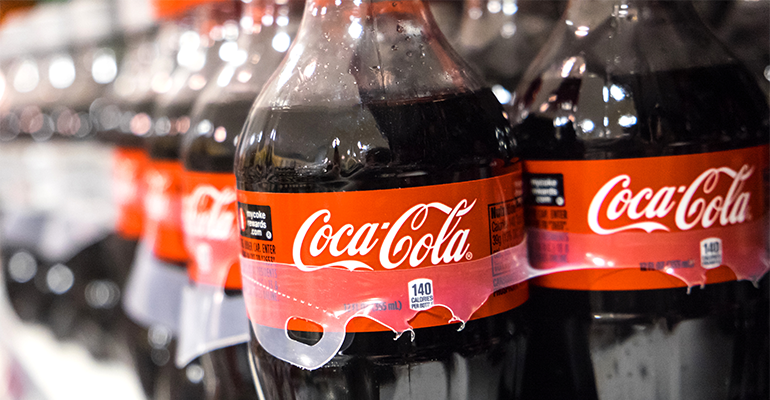
On packaging, for example, a commitment to use at least 50% recycled material in its primary packaging by 2030 has been replaced with an “aim” to use 35% to 40% recycled material in plastic, glass and aluminium and to increase recycled plastic use to 30% to 35% globally.
The company’s latest environmental report showed that in 2023 it had reached 27% and 17% in the two targets respectively. Coca-Cola used 137 billion plastic bottles in 2023, up from 125 billion in 2021. Its use of aluminium and steel cans and bottles also jumped in the same period from 68 billion to 74 billion.
The number of refillable glass and plastic bottles has remained the same at 25 billion and 4 billion respectively, as the company struggles to increase the use of these formats.
Indeed, the new strategy also appears to have shifted away from reusable and refillable systems – widely seen to be the most sustainable approach with fewest greenhouse gas emissions – with no sign of the 25% reusable packaging by 2030 target. Coca-Cola reached 14% of total beverage volume in reusable packaging in 2023.
Changes around climate targets
There have also been changes to targets around climate. Coca-Cola said that it aims to reduce the company’s scope 1, 2 and 3 emissions in line with a 1.5°C trajectory by 2035, from a 2019 baseline. However, the lack of a new emissions reduction target has concerned campaigners.
Coca-Cola had previously set a science-based target to reduce absolute emissions (scopes 1, 2 and 3) by 25% by 2030 against a 2015 baseline. According to the company’s latest report to the CDP, the sustainability disclosure platform, emissions would have needed to be cut from 66.9 million tonnes of CO2 equivalents (e). in 2015 to around 52.4 mt CO2 e in 2030. By 2022 its total emissions stood at 64.9 mt CO2 e, so just over a quarter of the reductions necessary had been achieved.
Sustainable agricultural ingredients target is buried
The company also announced that it will “no longer have a voluntary goal on agriculture” and instead will “continue initiatives and programmes with suppliers and third-party stakeholders to support sustainable sourcing of agricultural ingredients”. In 2023, 64% of its global priority ingredient volumes were sustainably sourced to its “leader standard” in 2023, in line with its principles for sustainable agriculture; the target was 100%.
Doing better than competitors on water usage
Coca-Cola did perform well compared to its peers according to the Nature Benchmark 2023. The World Benchmarking Alliance highlighted the reporting of water withdrawals in water-stressed areas and engagement with suppliers to reduce water withdrawal, for example.
On water, Coca-Cola has said it aims to return more than 100% of the water used in finished products globally, on an aggregate level, to nature and communities (a goal that has been met since 2015). The company will also “seek to return 100% of the total water used in each of the more than 200 high-risk locations across the Coca‑Cola system”. Water consumption across the company increased by 24,000 megalitres, to almost 195,000 megalitres, between 2021 and 2023.
Coca-Cola, which also owns Sprite and Costa Coffee, said it is “prioritising goals and actions that seek to improve water security in high-risk locations, reduce packaging waste and decrease emissions, and is extending the timeframe to 2035”. The changes have been informed “by learnings gathered through decades of work in sustainability, periodic assessment of progress and identified challenges,” it added.
Experts are not convinced, and raised doubts about the corporate’s commitment to tackling the various environmental crises (which also present considerable risks to the business).
“Coca-Cola are one of the world´s biggest and most loved brands which perhaps means they lack enough incentive to change,” said Gill Wilson, professor of sustainable marketing at IE Business School in Madrid, Spain.
The updates to the targets were made just days after talks on a global treaty on plastics ended without an agreement in place. New talks will take place next year but there are concerns that more companies may rethink their own environmental targets – a process referred to as ‘greenrinsing’.
Unilever shifts its green ambitions
Unilever also recently attracted widespread criticism for pushing some of its targets further into the future. A 50% virgin plastic reduction by 2025 is now 30% by 2026 (a reported difference of 100,000 tonnes of plastic), for example. The maker of Hellmann’s mayonnaise also dropped a target to use only 100% reusable, recyclable or compostable plastic packaging by 2025, replacing it with a split target – rigid plastics must be reusable, recyclable or compostable by 2030, while for flexibles the deadline is 2035.
According to Planet Tracker, an NGO, of the company’s 27 ESG targets, three were dropped and four were reduced. There were also five new targets – including ones for scope 3 carbon emissions – and two around land use were also improved. The company’s CEO Hein Schumacher said the new targets, announced in April, are “intentionally, and unashamedly, realistic”.
Nestlé is among the others to have started altering targets, albeit more quietly. The shift in language on the website of the world’s largest food maker pledged to mostly use plastic "designed for” recycling by 2025 rather than only use "recyclable” or reusable packaging by next year — its original commitment – according to a report by The Japan Times. The change amounts to a reported 280,000 metric tons of additional nonrecyclable plastic waste a year.
Nestlé said: “We are standing by our commitments and delivering real change in our packaging. We transparently report to the EMF [Ellen MacArthur Foundation] every year our progress against our original plastics commitments, and additional data such as designed for recycling. In addition, we publish data on all packaging every year in our creating shared value and sustainability report.”
Some 83.5% of the KitKat owner’s plastic packaging is currently “designed for recycling”. There has also been a 14.9% reduction in the use of virgin plastic, against a 2025 target of 33%.
The large food and drink manufacturers to have adjusted their environmental targets all blame a lack of action from peers. Collaboration is seen as key to overcoming some of the major challenges facing food suppliers.

Get more of our news on Google
Set Ingredients Network as a 'Preferred Source' to get quicker access to the news you value.
Related news

Do the US dietary guidelines put UPFs under pressure?
10 Sep 2026
Will the US dietary guidelines change the way Americans eat, swapping ultra-processed foods for whole foods? We asked Dr Barry Popkin, renowned nutrition and obesity researcher.
Read more
Health and wellness engagement matures across Middle East and Africa
4 Sep 2026
Many consumers in the Middle East and Africa are now proactively engaged in health and wellness, looking to integrate better habits and products into their daily lives, say experts.
Read more
Skimpflation: An ‘unfair’ and risky approach to keeping prices low
2 Sep 2026
Consumers see skimpflation – reducing the quality of ingredients due to rising costs – as more unfair than shrinkflation, making it a risky strategy according to recent research.
Read more
‘Urgent gaps’ in achieving 2030 food system goals
27 Aug 2026
Global food systems are failing to meet 2030 targets across indicators including health, environment, and resilience, according to a report co-authored by the Food and Agriculture Organisation (FAO).
Read more
Seven-Eleven uses microbial testing tech to extend katsudon shelf life
26 Aug 2026
Japanese retail company Seven-Eleven has improved its factory’s microbial environment to keep comfort-food staple, katsudon, fresher for longer.
Read more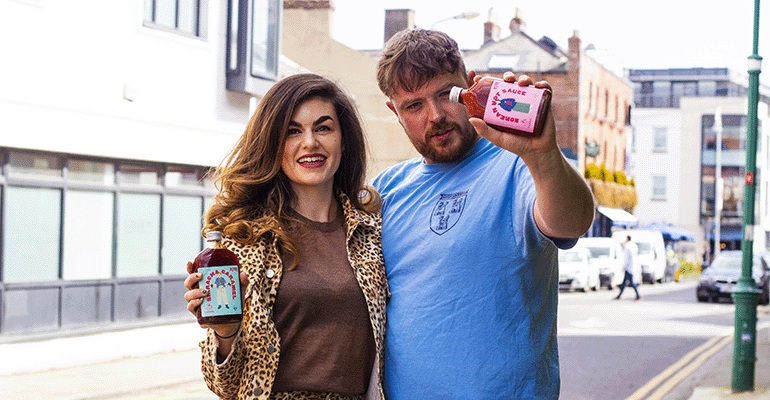
Chimac’s fusion sauces bring Korean flavours to Europe
25 Aug 2026
Irish sauce brand Chimac is tapping into Korea’s culinary traditions, bringing its flavours and products to European consumers who want a taste of K-food.
Read more
Global demand for instant noodles continues to rise
24 Aug 2026
Global demand for instant noodles reached 124.21 billion servings last year, representing a 0.7% year-on-year increase – or 900 million extra servings.
Read more
Popular barbecue staples experience sharp price increases
19 Aug 2026
The typical cost of US shoppers’ barbecue baskets has risen by 12% over the past year – the fastest annual rise in a decade, figures from The Economist show.
Read more
Hot NPD: Nissin launches first cold-water Cup Noodles
18 Aug 2026
Nissin is taking one of Japan’s most iconic instant meals in a completely new direction with the launch of the first cold water-only Cup Noodles in the brand’s 55-year history.
Read more
Manam Chocolate aims to bring premium Indian cacao to 'the world stage'
11 Aug 2026
Craft chocolate brand Manam Chocolate is investing in local expansion and supply chain innovation throughout India as it works to build out the premium reputation of its locally produced cacao products.
Read more