
Ingredients Categories
Finished Products
Finished Food Categories
- Bakery
- Beverages / Juices
- Cereal and grain products
- Confectionery
- Cooking Fats & Oils
- Dairy
- Egg products
- Fruits & Vegetables
- Infant & Baby food
- Meat, Poultry & Fish
- Nuts & Seeds products
- Other Finished Food Categories
- Pet Food
- Plant-based foods
- Prepared foods
- Sauces & Seasonings
- Sweet & Savoury Spreads
Specialised Finished Products
- Bee products
- Biotic products
- Dietary supplements
- Energy drinks
- Functional beverages
- Functional confectionery
- Functional food
- Functional powders
- Meal replacement products
- Nutricosmetics
- Other Specialised Finished Products
- Pet Dietary Supplements
- Pharma and OTC products
- Protein products
- Sugar replacers / Sweeteners
Health & Wellness Areas
Delivery Formats
Operations & Services
- 3D printing
- Analysis/ Testing
- Auditing & certifications
- Blending & mixing
- Bottling
- Certification
- Clinical trials
- Co-packing
- Coating
- Consulting
- Contract manufacturing
- Drying
- Electrospinning
- Encapsulating
- Enzymatic processing
- Extracting
- Extrusion
- Fat structuring
- Fermentation
- Filling
- Flavour development
- Freeze drying
- Granulating/ grinding/ milling / mixing
- High-pressure processing
- Labelling
- Other Operations & Services
- Packaging
- Packet filling
- Pasturising
- Quality assurance
- Saccharification
- Shear cell processing
- Spray drying
- Sterilisation
- Storage & Logistics
- Tabletting
- Toasting / roasting
- Ultra-high temperature processing
News
Exploring Innova’s Top 10 Trends for 2025
Niamh Michail, Head of Publishing 21 Nov 2024At Fi Europe, Innova Market Insights shared its top food and drink trends for 2025, giving examples and highlighting how brands can tap into each one. Ingredients Network takes a look.

Innova began conducting consumer research for its 2025 trend predictions in May, enriching this with information from its product database that tracks ingredients, flavours, claims, and more on over 400,000 products in over 90 countries.
Trend # 1: Ingredients and Beyond
The number one trend for 2025 puts the spotlight on ingredients.
“As the world divides into smaller and smaller niches, we see that consumers […] are now looking for elevated ingredients, they are looking for high quality ones and [asking] how ingredients interact with other ones,” said Lu Ann Williams, director of insights at Innova Market Insights.
This can be clearly seen in the protein trend and how it has evolved to become more sophisticated.
“It’s getting to the point where [a protein claim] is […] not a differentiator anymore. It's easy to replicate, it lacks identity. But if you want to stand out, focusing on the quality of these ingredients – if it's protein or anything else – is a way to do that,” she added.
Williams gave the example of one product that, rather than simply saying on-pack “30 g of protein”, it said “30 g of sustained absorption protein”.
Trend # 2: Precision Wellness
Consumers are increasingly taking a very personal precision approach to their own nutrition, tailoring food choices to their lifestyle, their life stage, or a specific health condition.
Innova analysts have seen a huge increase in products with “a female positioning”, such as products for menopause. Another big topic is weight management.
“This year, consumers have told us [weight loss] is their top concern and this is applicable across the 11 countries we did this study in,” Williams said.
The rise of GLP-1 drugs will be a big opportunity for the industry as people look for targeted nutrition solutions to support them in their weight-loss journey.
“If you're going to eat less food, you're going to have to eat higher quality food or you will risk being malnourished and losing muscle mass, and so on,” said Williams. “We see very fast growth in products with a weight management claim and we see opportunities for specialised approaches to this.”
Trend # 3: Wildly Inventive
Innova’s market research shows that consumers are still interested in food experiences.
More than 40% of people say they are looking for “crazy creations that give them this ultimate indulgent experience”, Williams said, while 40% are looking for rich flavours and one-third want interesting flavour combinations.
One such example was the limited-edition Oreo-flavoured Coca-Cola drink launched in 2024.
Innova is also seeing increasing “cross-category mash-ups” such as a cookie dough-flavoured mochi that blends bakery and desserts; a cinnamon toast-flavoured rub for bacon in the US that blends bakery and meat; and tempeh-based snack chips in Thailand, blending snacks and a meat alternative.
Trend # 4: Flourish from Within
Digestive and gut health is the number one benefit consumers are seeking when buying functional food and beverages, according to Innova, which has noted an 8% increase in digestive and gut health claims globally.
A number of functional product launches highlight the versatility of this trend in terms of category penetration: Williams highlighted a hydration beverage with 3 g of added prebiotic fibre; an Actimel probiotic product with a prominent vitamin D claim; and even a popcorn snack with a probiotic coating.
“[We have noted] a 24% increase in snacks that have some kind of probiotic,” said Williams. “There is a lot of innovation in the gut health space.”
Trend # 5: Rethinking Plants
“Depending on where you live, there is still a lot of interest and we are still at the beginning of the beginning of plant-based,” said the insights director.
However, she noted that scrutiny over the level of ultra-processing involved in making plant-based alternatives was on the rise, increasing from consumers’ number five barrier last year to their number three barrier in 2024.
“Consumers are really looking for the product label to be cleaned up. Health is still the number one driver for plant-based products, so this is just the evolution [of the category],” she said, predicting a rise in the number of brands calling out their “pure” and “natural” ingredients on-pack.
Trend # 6: Climate Adaption.
While inflation has put something of a dampener on consumers’ willingness to pay a premium for more sustainable products, Innova analysts questioned people about their “big, global concerns”, and sustainability and the health of the planet were at the top.
About half of consumers said they were very or extremely aware of the impact of climate change, and they expected the biggest impact on food to be price increases.
How people respond to such price hikes will depend on the category, according to Innova research. Consumers said they would either stop or reduce buying chocolate but they would continue buying coffee, for instance.
“Finding which categories have price elasticity will be an interesting thing to do,” said Williams.
Trend # 7: Taste the Glow
Innova sees an opportunity to incorporate beauty-enhancing features into food and drinks.
“About 20% of consumers say they have purchased food or beverages to improve their physical appearance in the last year,” said the insights director.
Innova has tracked an 11% increase in food, drink, and supplement launches with a beauty claim, with collagen a stand-out ingredient. Facial skin is the number one area consumers are interested in, followed by hair and then body.
This trend is being driven primarily by younger people. “About 50% of people that are purchasing functional food and beverage products for skin health are between Gen Z and Millennials,” Williams told the Fi Europe audience. “I think there was always a misconception that this was for older, 50+ consumers but it's not, it's for young people.”
Trend # 8: Tradition Reinvented
“Tradition is a trend that sticks, whenever we go through periods of uncertainty there is a rush back to things that are very familiar and comforting,” she said. “Consumers are still seeking authenticity; there's still a lot of interest in local, and people are interested in either rediscovering parts of their culinary heritage or understanding [others].”
One example was a German raspberry tart made according to "Grandma's recipe".
Sixty-four percent of people also said they were interested in trying new products with old or traditional flavours. Mars’ recent launch of peanut butter and jelly-flavoured M&M’s exemplified this trend, the Innova director said.
Trend # 9: Mindful Choices
"Everything around mood, mental health is really sticking,” said Williams. “We see this as a real opportunity gap to create products with claims and ingredients that fill that gap.”
The market research company has tracked the top trending ingredients for mental health and wellbeing as B vitamins; vitamin D; vitamin C; magnesium; and vitamin E.
However, other trending ingredients include botanicals such as ashwagandha and mushrooms. US brand Melting Forest launched a ‘Mushroom D-Stress’ beverage that claims to promote mental clarity, stress management, and calmness.
Trend # 10: Bytes to Bites
Innova’s final trend is about artificial intelligence (AI).
“We have seen a massive increase in products making an AI claim – but of course, this is from a very small base,” Williams said.
When asked how they feel about AI, 25% of consumers say they are not aware while 23% say they are "curious".
Nanofizz is a German ready-to-drink fruit and wine beverage brand that claims its product’s branding and name was developed using AI.

Get more of our news on Google
Set Ingredients Network as a 'Preferred Source' to get quicker access to the news you value.
Related news
Do the US dietary guidelines put UPFs under pressure?
10 Sep 2026
Will the US dietary guidelines change the way Americans eat, swapping ultra-processed foods for whole foods? We asked Dr Barry Popkin, renowned nutrition and obesity researcher.
Read more
Food fraud costs UK economy £2bn each year
9 Sep 2026
Food fraud is costing the UK economy up to £2 billion (€2.3 billion) every year although the food sector is more “resilient” than others, according to a recent study.
Read more
Kellogg accelerates work to remove artificial colours from all US cereals
3 Sep 2026
WK Kellogg has announced an accelerated timeline to eliminate all artificial colours and the chemical preservative, BHT, across its full US portfolio of cereals and cereal packaging.
Read more
Skimpflation: An ‘unfair’ and risky approach to keeping prices low
2 Sep 2026
Consumers see skimpflation – reducing the quality of ingredients due to rising costs – as more unfair than shrinkflation, making it a risky strategy according to recent research.
Read more
NielsenIQ’s EU barometer shows Britain leading in grocery inflation
31 Aug 2026
Britain was the only country to record grocery inflation above 2%, according to NielsenIQ data that compared Europe’s five biggest grocery markets from February to May 2026.
Read more
‘Urgent gaps’ in achieving 2030 food system goals
27 Aug 2026
Global food systems are failing to meet 2030 targets across indicators including health, environment, and resilience, according to a report co-authored by the Food and Agriculture Organisation (FAO).
Read more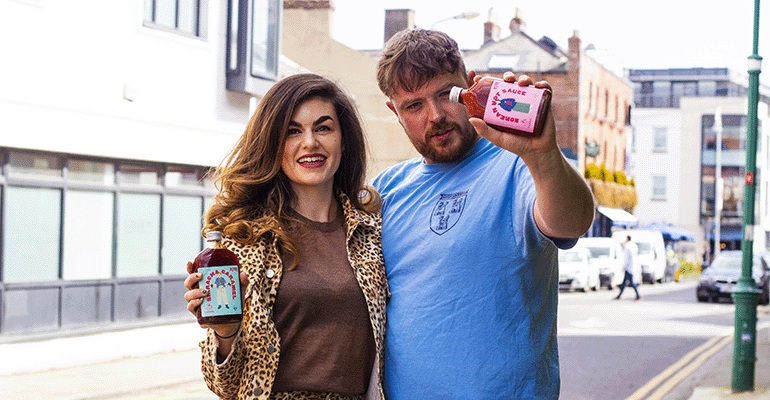
Chimac’s fusion sauces bring Korean flavours to Europe
25 Aug 2026
Irish sauce brand Chimac is tapping into Korea’s culinary traditions, bringing its flavours and products to European consumers who want a taste of K-food.
Read more
Global demand for instant noodles continues to rise
24 Aug 2026
Global demand for instant noodles reached 124.21 billion servings last year, representing a 0.7% year-on-year increase – or 900 million extra servings.
Read more
Popular barbecue staples experience sharp price increases
19 Aug 2026
The typical cost of US shoppers’ barbecue baskets has risen by 12% over the past year – the fastest annual rise in a decade, figures from The Economist show.
Read more
Hot NPD: Nissin launches first cold-water Cup Noodles
18 Aug 2026
Nissin is taking one of Japan’s most iconic instant meals in a completely new direction with the launch of the first cold water-only Cup Noodles in the brand’s 55-year history.
Read more