
Ingredients Categories
Finished Products
Finished Food Categories
- Bakery
- Beverages / Juices
- Cereal and grain products
- Confectionery
- Cooking Fats & Oils
- Dairy
- Egg products
- Fruits & Vegetables
- Infant & Baby food
- Meat, Poultry & Fish
- Nuts & Seeds products
- Other Finished Food Categories
- Pet Food
- Plant-based foods
- Prepared foods
- Sauces & Seasonings
- Sweet & Savoury Spreads
Specialised Finished Products
- Bee products
- Biotic products
- Dietary supplements
- Energy drinks
- Functional beverages
- Functional confectionery
- Functional food
- Functional powders
- Meal replacement products
- Nutricosmetics
- Other Specialised Finished Products
- Pet Dietary Supplements
- Pharma and OTC products
- Protein products
- Sugar replacers / Sweeteners
Health & Wellness Areas
Delivery Formats
Operations & Services
- 3D printing
- Analysis/ Testing
- Auditing & certifications
- Blending & mixing
- Bottling
- Certification
- Clinical trials
- Co-packing
- Coating
- Consulting
- Contract manufacturing
- Drying
- Electrospinning
- Encapsulating
- Enzymatic processing
- Extracting
- Extrusion
- Fat structuring
- Fermentation
- Filling
- Flavour development
- Freeze drying
- Granulating/ grinding/ milling / mixing
- High-pressure processing
- Labelling
- Other Operations & Services
- Packaging
- Packet filling
- Pasturising
- Quality assurance
- Saccharification
- Shear cell processing
- Spray drying
- Sterilisation
- Storage & Logistics
- Tabletting
- Toasting / roasting
- Ultra-high temperature processing
News
F&B industry hit with fresh greenwashing claims
26 Feb 2025The food and beverage (F&B) industry is under fresh scrutiny amid claims of greenwashing, with Arla the latest company in the firing line.
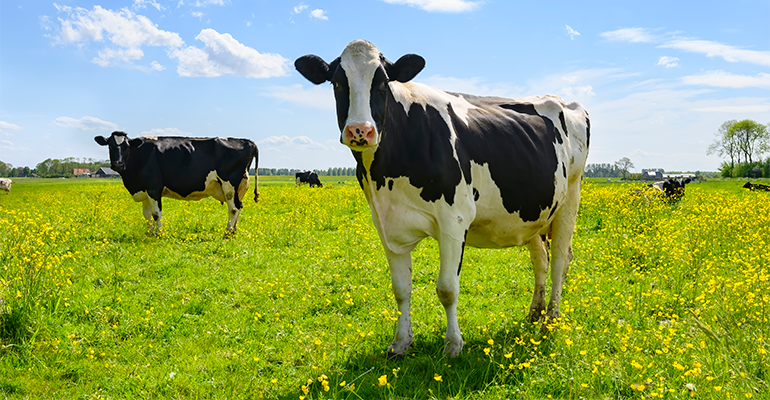
Consumer trust is being eroded by practices such as making false or exaggerated claims, using misleading labels and certifications, and being ambiguous or vague, which are among the most common greenwashing tactics used by the F&B industry.
Now, a report released earlier this month by Changing Markets Foundation and Greenpeace Nordic has accused Denmark-based dairy giant Arla of failing to meet its environmental pledges.
Arla’s reduction targets come under fire
Entitled Dairytales: Arla’s smokescreen for its lack of climate action, the report details the company’s inability to live up to its previous positioning attempts as an environmentally conscious organisation.
“Arla has been selling us a fairytale for far too long, and this report exposes the stark contradiction between Arla’s reputation as the poster child of dairy sustainability and the reality of its failure to develop robust plans to reduce its emissions – in particular, its methane emissions,” said Alma Castrejon-Davila, senior campaigner at Changing Markets Foundation, an organisation that campaigns to expose irresponsible corporate practices.
Arla has pledged to reach net-zero emissions by 2050.
However, in a 2024 report entitled Turning down the heat, Greenpeace Nordic estimated that Arla’s estimated methane emissions are 13.4 MtCO2e per year, exceeding the agricultural methane emissions reported for the Netherlands, which are 11.4 MtCO2e per year.
The 2025 report found that Arla has no reduction targets for material non-emissions, including methane. It also reported that when comparing Arla’s climate plans with the United Nations’ guidelines for non-state actors setting net-zero targets, the dairy giant meets just one of its nine relevant recommendations, while only partially meeting five and failing to meet three.
The authors state that many of Arla’s emissions reduction strategies focus on research and development (R&D) measures that have not yet proven their relevancy and robustness or do not tackle the root cause. Approaches to food additives and biogas production are among these. They anticipate a maximum emissions reduction potential of 15% per kilo of milk if all manure was used for biogas production. At present, these reductions amount to 2.6%.
The report also accuses Arla of “putting up smokescreens through lobbying, greenwashing, and creative emissions calculations” in a bid to conceal its true emissions as well as increase its political influence and profits.
An Arla spokesperson told Ingredients Network: “We have taken the time to review the report and unfortunately, it does contain multiple inaccuracies.
“It is therefore not a true reflection of Arla’s science-based targets, our farmers’ actions to reduce emissions, and our commitment to producing more sustainable dairy.”
Tyson Foods in lawsuit over ‘false’ carbon and climate claims
In September 2024, the Environmental Working Group (EWG), a US-based non-profit organisation, filed a lawsuit against leading meat company Tyson Foods for greenwashing claims. In the legal action, EWG accuses Tyson Foods of “capitalising on consumers’ interest in purchasing climate-friendly foods”.
The filing comes in response to what EWG describes as “false” claims from Tyson Foods that it will become net zero by 2050 and misleading marketing that positions its industrial beef products as “climate-smart”.
EWG, which is represented by the Animal Legal Defense Fund, Earthjustice, Edelson PC, and FarmSTAND, claims that industrial beef has a larger carbon footprint than any other key food product. Beef production makes up approximately 85% of Tyson Foods’ emissions.
With the company responsible for producing around 20% of US beef, chicken, and pork, EWG states that its greenhouse gas emissions surpass those of countries like Greece or Austria.
“Our lawsuit aims to hold Tyson accountable for misleading consumers about the true nature of its products and their environmental costs,” it said. “A court order stopping Tyson’s harmful conduct would represent a turning point in the fight to hold the biggest, most powerful contributors to the climate crisis – across industries – accountable for greenwashing.”
Thai Union accused of empty environmental promises
In May 2024, a UK shark and marine conservation charity accused the global seafood company Thai Union of greenwashing and failing to follow through on commitments to protect under-threat marine life.
In its The art of greenwashing: Thai Union’s sustainability smokescreen report, Shark Guardian explored the gap between the company’s sustainability commitments and measurable reform within its supply chain. The charity said it found “a consistent pattern” where new improvement initiatives were announced, “without any demonstration or evidence of credible progress on implementing existing sustainability commitments”.
Brendon Sing, the charity’s co-founder, said: “Talk is cheap and meaningless without action.”
Shark Guardian said that consumers were being given unrealised promises, while at the same time, the shark population was dwindling – an issue particularly prominent in the Indian Ocean.
“The disparity between Thai Union’s promises and its actions has major implications for the health of our ocean,” Sing added.

Get more of our news on Google
Set Ingredients Network as a 'Preferred Source' to get quicker access to the news you value.
Related news

Skimpflation: An ‘unfair’ and risky approach to keeping prices low
2 Sep 2026
Consumers see skimpflation – reducing the quality of ingredients due to rising costs – as more unfair than shrinkflation, making it a risky strategy according to recent research.
Read more
‘Urgent gaps’ in achieving 2030 food system goals
27 Aug 2026
Global food systems are failing to meet 2030 targets across indicators including health, environment, and resilience, according to a report co-authored by the Food and Agriculture Organisation (FAO).
Read more
Seven-Eleven uses microbial testing tech to extend katsudon shelf life
26 Aug 2026
Japanese retail company Seven-Eleven has improved its factory’s microbial environment to keep comfort-food staple, katsudon, fresher for longer.
Read more
Chimac’s fusion sauces bring Korean flavours to Europe
25 Aug 2026
Irish sauce brand Chimac is tapping into Korea’s culinary traditions, bringing its flavours and products to European consumers who want a taste of K-food.
Read more
Global demand for instant noodles continues to rise
24 Aug 2026
Global demand for instant noodles reached 124.21 billion servings last year, representing a 0.7% year-on-year increase – or 900 million extra servings.
Read more
China beverages: Is herbal innovation the future?
20 Aug 2026
Herbal and botanical innovation in China's drinks market continues to grow, with ingredients like astragalus root, ginger, and ginseng in the spotlight – and focus shifting far beyond refreshment.
Read more
Popular barbecue staples experience sharp price increases
19 Aug 2026
The typical cost of US shoppers’ barbecue baskets has risen by 12% over the past year – the fastest annual rise in a decade, figures from The Economist show.
Read more
Hot NPD: Nissin launches first cold-water Cup Noodles
18 Aug 2026
Nissin is taking one of Japan’s most iconic instant meals in a completely new direction with the launch of the first cold water-only Cup Noodles in the brand’s 55-year history.
Read more
Manam Chocolate aims to bring premium Indian cacao to 'the world stage'
11 Aug 2026
Craft chocolate brand Manam Chocolate is investing in local expansion and supply chain innovation throughout India as it works to build out the premium reputation of its locally produced cacao products.
Read more
Savoury protein snacks shake up the on-the-go market
10 Aug 2026
Sweet flavours have dominated the high-protein snack category but savoury snacks, such as cheese bars and meat sticks, can appeal to health-conscious consumers.
Read more