
Ingredients Categories
Finished Products
Finished Food Categories
- Bakery
- Beverages / Juices
- Cereal and grain products
- Confectionery
- Cooking Fats & Oils
- Dairy
- Egg products
- Fruits & Vegetables
- Infant & Baby food
- Meat, Poultry & Fish
- Nuts & Seeds products
- Other Finished Food Categories
- Pet Food
- Plant-based foods
- Prepared foods
- Sauces & Seasonings
- Sweet & Savoury Spreads
Specialised Finished Products
- Bee products
- Biotic products
- Dietary supplements
- Energy drinks
- Functional beverages
- Functional confectionery
- Functional food
- Functional powders
- Meal replacement products
- Nutricosmetics
- Other Specialised Finished Products
- Pet Dietary Supplements
- Pharma and OTC products
- Protein products
- Sugar replacers / Sweeteners
Health & Wellness Areas
Delivery Formats
Operations & Services
- 3D printing
- Analysis/ Testing
- Auditing & certifications
- Blending & mixing
- Bottling
- Certification
- Clinical trials
- Co-packing
- Coating
- Consulting
- Contract manufacturing
- Drying
- Electrospinning
- Encapsulating
- Enzymatic processing
- Extracting
- Extrusion
- Fat structuring
- Fermentation
- Filling
- Flavour development
- Freeze drying
- Granulating/ grinding/ milling / mixing
- High-pressure processing
- Labelling
- Other Operations & Services
- Packaging
- Packet filling
- Pasturising
- Quality assurance
- Saccharification
- Shear cell processing
- Spray drying
- Sterilisation
- Storage & Logistics
- Tabletting
- Toasting / roasting
- Ultra-high temperature processing
News
H&B 'transformation' hoped to demystify health and wellness market
Kacey Culliney, Freelance Journalist 3 Jun 2025Holland & Barrett is undergoing a transformation, with new product launches and a revamp of its supplement ranges, in a bid to demystify what it describes as “an increasingly complex” health and wellness market.
The British health food retailer now operates more than 1,300 stores worldwide across 16 countries, including the UK, Belgium, China, India, and Saudi Arabia.
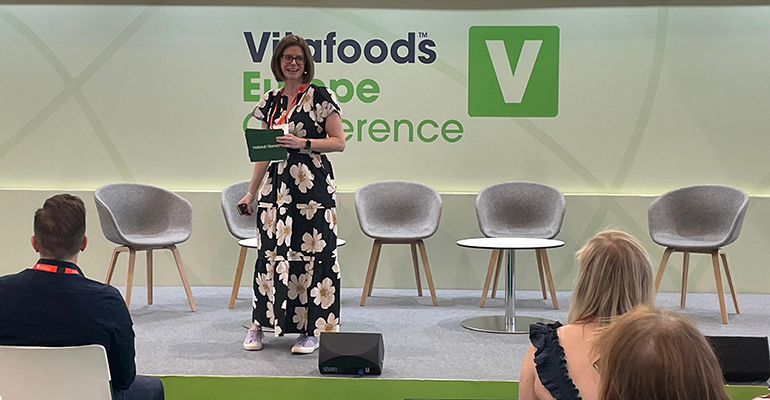
At the beginning of this year, H&B unveiled hundreds of new product offerings across its food, active nutrition, and supplement ranges.
Rachel Chatterton, director of product and global brand, said the company kick-started this important “transformation” three years ago, “with the sole purpose of creating products that add quality years to life” and the overarching goal to “demystify the health and wellness market”.
“We've been on, what's fair to say, a fairly phenomenal journey over the last three years, and we are really just getting going,” she told an audience at Vitafoods Europe 2025, held in Barcelona last month.
Holland & Barrett: Healthier foods, smarter sports, and simpler supplements
The first part of this transformation, according to Chatterton, was the “three-pronged” launch of more than 500 food products in January.
Holland & Barrett's food range, she explained, features “naturally nutritious” items like fruits, nuts, seeds, and legumes; “healthy swaps”, such as plant-dense pasta sauces; and “with benefits” products, like fortified cereals, kombuchas, teas, and superfoods.
Chatterton said the retailer's food category targeted “foundational health” needs and had been designed to build out healthier diets for consumers in a very broad sense.
“Health foods shouldn't be scary, and that's really been the principle around it,” she added.
Beyond food, Holland & Barrett also launched a range of new sports nutrition products, designed to help consumers “keep active” and “moving well”, she said.
Featuring more than 100 active nutrition products, the launches are split across two different ranges: a more traditional offering, with proteins, macros, and wheys, and a newer concept via the retailer’s TriActive line, blurring body, muscle, and mind health.
The latter line, she said, was “opening up a completely brand-new market” – targeting people that might just be taking part in a 10 km run, going to yoga on a Tuesday, or walking with their kids in the park. And Holland & Barrett, she said, is planning a lot more innovation in this body-muscle-mind space over the coming years.
On the supplements side – the “crown jewels” of Holland & Barrett – the director said the team had evolved thinking for this category significantly and was just finalising the rollout of thousands of revamped lines.
The company had completely changed the “look and feel” of its supplements, Chatterton said, with new bottle designs – a mix between square and oval to offer a new global identity – and fresh on-pack messaging.
The labelling overhaul, she said, made packaging “really clean and simple to understand”, outlining what the product was; why the customer needed it; the overall mission of the product; and how often it needed to be consumed.
“It sounds so basic, but if you look at this category, it normally gives me a bit of an anxiety attack if I stand in most pharmacies across the world, because you just cannot understand what [a product] is doing and why. And we believe we've got a really big role to play in this going forward,” she said.
Holland & Barrett: Store spaces and global strategies
Beyond product development, Chatterton said Holland & Barrett was also busy transforming its store estate – shifting focus towards in-store services and wellbeing spaces – and continuing to invest heavily in staff training and education so that its employees can advise customers.
All of this, she said, played a “big role” in the retailer's goal to demystify health and wellness at a time when so many consumers feel overwhelmed in this space.
She added: “We work in an incredibly complex market and customers have got so many choices to make. And, actually, it's our job to make this simple and easy for people to understand.”
Holland & Barrett, she said, would remain dedicated to keeping its stores and offerings as simple as possible, focusing on global commonalities such as gut health, immunity, skin health, sleep, and weight management, and innovating in important areas like women's health and foundational diet offerings.
Importantly, the company will continue to develop products that are “very consumer centric”, she said, across a broad range of categories, from whole foods and teas to fortified bars, powders, and pills.
“It's about finding those perfect solutions for the customer that they really, really need. There's no point creating products that aren't going to fulfil those big health needs,” she said, adding: “We really see the last three years as setting our foundations of being a brilliant global health and wellness retailer, and really you'll only start to see this accelerate more as we grow globally.”

Get more of our news on Google
Set Ingredients Network as a 'Preferred Source' to get quicker access to the news you value.
Related news

M&S launches own-brand pet food range
11 Sep 2026
UK retailer Marks & Spencer has launched its own-brand pet food line Paws & Pals – a well-timed and strategic move that will appeal to loyal shoppers, says a marketing expert.
Read more
Do the US dietary guidelines put UPFs under pressure?
10 Sep 2026
Will the US dietary guidelines change the way Americans eat, swapping ultra-processed foods for whole foods? We asked Dr Barry Popkin, renowned nutrition and obesity researcher.
Read more
Food fraud costs UK economy £2bn each year
9 Sep 2026
Food fraud is costing the UK economy up to £2 billion (€2.3 billion) every year although the food sector is more “resilient” than others, according to a recent study.
Read more
Kellogg accelerates work to remove artificial colours from all US cereals
3 Sep 2026
WK Kellogg has announced an accelerated timeline to eliminate all artificial colours and the chemical preservative, BHT, across its full US portfolio of cereals and cereal packaging.
Read more
‘Urgent gaps’ in achieving 2030 food system goals
27 Aug 2026
Global food systems are failing to meet 2030 targets across indicators including health, environment, and resilience, according to a report co-authored by the Food and Agriculture Organisation (FAO).
Read more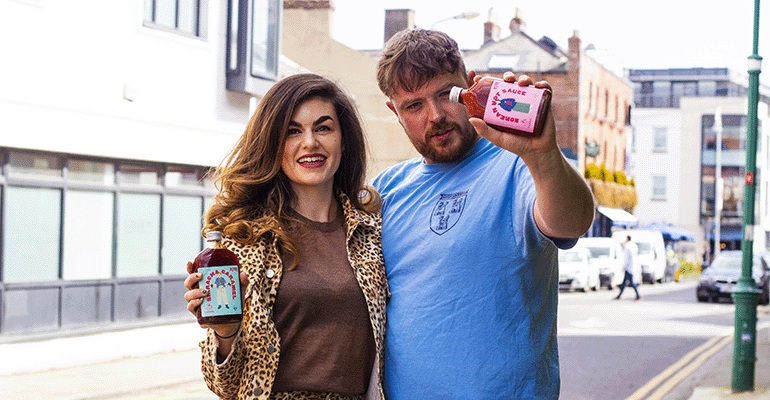
Chimac’s fusion sauces bring Korean flavours to Europe
25 Aug 2026
Irish sauce brand Chimac is tapping into Korea’s culinary traditions, bringing its flavours and products to European consumers who want a taste of K-food.
Read more
Savoury protein snacks shake up the on-the-go market
10 Aug 2026
Sweet flavours have dominated the high-protein snack category but savoury snacks, such as cheese bars and meat sticks, can appeal to health-conscious consumers.
Read more
Nestlé invests in regeneratively farmed wheat for KitKat
5 Aug 2026
Nestlé will pay a premium for Wildfarmed’s regeneratively farmed wheat but the CPG remains reticent to promote the move on packs of its KitKat bars.
Read more
How Secon Taste is putting upcycled snacks on shelves
4 Aug 2026
Hungarian zero-waste startup Secon Taste is turning surplus food into upcycled snacks such as fibre-packed granola, instant porridge, and a circular coffee-tasting box.
Read more
Codex sets global thresholds for ‘may contain’ labels
3 Aug 2026
Codex Alimentarius has adopted its first global guidance on when to use “may contain” allergen warnings, setting thresholds intended to stop the label being used as blanket legal cover.
Read more