
Ingredients Categories
Finished Products
Finished Food Categories
- Bakery
- Beverages / Juices
- Cereal and grain products
- Confectionery
- Cooking Fats & Oils
- Dairy
- Egg products
- Fruits & Vegetables
- Infant & Baby food
- Meat, Poultry & Fish
- Nuts & Seeds products
- Other Finished Food Categories
- Pet Food
- Plant-based foods
- Prepared foods
- Sauces & Seasonings
- Sweet & Savoury Spreads
Specialised Finished Products
- Bee products
- Biotic products
- Dietary supplements
- Energy drinks
- Functional beverages
- Functional confectionery
- Functional food
- Functional powders
- Meal replacement products
- Nutricosmetics
- Other Specialised Finished Products
- Pet Dietary Supplements
- Pharma and OTC products
- Protein products
- Sugar replacers / Sweeteners
Health & Wellness Areas
Delivery Formats
Operations & Services
- 3D printing
- Analysis/ Testing
- Auditing & certifications
- Blending & mixing
- Bottling
- Certification
- Clinical trials
- Co-packing
- Coating
- Consulting
- Contract manufacturing
- Drying
- Electrospinning
- Encapsulating
- Enzymatic processing
- Extracting
- Extrusion
- Fat structuring
- Fermentation
- Filling
- Flavour development
- Freeze drying
- Granulating/ grinding/ milling / mixing
- High-pressure processing
- Labelling
- Other Operations & Services
- Packaging
- Packet filling
- Pasturising
- Quality assurance
- Saccharification
- Shear cell processing
- Spray drying
- Sterilisation
- Storage & Logistics
- Tabletting
- Toasting / roasting
- Ultra-high temperature processing
News
India’s mithai market develops new ingredient and flavour profiles
Natasha Spencer-Jolliffe, Freelance Journalist 18 Mar 2024Mithai is a hugely popular dessert and sweet snack in India and manufacturers are experimenting with unique ingredients, new flavour combinations, and healthier versions to capture new audiences.
According to TastePak, mithai is the Hindi and Urdu word for sweets that are often made from flour, milk, sugar, nuts and, in some cases, vegetables and lentils. They are traditionally flavoured with rose water, saffron, and cardamom.
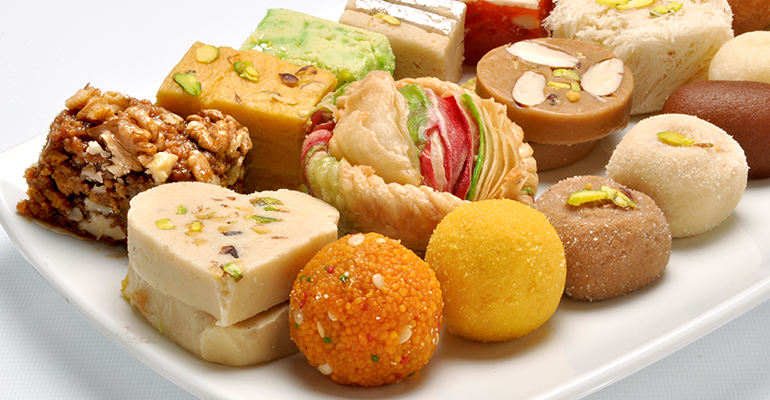
One of the most significant changes in the mithai industry is the rise of creators experimenting with diverse ingredients, blending traditional sweets with global dessert forms. Classic Indian mithais like gulab jamun and jalebis are transforming into waffles with maple, jamun-studded French toasts, and pancakes. Consumers have the opportunity to customise sweetness levels, spice infusions, and syrups beyond rose and saffron.
As people become more health-conscious, mithai makers are incorporating natural sugar alternatives like jaggery and honey and millets like ragi, jowar, and bajra. In a nod to the permissible indulgence trend, these ingredient replacements offer a healthy alternative to traditional sweets. Eco-friendly packaging and zero-waste production goals are becoming increasingly common, reflecting a commitment to sustainability.
Festivals and seasons drive the market in India, with players increasingly moving to online and e-commerce platforms. The market for processed traditional foods in India has significant export potential, with large-scale, quality, and safe traditional sweet production playing a crucial role.
Several manufacturing processes, such as concentration, boiling, drying, extrusion, and rolling, can be used in India. However, machines that can adapt to such procedures and create the desired tastes and flavours are a significant challenge that needs to be addressed for the market to grow.
Mithai: Where sweets meet chocolate
Increasingly, brands are exploring flavour innovation in chocolate confectionery and implementing this in Mithai, traditional Indian sweets.
Market intelligence company Mintel found that a third of consumers are interested in mithai-flavoured chocolates compared to international dessert flavours. Manufacturers have the opportunity to cater to local preferences by infusing chocolates with flavours reminiscent of beloved mithais such as gulab jamun, rasgulla, and jalebi.
Brands can offer a modern twist on traditional delicacies by introducing limited edition assortment packs inspired by mithai flavours, enhancing consumer engagement. However, brands must recognise the diverse preferences across different regions in India and cater to these nuances to boost brand appeal. While flavours like gulab jamun may be more attractive to sweet shoppers in the West, those in the East may opt for rasgulla.
Moreover, chocolate brands can draw inspiration from local mithai stores that have successfully integrated desi flavours into their offerings, providing valuable insights into regional tastes.
New Mithai product developments
Khoya Mithai is expanding its product range, recently introducing the concept of luxury sweets. The Mithai sweet brand has recently launched an assorted box of Mithai in regular and sugar-free varieties to cater to health-conscious consumers. Arq Mithai has launched milk and dark chocolate truffles, bringing together India’s traditional sweet with confectionery.
Traditionally, mithai sweet shops conjure images of colourful and enchanting spaces filled with sweets. Bombay Sweet Shop aims to bring back the nostalgia and charm of traditional Mithai by reimagining Mithai flavours and textures. The local brand has introduced the Indie Bar, featuring layers of pepper caramel, coconut fluff, patissa/soan papdi (a local sweet delicacy), and dark chocolate. The brand’s chefs experimented with soan papdi and recognised its potential for inclusion in a chocolate bar.
The company has sought to “elevate nostalgia” and create gourmet sweets to meet today’s consumer demands. Bombay Sweet Shop’s Chocolate Butterscotch Barks is its best-seller, with a 60% repeat rate and contributing 30% of sales, while its assorted mithai box comes in at a close second.
In a relatively short period, Bombay Sweet Shop has seen significant sales increases, experiencing 120% monthly growth during Rakhi 2023 and 500% during Diwali 2022. The company anticipated 600% month-on-month growth for Diwali 2023.

Get more of our news on Google
Set Ingredients Network as a 'Preferred Source' to get quicker access to the news you value.
Related news

Do the US dietary guidelines put UPFs under pressure?
10 Sep 2026
Will the US dietary guidelines change the way Americans eat, swapping ultra-processed foods for whole foods? We asked Dr Barry Popkin, renowned nutrition and obesity researcher.
Read more
Skimpflation: An ‘unfair’ and risky approach to keeping prices low
2 Sep 2026
Consumers see skimpflation – reducing the quality of ingredients due to rising costs – as more unfair than shrinkflation, making it a risky strategy according to recent research.
Read more
‘Urgent gaps’ in achieving 2030 food system goals
27 Aug 2026
Global food systems are failing to meet 2030 targets across indicators including health, environment, and resilience, according to a report co-authored by the Food and Agriculture Organisation (FAO).
Read more
Seven-Eleven uses microbial testing tech to extend katsudon shelf life
26 Aug 2026
Japanese retail company Seven-Eleven has improved its factory’s microbial environment to keep comfort-food staple, katsudon, fresher for longer.
Read more
Chimac’s fusion sauces bring Korean flavours to Europe
25 Aug 2026
Irish sauce brand Chimac is tapping into Korea’s culinary traditions, bringing its flavours and products to European consumers who want a taste of K-food.
Read more
Global demand for instant noodles continues to rise
24 Aug 2026
Global demand for instant noodles reached 124.21 billion servings last year, representing a 0.7% year-on-year increase – or 900 million extra servings.
Read more
China beverages: Is herbal innovation the future?
20 Aug 2026
Herbal and botanical innovation in China's drinks market continues to grow, with ingredients like astragalus root, ginger, and ginseng in the spotlight – and focus shifting far beyond refreshment.
Read more
Popular barbecue staples experience sharp price increases
19 Aug 2026
The typical cost of US shoppers’ barbecue baskets has risen by 12% over the past year – the fastest annual rise in a decade, figures from The Economist show.
Read more
Hot NPD: Nissin launches first cold-water Cup Noodles
18 Aug 2026
Nissin is taking one of Japan’s most iconic instant meals in a completely new direction with the launch of the first cold water-only Cup Noodles in the brand’s 55-year history.
Read more
Manam Chocolate aims to bring premium Indian cacao to 'the world stage'
11 Aug 2026
Craft chocolate brand Manam Chocolate is investing in local expansion and supply chain innovation throughout India as it works to build out the premium reputation of its locally produced cacao products.
Read more