
Ingredients Categories
Finished Products
Finished Food Categories
- Bakery
- Beverages / Juices
- Cereal and grain products
- Confectionery
- Cooking Fats & Oils
- Dairy
- Egg products
- Fruits & Vegetables
- Infant & Baby food
- Meat, Poultry & Fish
- Nuts & Seeds products
- Other Finished Food Categories
- Pet Food
- Plant-based foods
- Prepared foods
- Sauces & Seasonings
- Sweet & Savoury Spreads
Specialised Finished Products
- Bee products
- Biotic products
- Dietary supplements
- Energy drinks
- Functional beverages
- Functional confectionery
- Functional food
- Functional powders
- Meal replacement products
- Nutricosmetics
- Other Specialised Finished Products
- Pet Dietary Supplements
- Pharma and OTC products
- Protein products
- Sugar replacers / Sweeteners
Health & Wellness Areas
Delivery Formats
Operations & Services
- 3D printing
- Analysis/ Testing
- Auditing & certifications
- Blending & mixing
- Bottling
- Certification
- Clinical trials
- Co-packing
- Coating
- Consulting
- Contract manufacturing
- Drying
- Electrospinning
- Encapsulating
- Enzymatic processing
- Extracting
- Extrusion
- Fat structuring
- Fermentation
- Filling
- Flavour development
- Freeze drying
- Granulating/ grinding/ milling / mixing
- High-pressure processing
- Labelling
- Other Operations & Services
- Packaging
- Packet filling
- Pasturising
- Quality assurance
- Saccharification
- Shear cell processing
- Spray drying
- Sterilisation
- Storage & Logistics
- Tabletting
- Toasting / roasting
- Ultra-high temperature processing
News
Lack of legal definition for vegan food could be dangerous, group warns
Beth Newhart, Freelance Journalist 3 Aug 2023
With little oversight and enforcement from government agencies, “vegan” food products are being mislabelled and posing a risk to people with allergies, the Chartered Trading Standards Institute (CTSI) has warned.
There is no legal definition or certification for vegan or vegetarian food in the US, the UK or the EU, but CTSI argues that there should be. Many types of certifications exist for vegan and vegetarian food, but they are not protected or approved by federal agencies.
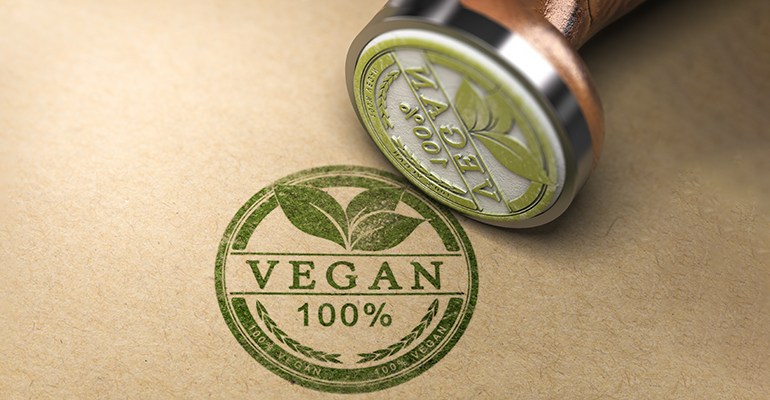
The CTSI said this puts people with allergies at risk, and causes confusion for consumers and businesses. In the US, for example, the Food and Drug Administration does not regulate the term “vegan” but has recently released labelling recommendations for plant-based food products like milk alternatives.
“CTSI is calling for a new legal definition of vegan food to be created to ensure the rules are clear, and that any food manufacturer or restaurant flouting these rules can be held accountable,” CTSI said. “This would provide clarity for those with allergies, for example to milk or eggs, over whether or not food labelled as vegan is safe to eat.”
Confusion for consumers and brands
In UK adults, about 4.5% follow a vegan diet and 14% follow a meat-free diet. And about 76% of the population believes that food labelled as vegan is completely free of any ingredients derived from animals, according to data from CTSI.
But because brands are free to make vegan and vegetarian claims on products without regulation, this isn’t always the case.
“Our research reveals that many consumers mistakenly believe that when something is described as vegan or plant-based, it doesn’t contain any animal products. However, there is currently nothing in the law that requires this to be true,” said John Herriman, CEO of CTSI.
“As well as causing confusion for consumers and businesses, the lack of legal definition could be exploited by unethical food businesses claiming foods are as vegan, when in fact they contain animal-derived products.”
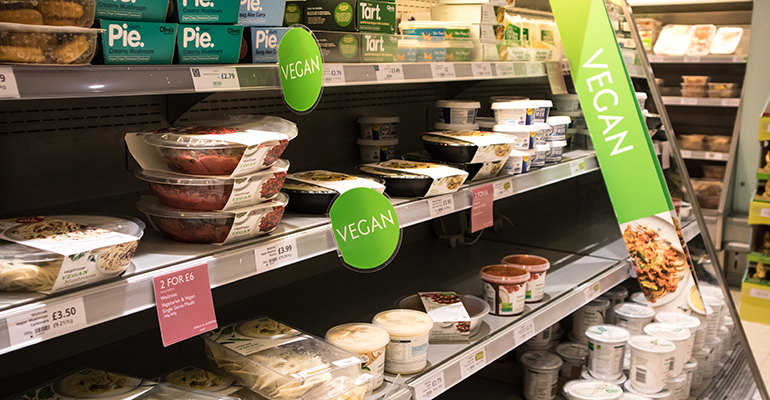 Pictured: Vegan food on display in supermarket | © AdobeStock/Mara Louvain
Data supplied by Hampshire and Kent Scientific Services revealed that several products labelled as “vegan” or “plant-based” actually contained milk or eggs. Items like chocolate truffles, pizza, pecan pie, vegetable curry, and brownies all contained a noticeable level of the animal ingredients.
Closing gaps in diets with proper labelling
A brand can apply for certifications from well-known and respected organisations, like Vegan Action, and if approved, can then use the group’s official Certified Vegan logo on its packaging. The more brands that achieve these certifications, the more often the logos will be recognized and trusted by consumers.
But without government oversight, brands can design their own unique logos for packaging to claim a product is vegan without any vetting process backing up that claim.
“As more consumers choose to eat food with no animal-derived ingredients it is important to establish what, as a society, we want that to mean,” said David Pickering, lead officer for food and nutrition at CTSI.
CTSI said that countries should adopt a legal definition of vegan food, including legal thresholds for what constitutes animal-free food. It also recommends education campaigns to raise awareness of what to look for on a label, as well as further stakeholder engagement in the industry in order for guidance to align with other countries.
“The dramatic increase in consumption and production of vegan and plant-based foods over the past five years has caused the sector to increase in value and shows no sign of slowing,” CTSI said. “Consumers rely heavily on nutritional labelling provided on food labels and any false or misleading claims could leave them with gaps in their diet.”

Get more of our news on Google
Set Ingredients Network as a 'Preferred Source' to get quicker access to the news you value.
Related news

M&S launches own-brand pet food range
11 Sep 2026
UK retailer Marks & Spencer has launched its own-brand pet food line Paws & Pals – a well-timed and strategic move that will appeal to loyal shoppers, says a marketing expert.
Read more
Do the US dietary guidelines put UPFs under pressure?
10 Sep 2026
Will the US dietary guidelines change the way Americans eat, swapping ultra-processed foods for whole foods? We asked Dr Barry Popkin, renowned nutrition and obesity researcher.
Read more
Food fraud costs UK economy £2bn each year
9 Sep 2026
Food fraud is costing the UK economy up to £2 billion (€2.3 billion) every year although the food sector is more “resilient” than others, according to a recent study.
Read more
Kellogg accelerates work to remove artificial colours from all US cereals
3 Sep 2026
WK Kellogg has announced an accelerated timeline to eliminate all artificial colours and the chemical preservative, BHT, across its full US portfolio of cereals and cereal packaging.
Read more
‘Urgent gaps’ in achieving 2030 food system goals
27 Aug 2026
Global food systems are failing to meet 2030 targets across indicators including health, environment, and resilience, according to a report co-authored by the Food and Agriculture Organisation (FAO).
Read more
Chimac’s fusion sauces bring Korean flavours to Europe
25 Aug 2026
Irish sauce brand Chimac is tapping into Korea’s culinary traditions, bringing its flavours and products to European consumers who want a taste of K-food.
Read more
Savoury protein snacks shake up the on-the-go market
10 Aug 2026
Sweet flavours have dominated the high-protein snack category but savoury snacks, such as cheese bars and meat sticks, can appeal to health-conscious consumers.
Read more
Nestlé invests in regeneratively farmed wheat for KitKat
5 Aug 2026
Nestlé will pay a premium for Wildfarmed’s regeneratively farmed wheat but the CPG remains reticent to promote the move on packs of its KitKat bars.
Read more
How Secon Taste is putting upcycled snacks on shelves
4 Aug 2026
Hungarian zero-waste startup Secon Taste is turning surplus food into upcycled snacks such as fibre-packed granola, instant porridge, and a circular coffee-tasting box.
Read more
Codex sets global thresholds for ‘may contain’ labels
3 Aug 2026
Codex Alimentarius has adopted its first global guidance on when to use “may contain” allergen warnings, setting thresholds intended to stop the label being used as blanket legal cover.
Read more