
Ingredients Categories
Finished Products
Finished Food Categories
- Bakery
- Beverages / Juices
- Cereal and grain products
- Confectionery
- Cooking Fats & Oils
- Dairy
- Egg products
- Fruits & Vegetables
- Infant & Baby food
- Meat, Poultry & Fish
- Nuts & Seeds products
- Other Finished Food Categories
- Pet Food
- Plant-based foods
- Prepared foods
- Sauces & Seasonings
- Sweet & Savoury Spreads
Specialised Finished Products
- Bee products
- Biotic products
- Dietary supplements
- Energy drinks
- Functional beverages
- Functional confectionery
- Functional food
- Functional powders
- Meal replacement products
- Nutricosmetics
- Other Specialised Finished Products
- Pet Dietary Supplements
- Pharma and OTC products
- Protein products
- Sugar replacers / Sweeteners
Health & Wellness Areas
Delivery Formats
Operations & Services
- 3D printing
- Analysis/ Testing
- Auditing & certifications
- Blending & mixing
- Bottling
- Certification
- Clinical trials
- Co-packing
- Coating
- Consulting
- Contract manufacturing
- Drying
- Electrospinning
- Encapsulating
- Enzymatic processing
- Extracting
- Extrusion
- Fat structuring
- Fermentation
- Filling
- Flavour development
- Freeze drying
- Granulating/ grinding/ milling / mixing
- High-pressure processing
- Labelling
- Other Operations & Services
- Packaging
- Packet filling
- Pasturising
- Quality assurance
- Saccharification
- Shear cell processing
- Spray drying
- Sterilisation
- Storage & Logistics
- Tabletting
- Toasting / roasting
- Ultra-high temperature processing
News
Plant-based and processed: Avoiding the next big health debate
Natasha Mentink, Freelance Journalist 2 Feb 2024Calls for clarity around ultra-processed food (UPFs) and ongoing debates on potential classification may bring the health credentials of plant-based food under the spotlight, which is why education is so necessary.
Although there is no harmonised definition of what processed food is, it is widely accepted that it refers to a foodstuff that has been changed from its original, natural state. Processing does not necessarily, therefore, mean that a food type, plant-based or not, is unhealthy.
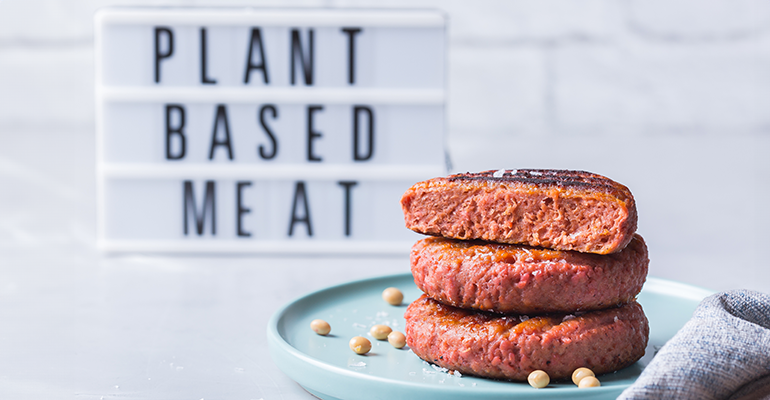
“It’s important to remember almost everything we eat—from frozen vegetables to bread—is processed in some way, and there is a huge amount of variation in the amount of processing used by producers to make plant-based meat,” Seren Kell, senior science and technology manager at nonprofit and think tank, Good Food Institute Europe (GFI) told Ingredients Network.
Manufacturers apply processing techniques to a foodstuff for a number of reasons. “Processing is not just used to make food tastier, it is also often used to make foods safer, add vitamins and minerals, and preserve food for longer to prevent waste,” says Kell.
Processing can provide benefits to the end product that are then passed onto the consumer. Fortification, preservation, and preparation are forms of processing that can provide added nutrition, a longer shelf life, and extra convenience.
Understanding UPFs and plant-based products
UPFs are foods that undergo multiple processes, such as extrusion, moulding or milling, contain many added ingredients, and experience high levels of manipulation. “While people often label plant-based meat as a UPF, comparing these products against the typical definitions of UPF, it’s clear they do not neatly fit,” explains Kell.
UPFs are those foods that are high in calories. “Plant-based meat is usually a source of fibre and is low in saturated fat, unlike most ultra-processed foods,” adds Kell.
The connection between processing and health, particularly following the prevalence of discussions around UPFs and how this links to plant-based products may now put meat-free items under the spotlight. Questions surrounding whether there is the understanding that processed equals bad and plant-based equals good, so the two cannot or do not mix, may increase.
The misconception that processing is inherently bad is prevalent among consumers. “But there has been a lack of clear communication to the public about what terms like UPF actually mean,” says Kell.
With rising consciousness and concerns, the UPF category is increasingly being challenged by a range of experts, and research suggests that the ultra-processing designation may not have much to say about how healthy a product is, Kell said. WHO research has challenged the assumption that all UPFs are bad for health—finding products such as plant-based meat are not associated with problems linked to UPFs such as fizzy drinks.
Nutritional value of processed foods
GFI’s recent Plant-Based Meat And Nutrition report outlines how researchers are pioneering new and improved processing techniques that can enhance the nutrients in these foods and help improve taste to make products more appealing.
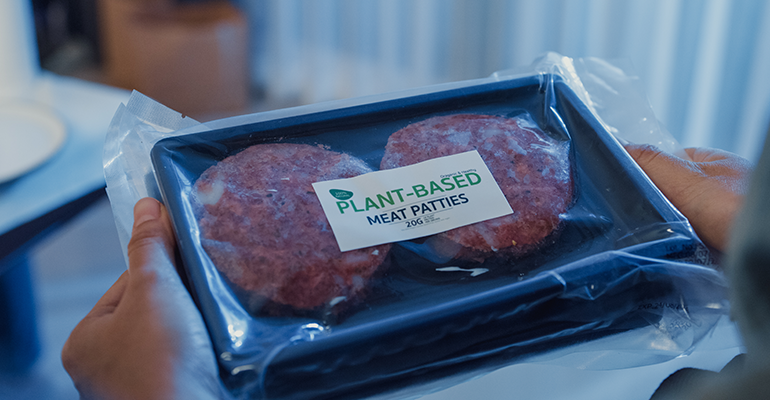
“Like the differences between plain white bread and seeded wholemeal bread, the nutritional makeup of different types of plant-based meat can vary a lot—but on the whole, they have a good nutritional profile, particularly compared to the red and processed conventional meat they often replace,” says Kell.
 © iStock/MTStock Studio
GFI’s report provides a snapshot of the current evidence, finding that plant-based meat is a source of fibre and protein and contains significantly less saturated fat than animal products. Initial studies suggest swapping plant-based for conventional meat could also help tackle many leading health problems, such as reducing the risk of heart disease and bowel cancer, improving gut health, and helping maintain a healthy weight, Kell adds.
A controversial reputation
“The controversy surrounding ultra-processing has led to a huge range of foods being tarred with the same ‘unhealthy’ brush, but new research is finding we need to look at this issue on a more granular level,” says Kell.
Embraced for its environmental benefits, plant-based meat causes up to 98% less climate emissions than conventional meat, uses less land to free up space for more nature-friendly farming, and helps tackle antibiotic resistance.
A recent paper published in the Lancet found that, while overall UPF intake was associated with poor health, certain foods that often fall into the category, including plant-based meat, were associated with positive health outcomes.
“If we’re going to enable plant-based foods to help large numbers of people switch to a healthier, more sustainable diet, we need to continue research and development (R&D) into these products,” says Kell. “However, we also need to ensure the conversation around ultra-processing is not misleading consumers.”
Clear communication quashes confusion
Although ever-evolving, shifts in the plant-based sector are expected to centre on education, communication, and reformulation to convey and develop a clear understanding of processed foods, particularly UPFs.
“There is a need for better-informed and more evidence-based discussion about UPFs, and businesses working in the plant-based space need to do more work to communicate the health benefits of their products to consumers,” explains Kell.
GFI’s report highlights that rapid advances are also taking place to develop next-generation products with a strong focus on health, adding vital micronutrients such as the vitamin B12 and iron lacking in many diets, and using new manufacturing techniques can enhance the nutrients within these foods. “Some of these new products are already beginning to make their way to market, and we expect this trend to continue throughout 2024,” says Kell.

Get more of our news on Google
Set Ingredients Network as a 'Preferred Source' to get quicker access to the news you value.
Related news

M&S launches own-brand pet food range
11 Sep 2026
UK retailer Marks & Spencer has launched its own-brand pet food line Paws & Pals – a well-timed and strategic move that will appeal to loyal shoppers, says a marketing expert.
Read more
Do the US dietary guidelines put UPFs under pressure?
10 Sep 2026
Will the US dietary guidelines change the way Americans eat, swapping ultra-processed foods for whole foods? We asked Dr Barry Popkin, renowned nutrition and obesity researcher.
Read more
Food fraud costs UK economy £2bn each year
9 Sep 2026
Food fraud is costing the UK economy up to £2 billion (€2.3 billion) every year although the food sector is more “resilient” than others, according to a recent study.
Read more
Kellogg accelerates work to remove artificial colours from all US cereals
3 Sep 2026
WK Kellogg has announced an accelerated timeline to eliminate all artificial colours and the chemical preservative, BHT, across its full US portfolio of cereals and cereal packaging.
Read more
‘Urgent gaps’ in achieving 2030 food system goals
27 Aug 2026
Global food systems are failing to meet 2030 targets across indicators including health, environment, and resilience, according to a report co-authored by the Food and Agriculture Organisation (FAO).
Read more
Chimac’s fusion sauces bring Korean flavours to Europe
25 Aug 2026
Irish sauce brand Chimac is tapping into Korea’s culinary traditions, bringing its flavours and products to European consumers who want a taste of K-food.
Read more
Savoury protein snacks shake up the on-the-go market
10 Aug 2026
Sweet flavours have dominated the high-protein snack category but savoury snacks, such as cheese bars and meat sticks, can appeal to health-conscious consumers.
Read more
Nestlé invests in regeneratively farmed wheat for KitKat
5 Aug 2026
Nestlé will pay a premium for Wildfarmed’s regeneratively farmed wheat but the CPG remains reticent to promote the move on packs of its KitKat bars.
Read more
How Secon Taste is putting upcycled snacks on shelves
4 Aug 2026
Hungarian zero-waste startup Secon Taste is turning surplus food into upcycled snacks such as fibre-packed granola, instant porridge, and a circular coffee-tasting box.
Read more
Codex sets global thresholds for ‘may contain’ labels
3 Aug 2026
Codex Alimentarius has adopted its first global guidance on when to use “may contain” allergen warnings, setting thresholds intended to stop the label being used as blanket legal cover.
Read more