
Ingredients Categories
Finished Products
Finished Food Categories
- Bakery
- Beverages / Juices
- Cereal and grain products
- Confectionery
- Cooking Fats & Oils
- Dairy
- Egg products
- Fruits & Vegetables
- Infant & Baby food
- Meat, Poultry & Fish
- Nuts & Seeds products
- Other Finished Food Categories
- Pet Food
- Plant-based foods
- Prepared foods
- Sauces & Seasonings
- Sweet & Savoury Spreads
Specialised Finished Products
- Bee products
- Biotic products
- Dietary supplements
- Energy drinks
- Functional beverages
- Functional confectionery
- Functional food
- Functional powders
- Meal replacement products
- Nutricosmetics
- Other Specialised Finished Products
- Pet Dietary Supplements
- Pharma and OTC products
- Protein products
- Sugar replacers / Sweeteners
Health & Wellness Areas
Delivery Formats
Operations & Services
- 3D printing
- Analysis/ Testing
- Auditing & certifications
- Blending & mixing
- Bottling
- Certification
- Clinical trials
- Co-packing
- Coating
- Consulting
- Contract manufacturing
- Drying
- Electrospinning
- Encapsulating
- Enzymatic processing
- Extracting
- Extrusion
- Fat structuring
- Fermentation
- Filling
- Flavour development
- Freeze drying
- Granulating/ grinding/ milling / mixing
- High-pressure processing
- Labelling
- Other Operations & Services
- Packaging
- Packet filling
- Pasturising
- Quality assurance
- Saccharification
- Shear cell processing
- Spray drying
- Sterilisation
- Storage & Logistics
- Tabletting
- Toasting / roasting
- Ultra-high temperature processing
News
Pesticides in the pantry: Major food companies roll back pesticide pledges
Tessa Wiles, Content Editor - Food 2 Jun 2026Ten of the 17 food companies, including General Mills, ADM, and Conagra, have reduced their public pesticide commitments since 2023, according to a recent report.
The 2026 edition of the Pesticides in the Pantry scorecard, published in March by US shareholder advocacy organisation As You Sow, reports that the majority of the 17 benchmarked food manufacturers and suppliers have reduced their public pesticide commitments and disclosures since 2023.
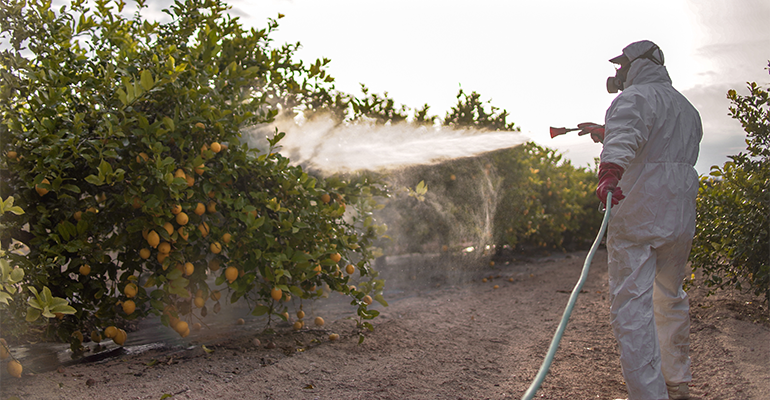
The scorecard benchmarks companies on their commitments to reduce pesticide use, disclosure of pesticide-related data, supplier requirements on farmworker exposure, and progress on phasing out specific high-risk active ingredients. Companies are scored out of 27 points across nine multi-tiered performance indicators, based on publicly available information. This means companies can lose points if they remove previously disclosed commitments or data.
Failure to disclose: ‘Starting to become a pattern’?
Of the 17 companies assessed, General Mills had the biggest change in score from the 2023 edition.
It led the 2019 and 2023 editions with 10 out of 27 points after publicly disclosing pesticide-avoidance data and linking its regenerative agriculture programme to pesticide reduction.
In 2026, General Mills scored zero, having removed pesticide-related language from its regenerative agriculture webpage and discontinued related disclosures.
“The company did not directly tell us that it would be abandoning its pesticide reduction commitments or disclosures. Rather, the company quietly removed this information and data from its website,” Cailin Dendas, senior coordinator for environmental health at As You Sow, told Ingredients Network.
Archer Daniels Midland (ADM), an upstream ingredient supplier to European food manufacturers, fell from nine points in 2023 to three in 2026, following the removal of its public commitment to “reduce the usage of chemical pesticides in our key agricultural supply chains by 2030”.
Conagra, which had previously reported avoiding 112,500 gallons of soil fumigants since 2021, also removed its public pesticide reduction goal.
“You could say this is starting to become a pattern,” Dendas said.
Five companies score zero for pesticide commitments
Five companies scored zero in 2026, compared with just one in 2023.
The scorecard also reports limited public information on what protections companies require from their suppliers regarding farmworker exposure to pesticides.
“The report generally shows a trend of retreating from health and environmental protections, with companies like General Mills and ADM, which previously disclosed information, now saying less, not more,” Dendas said. “That behaviour is more consistent with dismantling programmes than with failing to disclose robust ones.”
As You Sow restructured the scorecard format from 27 binary questions to nine-tiered indicators in 2026, but the total possible points remained the same.
The score declines, Dendas explained, correlate with companies decreasing their disclosure and, in some cases, dropping reduction goals altogether.
EU residue limits and due diligence rules tighten
While many of the companies benchmarked have pared back their pesticide commitments, European regulation has moved in the opposite direction over the same period.
The EU has continued to tighten maximum residue limits (MRLs) for pesticides, with Commission Regulation (EU) 2026/140 updating limits for six substances in January 2026.
In July 2025, the US submitted three statements (25-4364, 25-4362, 25-4367) to the World Trade Organization challenging the EU's approach, arguing that hazard-based criteria are not appropriate justification for MRL reductions.
“Specific EU regulations on pesticide use, such as use of glyphosate as a pre-harvest desiccant, or pesticide detection levels in foods, may create shipment rejection risk to European buyers,” Dendas said.
Dendas added that US suppliers already operating to EU standards could find a commercial advantage in the divergence.
“They can offer something their competitors lack – verified pesticide information. As European due diligence rules tighten, fewer and fewer US suppliers will qualify, making the ones that do increasingly valuable.”
The EU Corporate Sustainability Due Diligence Directive (CSDDD) adds a further layer for in-scope buyers. Omnibus I amendments (Directive (EU) 2026/470), adopted in February 2026, pushed the transposition deadline back to July 2028 and narrowed the scope to companies with at least 5,000 employees and €1.5 billion in net worldwide turnover, with first application from July 2029.
Nestlé, PepsiCo, Lamb Weston and Del Monte improved their scores
Not every company regressed in score.
Four companies improved their scores in the 2026 edition. Nestlé topped the 2026 ranking with 10 out of 27 points, up from six in 2023, after publicly committing to phase out the use of glyphosate as a desiccant and disclosing pesticide reduction data.
Lamb Weston scored nine points and remains the only benchmarked company with a quantitative reduction goal, citing a reduction in active ingredient use between 2023 and 2024.
Del Monte rose four points after discontinuing pesticides under Rainforest Alliance certification.
Dendas said Post Holdings expanded its pesticide-related disclosures since 2023, publishing a regenerative agriculture commitment and broadening data collection across its global supply chain.
PepsiCo also expanded its pesticide disclosure after the scoring window closed, Dendas said, following an As You Sow shareholder proposal filed in November 2025.

Get more of our news on Google
Set Ingredients Network as a 'Preferred Source' to get quicker access to the news you value.
Related news

Do the US dietary guidelines put UPFs under pressure?
10 Sep 2026
Will the US dietary guidelines change the way Americans eat, swapping ultra-processed foods for whole foods? We asked Dr Barry Popkin, renowned nutrition and obesity researcher.
Read more
Food fraud costs UK economy £2bn each year
9 Sep 2026
Food fraud is costing the UK economy up to £2 billion (€2.3 billion) every year although the food sector is more “resilient” than others, according to a recent study.
Read more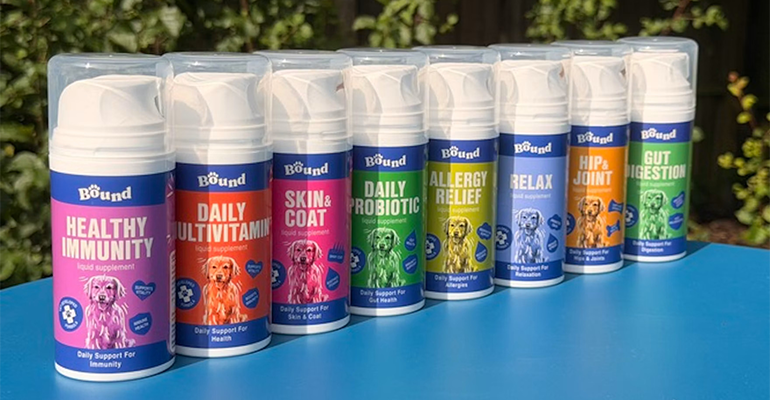
Pump-based liquid pet supplement focuses on health and convenience
8 Sep 2026
Prefera Pet Food uses a plastic pump-based packaging to make administering its liquid supplements for cats and dogs easier, healthier, and more accurate.
Read more
Health and wellness engagement matures across Middle East and Africa
4 Sep 2026
Many consumers in the Middle East and Africa are now proactively engaged in health and wellness, looking to integrate better habits and products into their daily lives, say experts.
Read more
Kellogg accelerates work to remove artificial colours from all US cereals
3 Sep 2026
WK Kellogg has announced an accelerated timeline to eliminate all artificial colours and the chemical preservative, BHT, across its full US portfolio of cereals and cereal packaging.
Read more
Royal Canin launches ‘freshly-cooked’ therapeutic dog food
1 Sep 2026
Mars-owned Royal Canin has moved into the therapeutic diet sector with the launch of its Fresh Veterinary Diets range for dogs with health conditions. We asked a veterinary nutritionist for her opinion.
Read more
‘Urgent gaps’ in achieving 2030 food system goals
27 Aug 2026
Global food systems are failing to meet 2030 targets across indicators including health, environment, and resilience, according to a report co-authored by the Food and Agriculture Organisation (FAO).
Read more
Seven-Eleven uses microbial testing tech to extend katsudon shelf life
26 Aug 2026
Japanese retail company Seven-Eleven has improved its factory’s microbial environment to keep comfort-food staple, katsudon, fresher for longer.
Read more
Chimac’s fusion sauces bring Korean flavours to Europe
25 Aug 2026
Irish sauce brand Chimac is tapping into Korea’s culinary traditions, bringing its flavours and products to European consumers who want a taste of K-food.
Read more
China beverages: Is herbal innovation the future?
20 Aug 2026
Herbal and botanical innovation in China's drinks market continues to grow, with ingredients like astragalus root, ginger, and ginseng in the spotlight – and focus shifting far beyond refreshment.
Read more