
Ingredients Categories
Finished Products
Finished Food Categories
- Bakery
- Beverages / Juices
- Cereal and grain products
- Confectionery
- Cooking Fats & Oils
- Dairy
- Egg products
- Fruits & Vegetables
- Infant & Baby food
- Meat, Poultry & Fish
- Nuts & Seeds products
- Other Finished Food Categories
- Pet Food
- Plant-based foods
- Prepared foods
- Sauces & Seasonings
- Sweet & Savoury Spreads
Specialised Finished Products
- Bee products
- Biotic products
- Dietary supplements
- Energy drinks
- Functional beverages
- Functional confectionery
- Functional food
- Functional powders
- Meal replacement products
- Nutricosmetics
- Other Specialised Finished Products
- Pet Dietary Supplements
- Pharma and OTC products
- Protein products
- Sugar replacers / Sweeteners
Health & Wellness Areas
Delivery Formats
Operations & Services
- 3D printing
- Analysis/ Testing
- Auditing & certifications
- Blending & mixing
- Bottling
- Certification
- Clinical trials
- Co-packing
- Coating
- Consulting
- Contract manufacturing
- Drying
- Electrospinning
- Encapsulating
- Enzymatic processing
- Extracting
- Extrusion
- Fat structuring
- Fermentation
- Filling
- Flavour development
- Freeze drying
- Granulating/ grinding/ milling / mixing
- High-pressure processing
- Labelling
- Other Operations & Services
- Packaging
- Packet filling
- Pasturising
- Quality assurance
- Saccharification
- Shear cell processing
- Spray drying
- Sterilisation
- Storage & Logistics
- Tabletting
- Toasting / roasting
- Ultra-high temperature processing
Sponsored Content
SOY AS A VALUABLE FOOD INGREDIENT
27 Oct 2022
Your leading partner for individual NATURAL SOYLUTIONS
SOY AUSTRIA® produces natural, sustainable, non-GMO soy-based ingredients for the global food industry. This creates added value for customers and supports the market need for sustainable food.
 © SOY AUSTRIA®
Consumers are increasingly seeking transparency, less processed and more natural products. Growing demand for simple and recognizable ingredients with health credentials is driving product innovation. More companies are removing or replacing artificial ingredients with more natural options. Clean label, sustainability and nutritional profile such as protein and fibre rich foods continue to influence purchasing decisions.
SOY AUSTRIA® has perfected the processing of soy, using every part of the bean to create a multifunctional portfolio of 100 % natural soy food ingredients. SOY AUSTRIA® follows the principle of minimal processing; soybeans are processed only with the help of mechanical and thermic process, abstaining from the use of any chemical solvents, or auxiliaries.
“Sustainability and natural ingredients are the core values of our business. From our point of view, this can only be achieved by using EU-sourced beans, not by pushing for further deforestation. SOY AUSTRIA® has committed itself to purchasing only soybeans grown on fields in Austria and other surrounding EU-countries, to ensure that our beans are grown in the most sustainable way and with the shortest possible transport. We do not purchase soybeans grown in huge monocultures overseas, and we only accept non-GMO beans according to the strictest standard of < 0,1%. We support local, small-structured farmers who grow beans by following our SOY AUSTRIA® agricultural standards. By local contract farming we additionally contribute to the ongoing development of seed in Austria so that we can meet the market requirements of the future,” says René Skarnager, Managing Director.
Natural Soy Ingredients Product Portfolio
The extensive product portfolio includes firstly full-fat soy flours, enzyme-active and enzyme-inactive, roasted soy grit, high-quality debittered soy bran and premium full-fat soy flakes, which cover the needs of the bakery, confectionery, and sweet bakery market segments. In addition, SOY AUSTRIA® offers soybeans halved with high protein content as a more efficient method of producing milk alternatives. In the second production plant, a product range of unique textured soy protein is made from semi-defatted soy flour in a purely natural way to meet the growing market need for more natural meat alternatives. Compared to textured soy protein made from soy concentrate or soy isolate, the SOY AUSTRIA® SOYTEXTURE product line demands neither any prewashing steps, nor any further cooking steps to soften the structure. This accelerates customers' production processes and reduces water consumption and production costs.
“With our SOYTEXTURE product line, we have attained new heights in terms of creating 100% natural soy texturates on basis of our gently pressed, semi-defatted soy flours. Thanks to its unique pleasant taste, without any off-notes, and a fast rehydration behaviour, SOYTEXTURE will speed up your production process and requires no use of masking flavours,” says Erika Schwarzinger, Senior Marketing Manager.
SOY AUSTRIA® offers SOYTEXTURE in different sizes and shapes, providing the customer with the best NATURAL SOYLUTION for the product development needs.
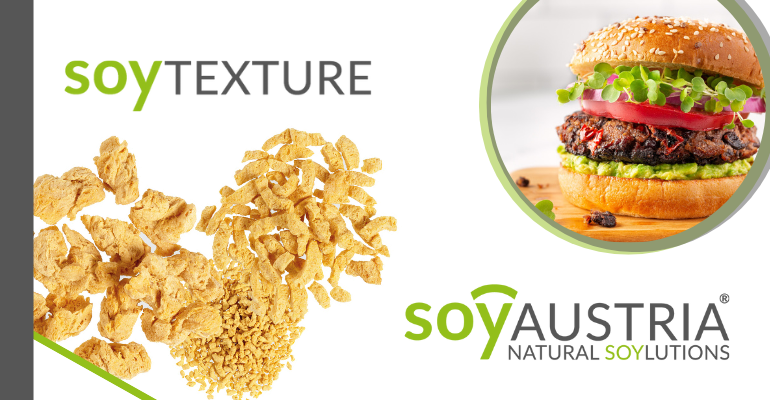
SOY as a valuable food ingredient and all its benefits
Soy is a high-quality plant protein rich in vitamins and minerals that contains all 9 essential amino acids. Soybeans grown directly as a food source for humans represent an environmentally friendly source of protein, requiring less water and land than other protein sources. In fact, only 7% of global soy is used for products for human consumption, while more than 3/4 is used as feed for animals farmed for human consumption. This in one of the top motivations why more and more consumers around the world are switching to a sustainable plant-based diet.
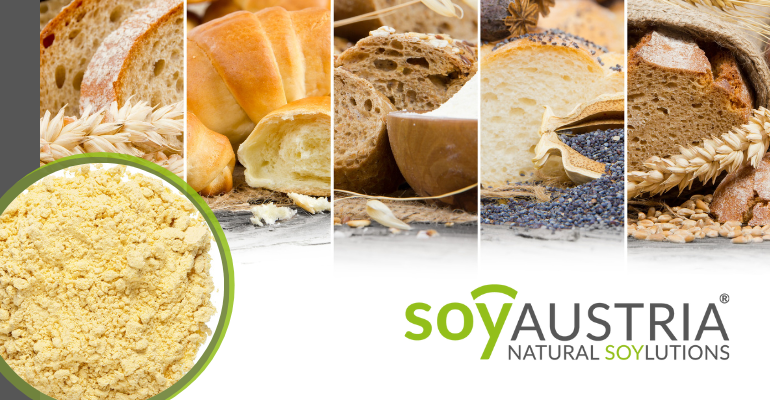 © SOY AUSTRIA®
Companies mentioned


Get more of our news on Google
Set Ingredients Network as a 'Preferred Source' to get quicker access to the news you value.
Related news

Health and wellness engagement matures across Middle East and Africa
4 Sep 2026
Many consumers in the Middle East and Africa are now proactively engaged in health and wellness, looking to integrate better habits and products into their daily lives, say experts.
Read more
Kellogg accelerates work to remove artificial colours from all US cereals
3 Sep 2026
WK Kellogg has announced an accelerated timeline to eliminate all artificial colours and the chemical preservative, BHT, across its full US portfolio of cereals and cereal packaging.
Read more
Skimpflation: An ‘unfair’ and risky approach to keeping prices low
2 Sep 2026
Consumers see skimpflation – reducing the quality of ingredients due to rising costs – as more unfair than shrinkflation, making it a risky strategy according to recent research.
Read more
‘Urgent gaps’ in achieving 2030 food system goals
27 Aug 2026
Global food systems are failing to meet 2030 targets across indicators including health, environment, and resilience, according to a report co-authored by the Food and Agriculture Organisation (FAO).
Read more
Global demand for instant noodles continues to rise
24 Aug 2026
Global demand for instant noodles reached 124.21 billion servings last year, representing a 0.7% year-on-year increase – or 900 million extra servings.
Read more
Savoury protein snacks shake up the on-the-go market
10 Aug 2026
Sweet flavours have dominated the high-protein snack category but savoury snacks, such as cheese bars and meat sticks, can appeal to health-conscious consumers.
Read more
How Secon Taste is putting upcycled snacks on shelves
4 Aug 2026
Hungarian zero-waste startup Secon Taste is turning surplus food into upcycled snacks such as fibre-packed granola, instant porridge, and a circular coffee-tasting box.
Read more
EU sets maximum MOAH levels to protect human health
28 Jul 2026
The EU will adopt maximum levels for mineral oil aromatic hydrocarbons (MOAH) in food to protect human health. What do manufacturers need to know?
Read more
UK publishes guidance on SPS food trade agreement with EU
27 Jul 2026
The UK government has shared guidance on how food businesses can prepare for its upcoming Sanitary and Phytosanitary (SPS) agreement with the EU.
Read more
Industry hits back at UK’s proposed healthy food rules
24 Jul 2026
Food brands, including Haribo, have hit out against the UK’s proposed nutrient profiling model, which places a new focus on free sugars that are added during manufacturing.
Read more