
Ingredients Categories
Finished Products
Finished Food Categories
- Bakery
- Beverages / Juices
- Cereal and grain products
- Confectionery
- Cooking Fats & Oils
- Dairy
- Egg products
- Fruits & Vegetables
- Infant & Baby food
- Meat, Poultry & Fish
- Nuts & Seeds products
- Other Finished Food Categories
- Pet Food
- Plant-based foods
- Prepared foods
- Sauces & Seasonings
- Sweet & Savoury Spreads
Specialised Finished Products
- Bee products
- Biotic products
- Dietary supplements
- Energy drinks
- Functional beverages
- Functional confectionery
- Functional food
- Functional powders
- Meal replacement products
- Nutricosmetics
- Other Specialised Finished Products
- Pet Dietary Supplements
- Pharma and OTC products
- Protein products
- Sugar replacers / Sweeteners
Health & Wellness Areas
Delivery Formats
Operations & Services
- 3D printing
- Analysis/ Testing
- Auditing & certifications
- Blending & mixing
- Bottling
- Certification
- Clinical trials
- Co-packing
- Coating
- Consulting
- Contract manufacturing
- Drying
- Electrospinning
- Encapsulating
- Enzymatic processing
- Extracting
- Extrusion
- Fat structuring
- Fermentation
- Filling
- Flavour development
- Freeze drying
- Granulating/ grinding/ milling / mixing
- High-pressure processing
- Labelling
- Other Operations & Services
- Packaging
- Packet filling
- Pasturising
- Quality assurance
- Saccharification
- Shear cell processing
- Spray drying
- Sterilisation
- Storage & Logistics
- Tabletting
- Toasting / roasting
- Ultra-high temperature processing
News
UAE looks to become global food tech hub
Katja Knox, Editorial Account Manager 18 May 2021The first phase of the United Arab Emirates’ new Food Tech Valley was launched on May 1, Gulf Business reported. This economic zone is focused on four main innovation clusters in the food tech space: agricultural technology, including bioengineering and automation; food innovation, which will function as an incubator space for startups; R&D facilities focused on drought-resistant crop cultivation and alternative protein production; and smart food logistics intended to make food storage, distribution and transportation more effective.
Through this project, the UAE is working to take a bite out of the sizeable and growing AgTech market, which is slated to grow to $42.52 billion by 2027, according to recent analysis by Emergen Research. Although the facilities that make up this Food Tech Valley project are dedicated to a variety of pursuits to increase the UAE’s foothold in the growing food tech sector, 60% of the project will be allocated to advanced farms, including indoor and vertical farms.

Without the assistance of innovative agricultural techniques, the UAE is heavily reliant on importation to feed its population. As a result of its limited natural ability to provide sustenance for its own citizenry, the UAE currently ranks 42 out of 113 on the Global Food Security Index. The index, which ranks food systems based on a country’s resource risks, how the country is adapting to those risks and the overall food insecurity of its population, cited “agricultural research and development” as a major deficiency in the UAE.
However, the emirates are aware of these areas for improvement. As part of the country’s National Food Security Strategy 2051 targets, the country has committed to ranking among the top 10 countries on the Global Food Security Index by 2021 by using technology to enhance local production, diversify food sources, and improve nutrition.
In the announcement of the new food technology hub, Sheikh Mohammed bin Rashid, Vice President and Ruler of Dubai said that the development of advanced agricultural technologies in this economic center is critical to the country achieving self-sufficiency.
The Minister of State for Food Security, Mariam Al Mheiri echoed this sentiment saying, “We seek to adopt and develop the latest methods for smart agriculture and food production, rationalize water use, accelerate basic food self-sufficiency, and share our successful experiences with countries around the world. This will help us achieve the Sustainable Development Goals and safeguard the future of forthcoming generations.”
The UAE is not alone in looking to food tech for a boost in investment and self-sufficiency. Singapore has recently been making headlines for its investments in technologies like cultured meat. Israel too has consistently been at the forefront of food tech and has made strides in alternative protein as well as incubators to bring R&D within its borders.
Gulf Business reported that the UAE currently has Dhs62bn ($16.9 billion) invested in the food and beverage space. With this newest announcement of institutional investment, the UAE has placed itself as a heavyweight in competition for the growing global interest in food tech. Now, with this latest commitment to growing its resources in the space, it will not be surprising to see more foreign and direct investments landing in a country where non-arable land has traditionally left it behind in terms of agricultural development.

Get more of our news on Google
Set Ingredients Network as a 'Preferred Source' to get quicker access to the news you value.
Related news

M&S launches own-brand pet food range
11 Sep 2026
UK retailer Marks & Spencer has launched its own-brand pet food line Paws & Pals – a well-timed and strategic move that will appeal to loyal shoppers, says a marketing expert.
Read more
Do the US dietary guidelines put UPFs under pressure?
10 Sep 2026
Will the US dietary guidelines change the way Americans eat, swapping ultra-processed foods for whole foods? We asked Dr Barry Popkin, renowned nutrition and obesity researcher.
Read more
Food fraud costs UK economy £2bn each year
9 Sep 2026
Food fraud is costing the UK economy up to £2 billion (€2.3 billion) every year although the food sector is more “resilient” than others, according to a recent study.
Read more
Kellogg accelerates work to remove artificial colours from all US cereals
3 Sep 2026
WK Kellogg has announced an accelerated timeline to eliminate all artificial colours and the chemical preservative, BHT, across its full US portfolio of cereals and cereal packaging.
Read more
‘Urgent gaps’ in achieving 2030 food system goals
27 Aug 2026
Global food systems are failing to meet 2030 targets across indicators including health, environment, and resilience, according to a report co-authored by the Food and Agriculture Organisation (FAO).
Read more
Chimac’s fusion sauces bring Korean flavours to Europe
25 Aug 2026
Irish sauce brand Chimac is tapping into Korea’s culinary traditions, bringing its flavours and products to European consumers who want a taste of K-food.
Read more
Savoury protein snacks shake up the on-the-go market
10 Aug 2026
Sweet flavours have dominated the high-protein snack category but savoury snacks, such as cheese bars and meat sticks, can appeal to health-conscious consumers.
Read more
Nestlé invests in regeneratively farmed wheat for KitKat
5 Aug 2026
Nestlé will pay a premium for Wildfarmed’s regeneratively farmed wheat but the CPG remains reticent to promote the move on packs of its KitKat bars.
Read more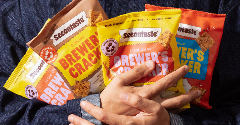
How Secon Taste is putting upcycled snacks on shelves
4 Aug 2026
Hungarian zero-waste startup Secon Taste is turning surplus food into upcycled snacks such as fibre-packed granola, instant porridge, and a circular coffee-tasting box.
Read more
Codex sets global thresholds for ‘may contain’ labels
3 Aug 2026
Codex Alimentarius has adopted its first global guidance on when to use “may contain” allergen warnings, setting thresholds intended to stop the label being used as blanket legal cover.
Read more