
Ingredients Categories
Finished Products
Finished Food Categories
- Bakery
- Beverages / Juices
- Cereal and grain products
- Confectionery
- Cooking Fats & Oils
- Dairy
- Egg products
- Fruits & Vegetables
- Infant & Baby food
- Meat, Poultry & Fish
- Nuts & Seeds products
- Other Finished Food Categories
- Pet Food
- Plant-based foods
- Prepared foods
- Sauces & Seasonings
- Sweet & Savoury Spreads
Specialised Finished Products
- Bee products
- Biotic products
- Dietary supplements
- Energy drinks
- Functional beverages
- Functional confectionery
- Functional food
- Functional powders
- Meal replacement products
- Nutricosmetics
- Other Specialised Finished Products
- Pet Dietary Supplements
- Pharma and OTC products
- Protein products
- Sugar replacers / Sweeteners
Health & Wellness Areas
Delivery Formats
Operations & Services
- 3D printing
- Analysis/ Testing
- Auditing & certifications
- Blending & mixing
- Bottling
- Certification
- Clinical trials
- Co-packing
- Coating
- Consulting
- Contract manufacturing
- Drying
- Electrospinning
- Encapsulating
- Enzymatic processing
- Extracting
- Extrusion
- Fat structuring
- Fermentation
- Filling
- Flavour development
- Freeze drying
- Granulating/ grinding/ milling / mixing
- High-pressure processing
- Labelling
- Other Operations & Services
- Packaging
- Packet filling
- Pasturising
- Quality assurance
- Saccharification
- Shear cell processing
- Spray drying
- Sterilisation
- Storage & Logistics
- Tabletting
- Toasting / roasting
- Ultra-high temperature processing
News
Cocoa prices likely to increase significantly in 2024
Natasha Spencer-Jolliffe, Freelance Journalist 27 Mar 2024Due to environmental factors, the International Cocoa Organization predicts an 11% drop in global cocoa output, driving cocoa prices up and raising concerns for farmers' livelihoods.
In its Quarterly Bulletin of Cocoa Statistics, the International Cocoa Organization’s (ICCO) latest figures show a projected 11% decline in the season’s main cocoa harvest for the forthcoming year.
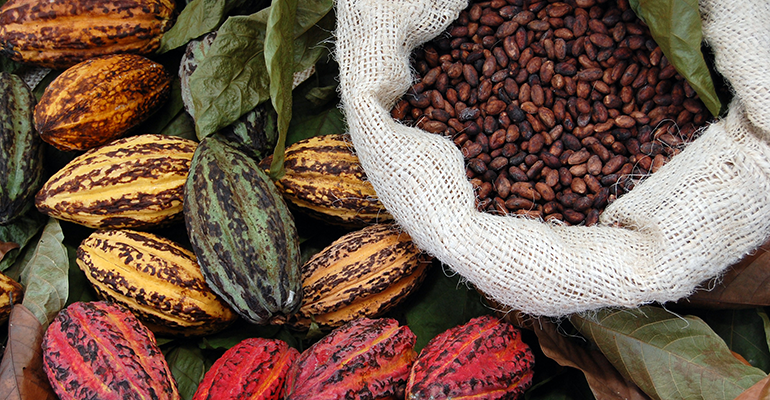
ICCO has released its first forecasts for the 2023/24 cocoa year and revised estimates of world production, grindings, and stocks of cocoa beans for the 2022/23 cocoa year. With the current forecasts, ICCO predicts that global cocoa supply will drop by almost 11% to 4.449 million tonnes compared to the 2022/23 season and that global cocoa demand will reduce by nearly 5% to 4.779 million tonnes.
Environmental disruption affects global cocoa production
ICCO says several factors are responsible for the expected reduction in global cocoa production, including climate and weather, pests and disease, specifically swollen shoots, and orchard ageing.
Speaking to Ingredients Network, Michel Arrion, executive director of the ICCO, confirms the organisation is unaware of any quantitative analysis or assessment that discriminates between these three leading causes of lower cocoa production. “The three explanations are not new, but they might have reached some kind of turning point, and the combination of the three factors explains the loss of production,” said Arrion.
The El Niño weather phenomenon is one of the leading causes of the drop in global cocoa output. West Africa was the area worst affected by adverse weather conditions, which caused the region to experience unseasonal heavy rains followed by dry heat. “Central Africa and Latin America do not seem to be affected by a loss of production,” Arrion adds.
These adverse El Niño weather conditions impact farmers’ livelihoods. “Our main concern is the living income of the farmers,” Arrion says. “If they produce less, they sell fewer volumes, and unless the unit price is increased, their income is reduced,” Arrion adds.
Predicting price hikes
The outlook in Ghana and Cote d’Ivoire, responsible for 70% of the world’s cocoa bean production, has led to ongoing cocoa price increases in the future price markets in London and New York. Concerns about global cocoa production and expanding global cocoa deficits drive support for elevated cocoa prices.
The loss of production also creates a mismatch between global supply and demand. If supply is less than demand, international prices will increase, which is positive in principle as it allows governments to manoeuvre and increase farmgate prices.
However, this is not always the case, for example, in long-term or forward sales. “In this case, farmgate prices remain low when international prices are high,” says Arrion. “Traders benefit from high prices, not farmers,” Arrion adds.
Amid El Niño weather conditions, while global costs remain the same, unit costs are higher as global costs are divided by smaller quantities. “Global deficit means higher international prices, higher retail prices, but not necessarily higher farmgate prices,” says Arrion.
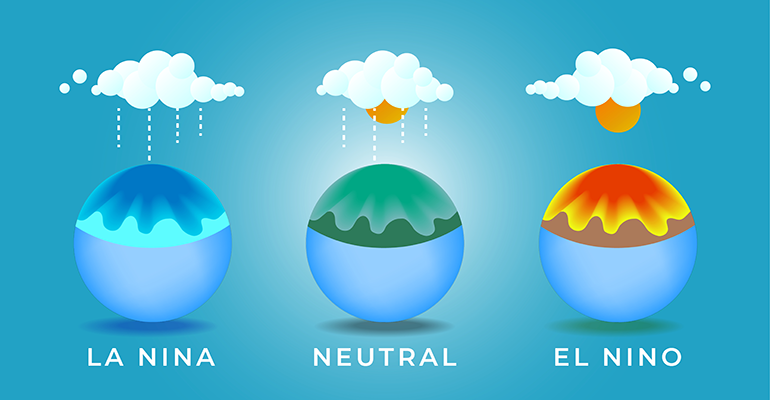 Pictured: Illustration of climate change | © AdobeStock/Budi Sudarmanto
Cocoa beans have been limited due to El Niño weather conditions over the past year. The lack of availability has resulted in significant increases in cocoa prices. As raw material costs increase, they are likely to have further detrimental impacts on processors’ operations. As a result of record-high cocoa prices, global demand is starting to stall.
Production loss
A significant decrease in cocoa production in Ivory Coast, the largest cocoa producer worldwide, has been reported. Cocoa shipments by Ivorian farmers to ports from 1 October 2023 to 25 February 2024 decreased by 32% compared to the same period the previous year, which could positively impact cocoa prices, insights reveal.
Le Conseil Cafe-Cacao, the Ivory Coast cocoa regulator, temporarily halted forward sales of cocoa for the 2024/25 season on 25th January. The regulator sought a more accurate estimate of the Ivory Coast’s expected cocoa production, adding to the region's supply concerns.
The Ghana Cocoa Board had to revise its 2023/24 Ghana cocoa production estimate to a 14-year low of 650,000-700,000 metric tonnes from its previous projection of 850,000 metric tonnes on 21 February 2024.
In August 2023, Ghana’s cocoa regulator announced that some cocoa farmers would unlikely fulfil their cocoa contracts for the second consecutive season. The news is concerning, as Ghana is the world’s second-largest cocoa producer.
The decline in output in Ghana and the Ivory Coast has pushed cocoa prices to historic highs, causing financial troubles for significant players and raising concerns about the sustainability of cocoa production. Furthermore, the market has risen by over 100% since last summer, when worries about heavy rains and disease issues first arose, says Weather Wealth.
Cocoa prices are likely to increase significantly in 2024 due to weather and disease issues in Ivory Coast, Ghana, and Nigeria. Ghana’s cocoa sector faces challenges such as aged trees, diseases, low farmgate prices, and climate difficulties, leading to a 35% drop in cocoa purchases.

Get more of our news on Google
Set Ingredients Network as a 'Preferred Source' to get quicker access to the news you value.
Related news

Do the US dietary guidelines put UPFs under pressure?
10 Sep 2026
Will the US dietary guidelines change the way Americans eat, swapping ultra-processed foods for whole foods? We asked Dr Barry Popkin, renowned nutrition and obesity researcher.
Read more
Health and wellness engagement matures across Middle East and Africa
4 Sep 2026
Many consumers in the Middle East and Africa are now proactively engaged in health and wellness, looking to integrate better habits and products into their daily lives, say experts.
Read more
Skimpflation: An ‘unfair’ and risky approach to keeping prices low
2 Sep 2026
Consumers see skimpflation – reducing the quality of ingredients due to rising costs – as more unfair than shrinkflation, making it a risky strategy according to recent research.
Read more
‘Urgent gaps’ in achieving 2030 food system goals
27 Aug 2026
Global food systems are failing to meet 2030 targets across indicators including health, environment, and resilience, according to a report co-authored by the Food and Agriculture Organisation (FAO).
Read more
Seven-Eleven uses microbial testing tech to extend katsudon shelf life
26 Aug 2026
Japanese retail company Seven-Eleven has improved its factory’s microbial environment to keep comfort-food staple, katsudon, fresher for longer.
Read more
Chimac’s fusion sauces bring Korean flavours to Europe
25 Aug 2026
Irish sauce brand Chimac is tapping into Korea’s culinary traditions, bringing its flavours and products to European consumers who want a taste of K-food.
Read more
Global demand for instant noodles continues to rise
24 Aug 2026
Global demand for instant noodles reached 124.21 billion servings last year, representing a 0.7% year-on-year increase – or 900 million extra servings.
Read more
Popular barbecue staples experience sharp price increases
19 Aug 2026
The typical cost of US shoppers’ barbecue baskets has risen by 12% over the past year – the fastest annual rise in a decade, figures from The Economist show.
Read more
Hot NPD: Nissin launches first cold-water Cup Noodles
18 Aug 2026
Nissin is taking one of Japan’s most iconic instant meals in a completely new direction with the launch of the first cold water-only Cup Noodles in the brand’s 55-year history.
Read more
Manam Chocolate aims to bring premium Indian cacao to 'the world stage'
11 Aug 2026
Craft chocolate brand Manam Chocolate is investing in local expansion and supply chain innovation throughout India as it works to build out the premium reputation of its locally produced cacao products.
Read more