
Ingredients Categories
Finished Products
Finished Food Categories
- Bakery
- Beverages / Juices
- Cereal and grain products
- Confectionery
- Cooking Fats & Oils
- Dairy
- Egg products
- Fruits & Vegetables
- Infant & Baby food
- Meat, Poultry & Fish
- Nuts & Seeds products
- Other Finished Food Categories
- Pet Food
- Plant-based foods
- Prepared foods
- Sauces & Seasonings
- Sweet & Savoury Spreads
Specialised Finished Products
- Bee products
- Biotic products
- Dietary supplements
- Energy drinks
- Functional beverages
- Functional confectionery
- Functional food
- Functional powders
- Meal replacement products
- Nutricosmetics
- Other Specialised Finished Products
- Pet Dietary Supplements
- Pharma and OTC products
- Protein products
- Sugar replacers / Sweeteners
Health & Wellness Areas
Delivery Formats
Operations & Services
- 3D printing
- Analysis/ Testing
- Auditing & certifications
- Blending & mixing
- Bottling
- Certification
- Clinical trials
- Co-packing
- Coating
- Consulting
- Contract manufacturing
- Drying
- Electrospinning
- Encapsulating
- Enzymatic processing
- Extracting
- Extrusion
- Fat structuring
- Fermentation
- Filling
- Flavour development
- Freeze drying
- Granulating/ grinding/ milling / mixing
- High-pressure processing
- Labelling
- Other Operations & Services
- Packaging
- Packet filling
- Pasturising
- Quality assurance
- Saccharification
- Shear cell processing
- Spray drying
- Sterilisation
- Storage & Logistics
- Tabletting
- Toasting / roasting
- Ultra-high temperature processing
News
Danone removes NutriScore from products
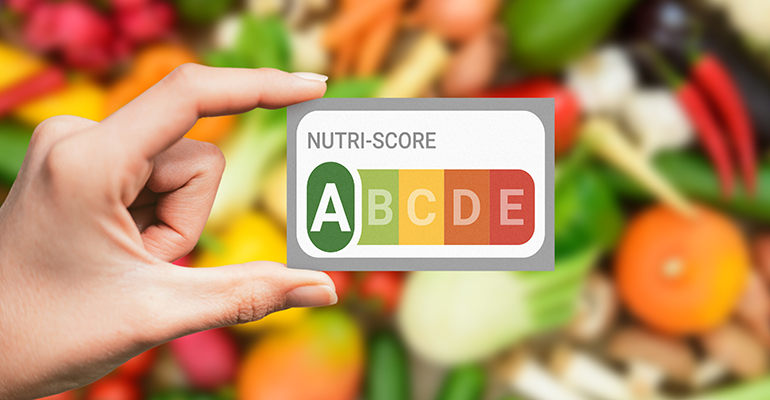
Natasha Spencer-Jolliffe, Freelance Journalist 20 Sep 2024Following an algorithm update that gives some of its sweetened drinks a worse score, Danone has removed the front-of-pack label, NutriScore, from all of its products – putting profit before public health, say campaigners.
After an 18-month period of investigation, NutriScore’s Scientific Committee proposed several changes to how the scores are calculated, some of which now affect Danone and other food companies. Milk-based drinks, fermented milk-based drinks and vegetable drinks are now included in the category of beverages. Previously they were classified in the general food category like yoghurts, which meant their sweetened forms had a more favourable score.
“This situation was not in line with public health recommendations,” Serge Hercberg, professor of nutrition at Université Paris, who led the team of researchers that created NutriScore, told Ingredients Network.
NutriScore no more
The reclassification has decreased the NutriScore rating for Danone’s drinkable yoghurts. The leading food company has since announced that it intends to gradually withdraw the NutriScore label from its products in this category. Following Committee’s findings and update, a NutriScore of D or E may seem unattractive for products with a marked health positioning, even if they may contain sugar levels close to those of sodas.
“We have always supported consistent science-based, interpretive nutrition labelling and were pioneers in displaying, on a voluntary basis, the NutriScore on our packaging in Europe,” a spokesperson from Danone, said.
“However, we do not agree with the revision of the algorithm, which switches drinkable dairy and plant-based alternatives into the beverage category,” the spokesperson says. “This development gives an erroneous view of the nutritional and functional quality of drinkable dairy and plant-based products, not in line with food based dietary guidelines in Europe,” Danone’s spokesperson adds.
Danone believes this leads to confusion among consumers with different NutriScore scoring for products with similar nutritional purposes in diets that come in a different format.
Given this “major inconsistency”, Danone’s spokesperson said the company will gradually remove the NutriScore from its dairy and plant-based drinkable products, starting from September 2024. “We are also studying the impact of this withdrawal on our other product references and are working with all stakeholders in each market where we operate to identify the best solution.”
Some yoghurt drinks contain as much sugar as soda
According to Hercberg, the new classification seeks to achieve public health objectives by scoring products based on their sugar content. “This is important because the sugar content of these drinks produced by Danone – yoghurt drinks, sweetened milk drinks (flavoured milk) and plant-based drinks (including soya, almond, oat and rice drinks) – varies considerably between sugar-free versions of the product and very sweet versions.”
Some of these products may contain up to 10 to 13g of sugar per 100ml, equivalent to soft drinks. However, they were classified as A or B using the calculation method for general foods that was initially used. In the beverages category, the sweetest soft drinks, which contain the same quantities of sugar as drinking yoghurts or other sweetened vegetable drinks, are classified as E.
“Contrary to what Danone says, it’s not drinking yoghurts or plant-based drinks that are being penalised by the update of NutriScore,” Hercberg says. “It’s actually the sweetened forms of these products that have had their NutriScore downgraded,” Hercberg adds.
With the updated NutriScore, versions of these products with little or no added sugar (less than 4%) are still well classified as green/B. Only the sweetened forms of drinking yoghurts and vegetable drinks are classified as C, D or E, depending on their sugar content, varying from 5 grams to almost 13 grams of sugar per 100ml.
For Danone, however, they are calling for a new European-wide nutritional information system. “We call for the adoption, at the EU level, of a harmonised interpretative nutritional information system benefitting all European consumers,” the spokesperson said.
In line with its health compass and Danone Impact Journey targets, the company says it is committed to improving its products’ recipes and offering its consumers transparent information on its products’ nutritional profile. “We are open to further dialogue and collaboration to promote healthy food choices,” Danone’s spokesperson adds.
Hercberg: ‘We expected better from a company like Danone’
“We expected better from a company like Danone, which until recently campaigned to make NutriScore mandatory in Europe until the update (quite rightly) affected some of its flagship products,” says Hercberg.
“The decision to withdraw the NutriScore shows that Danone, contrary to the virtuous image it is trying to project, is in fact focusing primarily on its commercial and marketing interests and not on the health of consumers. The attitude of Danone is regrettable and very disappointing on the part of a company that has for several years cultivated an image of a food group with a strong social commitment and that has until now claimed to place ‘health for all through food’ at the heart of its image as a responsible company,” he added.

Get more of our news on Google
Set Ingredients Network as a 'Preferred Source' to get quicker access to the news you value.
Related news

Do the US dietary guidelines put UPFs under pressure?
10 Sep 2026
Will the US dietary guidelines change the way Americans eat, swapping ultra-processed foods for whole foods? We asked Dr Barry Popkin, renowned nutrition and obesity researcher.
Read more
Food fraud costs UK economy £2bn each year
9 Sep 2026
Food fraud is costing the UK economy up to £2 billion (€2.3 billion) every year although the food sector is more “resilient” than others, according to a recent study.
Read more
Kellogg accelerates work to remove artificial colours from all US cereals
3 Sep 2026
WK Kellogg has announced an accelerated timeline to eliminate all artificial colours and the chemical preservative, BHT, across its full US portfolio of cereals and cereal packaging.
Read more
Skimpflation: An ‘unfair’ and risky approach to keeping prices low
2 Sep 2026
Consumers see skimpflation – reducing the quality of ingredients due to rising costs – as more unfair than shrinkflation, making it a risky strategy according to recent research.
Read more
NielsenIQ’s EU barometer shows Britain leading in grocery inflation
31 Aug 2026
Britain was the only country to record grocery inflation above 2%, according to NielsenIQ data that compared Europe’s five biggest grocery markets from February to May 2026.
Read more
‘Urgent gaps’ in achieving 2030 food system goals
27 Aug 2026
Global food systems are failing to meet 2030 targets across indicators including health, environment, and resilience, according to a report co-authored by the Food and Agriculture Organisation (FAO).
Read more
Chimac’s fusion sauces bring Korean flavours to Europe
25 Aug 2026
Irish sauce brand Chimac is tapping into Korea’s culinary traditions, bringing its flavours and products to European consumers who want a taste of K-food.
Read more
Global demand for instant noodles continues to rise
24 Aug 2026
Global demand for instant noodles reached 124.21 billion servings last year, representing a 0.7% year-on-year increase – or 900 million extra servings.
Read more
Popular barbecue staples experience sharp price increases
19 Aug 2026
The typical cost of US shoppers’ barbecue baskets has risen by 12% over the past year – the fastest annual rise in a decade, figures from The Economist show.
Read more
Hot NPD: Nissin launches first cold-water Cup Noodles
18 Aug 2026
Nissin is taking one of Japan’s most iconic instant meals in a completely new direction with the launch of the first cold water-only Cup Noodles in the brand’s 55-year history.
Read more