
Ingredients Categories
Finished Products
Finished Food Categories
- Bakery
- Beverages / Juices
- Cereal and grain products
- Confectionery
- Cooking Fats & Oils
- Dairy
- Egg products
- Fruits & Vegetables
- Infant & Baby food
- Meat, Poultry & Fish
- Nuts & Seeds products
- Other Finished Food Categories
- Pet Food
- Plant-based foods
- Prepared foods
- Sauces & Seasonings
- Sweet & Savoury Spreads
Specialised Finished Products
- Bee products
- Biotic products
- Dietary supplements
- Energy drinks
- Functional beverages
- Functional confectionery
- Functional food
- Functional powders
- Meal replacement products
- Nutricosmetics
- Other Specialised Finished Products
- Pet Dietary Supplements
- Pharma and OTC products
- Protein products
- Sugar replacers / Sweeteners
Health & Wellness Areas
Delivery Formats
Operations & Services
- 3D printing
- Analysis/ Testing
- Auditing & certifications
- Blending & mixing
- Bottling
- Certification
- Clinical trials
- Co-packing
- Coating
- Consulting
- Contract manufacturing
- Drying
- Electrospinning
- Encapsulating
- Enzymatic processing
- Extracting
- Extrusion
- Fat structuring
- Fermentation
- Filling
- Flavour development
- Freeze drying
- Granulating/ grinding/ milling / mixing
- High-pressure processing
- Labelling
- Other Operations & Services
- Packaging
- Packet filling
- Pasturising
- Quality assurance
- Saccharification
- Shear cell processing
- Spray drying
- Sterilisation
- Storage & Logistics
- Tabletting
- Toasting / roasting
- Ultra-high temperature processing
News
Premium pet food: Fussy felines help drive Nestlé’s pet food plans
David Burrows, Freelance Journalist 8 Jul 2026The production of pet food is slowing as people adopt smaller dogs and more cats, prompting brands – such as Nestlé – to focus on premium and specialised products.
Growth in production of pet food slowed for the first time in years in 2025, rising 2.4% to 39.276 million metric tons, according to the 2026 agri-food outlook published by Alltech.
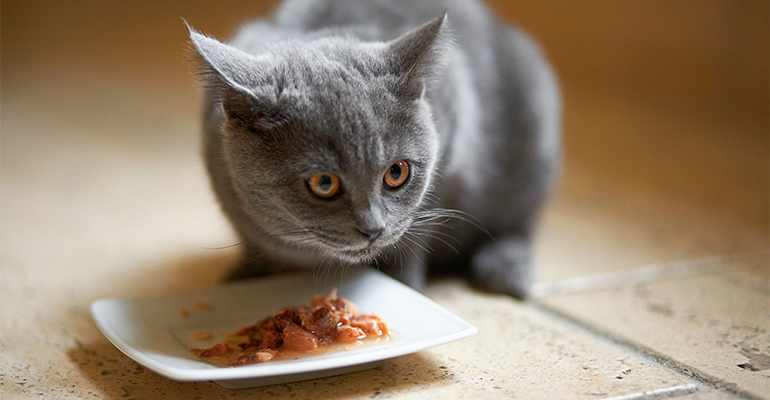
European tonnages were up 3.5% “reflecting continued household penetration and export strength”. Africa was the standout region with 11.7%.
The overall slowdown was primarily due to “normalisation in North America following pandemic-driven expansion, alongside demographic shifts in pet ownership”, the report reads.
In the US, for example, people are adopting smaller dogs and cats, which “consume less feed per animal, dampening volume growth”.
Nestlé’s focus is premium food for pickier cats
This trend was highlighted by Nestlé CEO Philipp Navratil at the DeutscheBank global consumer conference 2026 in June.
Navratil noted that the category had “good structural growth” and that pet adoption was still present but he added: “…what you see is that households that have several pets or had several pets, they're not replacing the number two or number three when it dies. And you have a trend to smaller dogs in general”.
NPD for cats requires ‘more science and technology’
Cat ownership was up and Nestlé was building back capacity in the US to meet demand in this growing segment, said Navratil.
“As people go back to work, [the] cat is just an easier animal to hold at home, and cats are growing in that sense. And so we like cats a lot because cats are also picky eaters in a sense. And so you need more science and technology to actually cater to that successfully,” he added.
Nestlé Purina Petcare Europe has just relaunched and expanded its Gourmet Perle range as it looks to meet increasing demand for premium wet cat food.
“Today's cat owners are paying closer attention to what goes on their pet's plate – from the quality of ingredients to how recipes are made – and increasingly value higher-quality options,” the company said in a statement.
Premium wet cat food is a fastest-growing category globally
This is the “personification of pets” trend as Navratil put it.
“[Pets are] part of the family and people are actually making the extra effort to treat them well and just spend extra money on their pets. And that's a trend that helps us as well,” he explained.
With around 108 million pet cats across Europe, the category continues to offer significant opportunities for growth, particularly in wet food, which caters to 'feline foodies' who enjoy variety and refined textures.
Premium wet cat food is among the fastest-growing categories globally, with around 6% value growth, according to Nestlé, highlighting “strong demand for more elevated, high-quality feeding experiences”.
Premium opportunity: Nestlé to invest in pet therapeutics
Pet therapeutics is the other premium area that Navratil is committed to invest in. These are the specialised products that are normally sold only through veterinary channels, for example.
Pro Plan is Nestlé’s brand in that space, available for both cats and dogs. “[...] those are products that piggyback from our science and technology backbone from the nutrition division that we have,” Navratil explained. “And they're really smart in taking some of those benefits that research and development comes up with into pet food [and] into driving pet food with health benefits, but also healthy longevity, weight management [...] even memory management.”
Navratil said there would be “more boots on the ground” selling these products into veterinary clinics.
“[...] it's highly specialised. It's premium and it's scientific products, and we believe we have an edge there, and we're going to invest there. It's high growth,” he added.

Get more of our news on Google
Set Ingredients Network as a 'Preferred Source' to get quicker access to the news you value.
Related news

Do the US dietary guidelines put UPFs under pressure?
10 Sep 2026
Will the US dietary guidelines change the way Americans eat, swapping ultra-processed foods for whole foods? We asked Dr Barry Popkin, renowned nutrition and obesity researcher.
Read more
Health and wellness engagement matures across Middle East and Africa
4 Sep 2026
Many consumers in the Middle East and Africa are now proactively engaged in health and wellness, looking to integrate better habits and products into their daily lives, say experts.
Read more
Skimpflation: An ‘unfair’ and risky approach to keeping prices low
2 Sep 2026
Consumers see skimpflation – reducing the quality of ingredients due to rising costs – as more unfair than shrinkflation, making it a risky strategy according to recent research.
Read more
‘Urgent gaps’ in achieving 2030 food system goals
27 Aug 2026
Global food systems are failing to meet 2030 targets across indicators including health, environment, and resilience, according to a report co-authored by the Food and Agriculture Organisation (FAO).
Read more
Seven-Eleven uses microbial testing tech to extend katsudon shelf life
26 Aug 2026
Japanese retail company Seven-Eleven has improved its factory’s microbial environment to keep comfort-food staple, katsudon, fresher for longer.
Read more
Chimac’s fusion sauces bring Korean flavours to Europe
25 Aug 2026
Irish sauce brand Chimac is tapping into Korea’s culinary traditions, bringing its flavours and products to European consumers who want a taste of K-food.
Read more
Global demand for instant noodles continues to rise
24 Aug 2026
Global demand for instant noodles reached 124.21 billion servings last year, representing a 0.7% year-on-year increase – or 900 million extra servings.
Read more
Popular barbecue staples experience sharp price increases
19 Aug 2026
The typical cost of US shoppers’ barbecue baskets has risen by 12% over the past year – the fastest annual rise in a decade, figures from The Economist show.
Read more
Hot NPD: Nissin launches first cold-water Cup Noodles
18 Aug 2026
Nissin is taking one of Japan’s most iconic instant meals in a completely new direction with the launch of the first cold water-only Cup Noodles in the brand’s 55-year history.
Read more
Manam Chocolate aims to bring premium Indian cacao to 'the world stage'
11 Aug 2026
Craft chocolate brand Manam Chocolate is investing in local expansion and supply chain innovation throughout India as it works to build out the premium reputation of its locally produced cacao products.
Read more